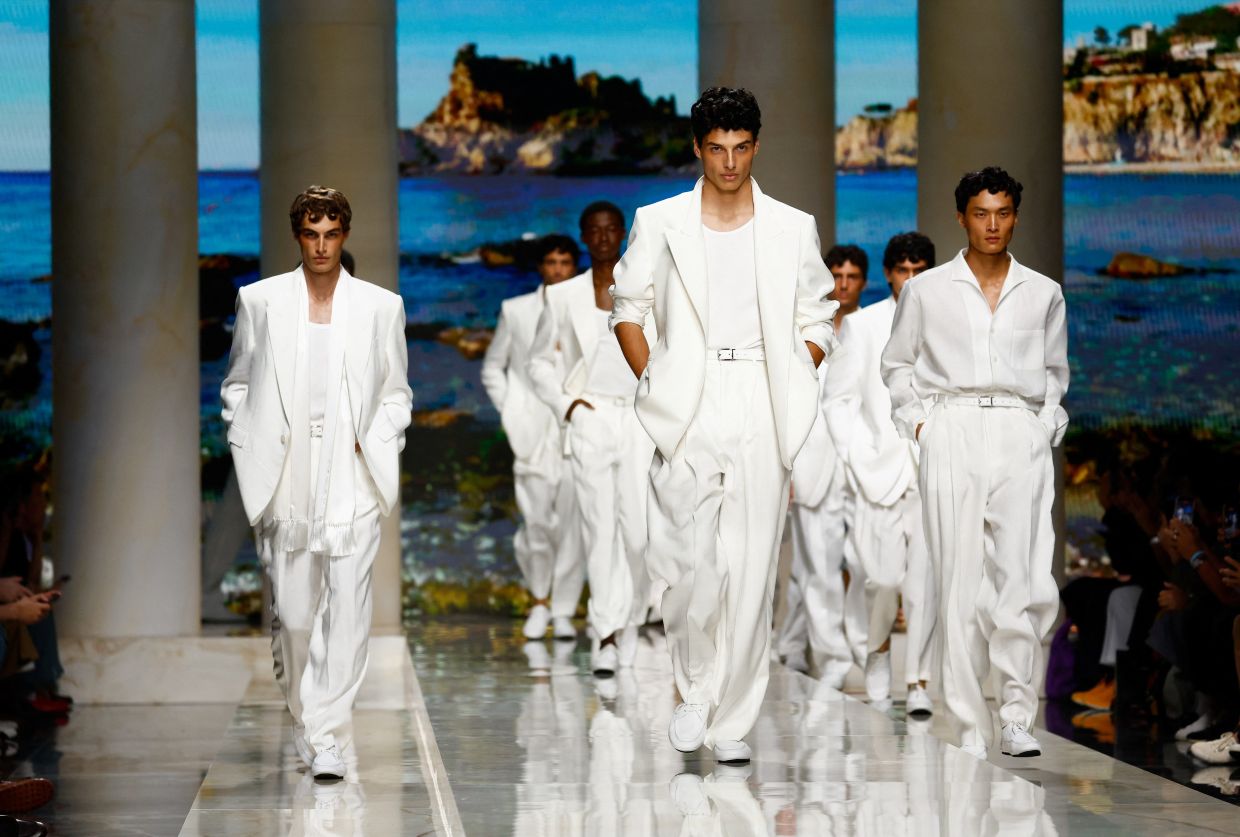
As Milan Fashion Week concluded on Monday with temperatures soaring and international anxieties mounting, the city's most influential menswear designers delivered a collective message of restraint and refinement. Rather than reaching for elaborate spectacle, the industry's creative heavyweights largely opted for simplification, using proportion and innovative fabrication to reimagine familiar wardrobing essentials. The collections unveiled over recent days suggest that in uncertain times, fashion's elite are gravitating toward clarity over complexity, though the path to achieving that vision proved far more nuanced than initial impressions might suggest.
At the forefront of this philosophical shift stood Prada, where co-creative directors Miuccia Prada and Raf Simons championed an aesthetic centred on uncomplicated dressing stripped of unnecessary ornamentation. Their proposition rested on the premise that timeless pieces gain new life when filtered through careful adjustments to fit and material choice. This approach resonated across much of Milan's schedule, with most collections reflecting similar instincts toward pared-down design language. Yet paradoxically, achieving these lighter looks required navigating considerable technical challenges that exposed an inherent tension between seasonal appropriateness and fashion's commitment to luxury materials.
The persistence of leather across Milan's runways presented perhaps the season's most striking contradiction. Despite soaring temperatures, designers repeatedly turned to this inherently heavy material, suggesting either remarkable faith in air-conditioning infrastructure or an unwillingness to abandon leather's associations with quality and craftsmanship. Prada exemplified this approach through leather combinations inspired by the democratic universality of denim, crafting slim five-pocket trousers paired with cropped jackets that functioned simultaneously as shirts. Rather than abandoning leather entirely, competing designers instead engineered solutions through woven and perforated techniques that rendered the material more breathable whilst preserving its luxurious tactile qualities and visual weight.
The shift toward closer-fitting silhouettes marked another defining characteristic of the collections, reversing years of oversized dressing that had dominated menswear conversations. There emerged broad consensus that a properly tailored suit remains fundamental to masculine dressing, though the challenge became solving how such formal garments might survive in increasingly hostile climates. The answer lay in strategic ventilation, with dress shirts left unbuttoned or rendered in transparent fabrics, sometimes eliminated entirely from the equation. Dolce & Gabbana pushed these ideas to their logical extreme through microshorts that unapologetically displayed muscular legs, while other brands experimented with exposed torsos and dramatically opened necklines that challenged conventional notions of formal propriety.
Tailorcraft itself underwent significant evolution, with designers embracing lighter constructions and more relaxed proportions than the rigid structures of previous seasons. Rather than abandoning tailoring altogether—a move that might have resolved the temperature challenges entirely—designers instead softened their approach, opening silhouettes to encourage air circulation whilst maintaining the crisp, structured lines that define formal menswear. The resulting pieces represent tailoring reimagined for rising temperatures without compromising formality, a calibration that allows wearers to maintain professional appearance whilst adapting to environmental realities. Thom Browne, now operating under Zegna ownership, returned to Milan for the first time since 2008 with layered suiting that leaned heavily on summer-friendly seersucker and pleated skirts—long a brand signature—demonstrating how historical references might serve contemporary climate concerns.
Yet Milan's narrative of restraint tells only part of the complete story. While Prada and fellow minimalists pursued reduction as their guiding philosophy, other significant designers defiantly embraced maximalism and unbridled decoration. Philipp Plein presented crystal-encrusted denim ensembles requiring days of meticulous handwork to complete, whilst Dolce & Gabbana leaned enthusiastically into embellishment through beaded accents evoking oceanic coral. These parallel approaches reflect genuine philosophical disagreement within the industry about how designers should respond to contemporary uncertainty—whether through stripped-down clarity or through reassuring glamour and abundance. Rather than representing contradiction, these opposing visions coexist as equally valid responses to the moment.
A lighter calendar compared to previous seasons created unexpected opportunities for emerging talent to command attention alongside industry titans. Martin Quad made his Milan debut with unconventional tailoring tricks that had already gained recognition in his native Copenhagen, whilst Domenico Orefice explored leather and richly textured woven materials across co-ed collections that blurred traditional gender boundaries in dressing. Japanese designer Shinya Kozuka's eponymous label made its Milan introduction with some of the season's most poetic and climatically appropriate pieces, epitomised by a bare-chested model wearing a billowing sheer coat in teal over baggy white trousers—an image that somehow captured the essential tension animating the entire week.
For Malaysian and Southeast Asian fashion consumers accustomed to oppressive heat and humidity throughout much of the year, these collections carry particular resonance. The challenge that bedevilled Milan's designers—how to maintain formal dress codes whilst adapting to extreme temperatures—represents a constant reality across this region rather than a seasonal consideration. The solutions developed on Milan's runways, from perforated leather techniques to breathable shirting and ventilated tailoring, translate directly to practical applications for professionals navigating tropical climates. Moreover, the renewed emphasis on properly fitted silhouettes and restrained design offers welcome alternatives to the oversized dressing that has dominated recent seasons, allowing those seeking more structured presentation to do so without resorting to heavy or impractical materials.
The message emanating from Milan extends beyond mere aesthetic preference into territory reflecting deeper anxieties about the contemporary moment. That designers across multiple houses gravitated toward simplification and clarity suggests a collective recognition that excessive ornamentation might read as tone-deaf given current economic pressures and geopolitical tensions. Simultaneously, the persistent experimentation with materials and construction techniques demonstrates the fashion industry's refusal to retreat into complacency or nostalgia. Rather than simply reviving past silhouettes unchanged, designers engaged in genuine innovation aimed at making familiar pieces relevant to present circumstances. The suit, Milan's collections insisted, remains foundational to men's dressing—but it requires constant evolution to remain contemporary and wearable.