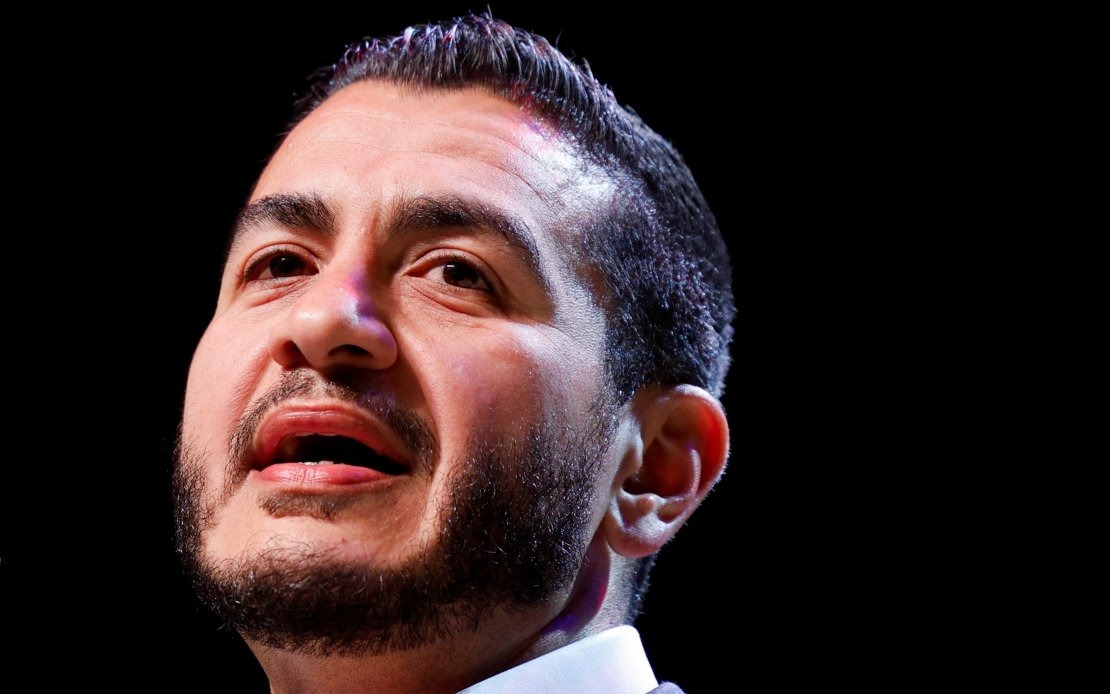
Abdul El-Sayed emerged with a slim advantage in Michigan's Democratic primary contest for the state's open U.S. Senate seat on Wednesday as voters in Michigan, Kansas, Missouri, Virginia and Washington participated in nominating contests that will shape battles in the November midterm elections. With more than nine-tenths of ballots tabulated, El-Sayed maintained his edge over U.S. Representative Haley Stevens, though major news organisations had not officially declared a victor in the closely watched race. The Michigan Democratic primary underscores the deep divisions within the party between progressive and establishment factions, a split that has animated Democratic politics for years but acquired sharper edges as the Israel-Palestine conflict dominated campaign messaging.
El-Sayed's narrow victory reflected backing from the party's progressive wing, with endorsements from Senator Bernie Sanders and Representatives Alexandria Ocasio-Cortez and Rashida Tlaib proving influential among younger and more leftward-leaning voters. Stevens, by contrast, secured support from the Democratic establishment, including retiring Senator Gary Peters himself, signalling that party regulars preferred her candidacy. The winning candidate will advance to face Republican Mike Rogers, who ran unopposed in his party's primary and will enter the general election as a significantly favoured challenger in the competitive statewide race.
The prominence of U.S. policy on Israel and the ongoing conflict in Gaza throughout the Michigan primary campaign illustrated how international affairs have penetrated American electoral politics in unprecedented ways. Both El-Sayed and Stevens grappled with this issue as voters expressed strong views about American support for Israeli military operations, making the question unavoidable for candidates seeking Democratic nominations. This dynamic carries implications for how domestic parties address foreign policy matters, particularly when conflicts generate intense grassroots passion among their voting bases.
Beyond the Senate race, Michigan Republicans consolidated support for their congressional nominees. Jack Bergman secured his party's endorsement in the 1st District with commanding margins, capturing roughly three-quarters of the vote despite facing two challengers. Similarly, Bill Huizenga won renomination in the 4th District with overwhelming support, positioning himself well for the general election against state Senator Sean McCann, who prevailed in a two-person Democratic contest.
In Kansas, the Republican primary landscape reflected the party's shift during the Trump era. Senator Roger Marshall defeated primary challenger Pond Naramore decisively with nearly 80 percent of votes, establishing himself as the likely favourite in a state trending solidly Republican. Marshall will face Democrat Adam Hamilton in November's general election. The gubernatorial race revealed deeper party fractures, with Republican Ty Masterson securing Trump's endorsement and winning his party's crowded primary, positioning him against Democrat Cindy Holscher, who emerged from her party's nominating contest. Governor Laura Kelly's term-limited status means the winner will control the governor's mansion heading into a new electoral cycle.
Missouri's congressional contests unfolded under different redistricting circumstances than previous cycles, with Republican state lawmakers adopting a map designed to strengthen their party's position in House races. In the 1st District, Democratic Representative Wesley Bell defeated former Representative Cori Bush and three other challengers, retaining his seat's Democratic nomination despite progressive criticism of his positioning on certain issues. Bell will face Republican Paul Berry III, who won his party's primary, setting up a clash between competing visions for the district.
Virginia's Senate contest featured Republican Bert Mizusawa emerging unopposed on his side to challenge Democratic Senator Mark Warner, who easily secured renomination without meaningful primary opposition. This pattern of one-sided primaries extended to various congressional races, where some seats remained uncontested in one party's primary while others generated fierce competition. Shannon Taylor won the 1st District Democratic primary with just over 53 percent of votes, narrowly edging rivals before facing Republican Representative Rob Wittman, a veteran legislator pursuing a tenth full term.
Former Representative Elaine Luria captured the 2nd District Democratic nomination with overwhelming support and will challenge Republican Representative Jen Kiggans in the general election. In the 7th District, Republican Doug Ollivant claimed his party's primary with slightly more than 56 percent of votes, setting up a contest against first-term Democratic Representative Eugene Vindman. These Virginia races reflect both the state's competitive nature and the challenges facing both parties as they position themselves for November.
Washington's all-party primary system, where the top two candidates regardless of party affiliation advance to November's general election, produced different dynamics from traditional closed primaries. Democratic Representative Suzan DelBene and Republican Mary Silva both advanced in the 1st Congressional District, guaranteeing a general election between members of different parties. In another district, Democratic Representative Marie Gluesenkamp Perez will face Republican John Braun, who carried Trump's endorsement. The 6th District contest will pit Democratic incumbent Emily Randall against Republican challenger Teresa Fox.
These contests across five states provided early indicators of campaign intensity and voter enthusiasm heading toward November's midterm elections. The prominence of Gaza-related issues in Michigan, the influence of Trump endorsements in Republican contests, and the range of primary competition levels all suggested a campaign season shaped by distinctive forces compared to previous cycles. For international observers and regional analysts, the results underscore how American political divisions increasingly reflect both domestic policy disputes and positions on global conflicts, factors that will influence not only electoral outcomes but also future American foreign policy directions affecting global stability.

