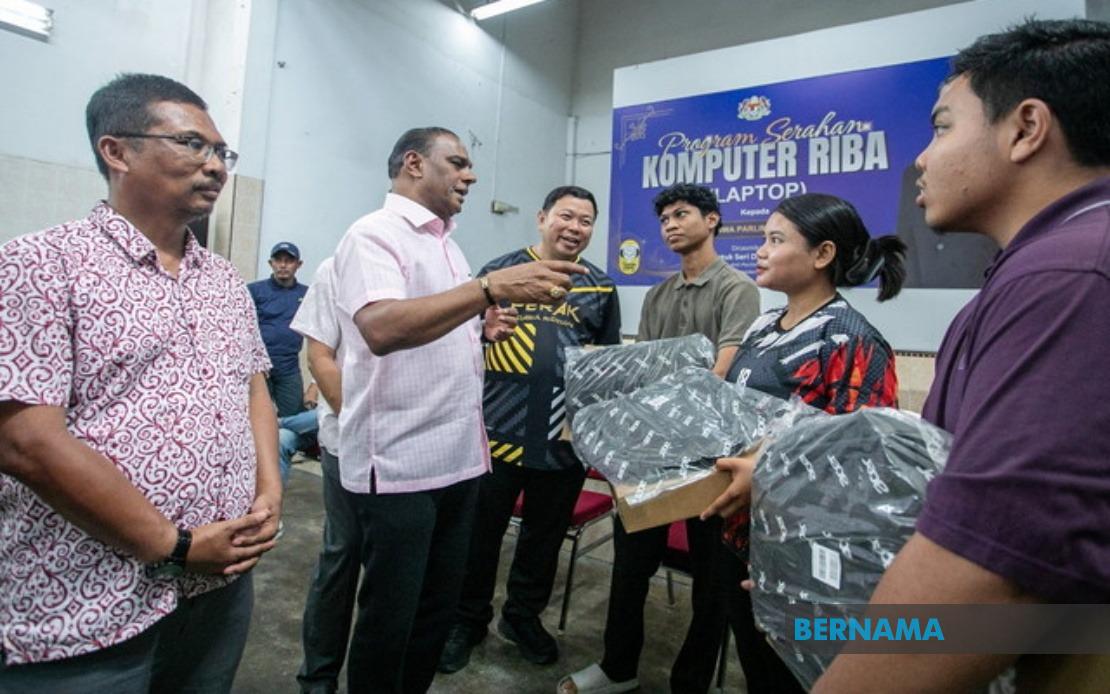
The Malaysian Indian Congress (MIC) has committed to fielding a candidate in the Gadek constituency for the upcoming Melaka state election, holding firm on the seat it secured five years ago. Party deputy president Datuk Seri M. Saravanan revealed that MIC is simultaneously exploring the possibility of broadening its electoral footprint by contesting seats beyond its current single representation in the state legislature. His remarks, delivered in Tapah during a parliamentary laptop distribution event, signal the party's intention to reassess its electoral strategy ahead of the anticipated poll.
The deputy president outlined a methodical approach to any potential expansion, emphasizing that the party leadership remains in deliberation mode before finalising its contest schedule. MIC's decision-making process involves scrutinizing multiple variables—the viability of prospective constituencies, the calibre of available candidates, and realistic assessments of victory prospects in each area. This cautious positioning reflects the party's awareness that simply fielding more candidates without genuine winning chances could deplete organisational resources and diminish the party's overall electoral performance.
MIC president Tan Sri S A Vigneswaran is presently engaged in evaluating potential candidates across various constituencies, with an announcement anticipated in the near term. The vetting process underscores the importance the party places on candidate quality, recognising that strong ground support and campaign machinery depend critically on individual representatives who can connect with voters and articulate the party's messaging effectively. The thoroughness of this evaluation suggests MIC is not rushing into hasty electoral calculations.
Gadek remains MIC's strategic stronghold in Melaka. The party successfully retained this seat in the 2021 state election through candidate VP Shanmugam, who triumphed in a competitive six-way contest with a majority of 559 votes. The modest victory margin, while sufficient for success, underscores the constituency's competitiveness and indicates that defending it will require sustained grassroots mobilisation and voter retention efforts. The seat's relatively tight contest dynamics make it neither a safe harbour nor a certain loss—a reality that demands MIC's continued attention and resource allocation.
MIC's groundwork has already commenced in earnest. The party is systematically identifying and cataloguing its core voter base, recognising that Indian Malaysian communities represent both a traditional support demographic and a constituency whose engagement cannot be taken for granted in contemporary Malaysian politics. This foundational work of voter mapping provides the essential database for targeted outreach campaigns and enables the party to concentrate its messaging on issues most relevant to its supporters.
The party's campaign preparation extends beyond voter identification to encompassing a broader survey of local governance concerns. MIC is actively monitoring pressing issues affecting Melaka communities, from economic opportunities and employment to education, healthcare, and social welfare provision. By aligning the party's electoral messaging with tangible grievances and policy solutions, MIC aims to present voters with a substantive platform rather than relying purely on traditional party loyalty or ethnic-based appeals.
MIC's approach reflects the evolving dynamics of Malaysian politics, where even established component parties within the Barisan Nasional coalition must demonstrate relevance and responsiveness to win voter confidence. The party's willingness to consider expanding its electoral participation suggests confidence in its grassroots mobilisation capabilities, even as it proceeds cautiously given resource constraints and candidate availability challenges. For a party representing a minority community in Malaysia's multiethnic political landscape, strategic seat selection is far more prudent than ubiquitous candidature.
The timing of these discussions matters significantly for Malaysian politics. With Melaka state elections anticipated in the coming period, the broader coalition picture in the state remains fluid. BN's continued dominance in Melaka depends substantially on its component parties, including MIC, delivering credible candidates and energized campaigns in constituencies they contest. MIC's contribution, though numerically modest, carries symbolic weight in demonstrating the coalition's commitment to multiethnic representation and inclusive governance.
For Malaysian Indian readers and the broader Southeast Asian audience, MIC's deliberative approach to seat expansion carries several implications. It demonstrates that minority-based political parties continue navigating complex terrain in plural democracies, where electoral viability depends on community engagement, organisational strength, and strategic positioning within larger coalitions. The party's emphasis on candidate quality and voter identification suggests a move toward more substantive campaigning beyond mere communal mobilisation, potentially setting precedents for how minority political interests are articulated and represented in Malaysia's electoral system.

