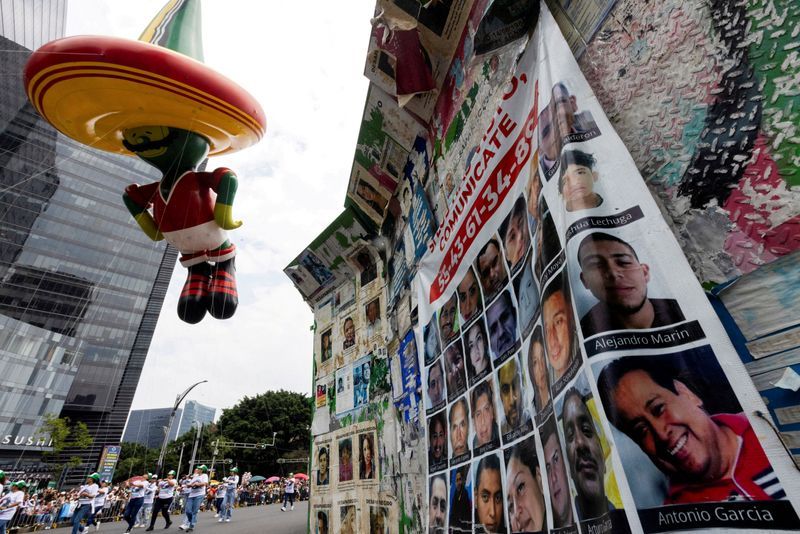
The streets of Mexico City have transformed into a sea of national colour ahead of this weekend's crucial World Cup encounter between Mexico and England, with massive screens dominating the Paseo de Reforma to broadcast the tournament. Yet the celebration tells only part of the story unfolding across Mexico's capital. Interspersed among the vibrant commercial displays promoting the nation's football ambitions are posters bearing the faces of the country's vanished citizens—more than 135,000 people whose disappearances have become part of Mexico's national fabric since the government's aggressive drug war began in 2006. This juxtaposition encapsulates the complex emotional landscape that Mexicans must navigate as their team pursues World Cup glory while the nation confronts mounting crises beyond the stadium.
The 2014 World Cup, jointly hosted by Mexico, the United States, and Canada, arrives at a moment of profound contradiction within Mexican society. While the national team has impressed observers with an unbeaten group stage performance and a flawless defensive record, the backdrop of the tournament has been repeatedly disrupted by street closures tied not to celebrations alone but to organised protests. The Paseo de Reforma, Mexico's most iconic thoroughfare, has become a recurring flashpoint where citizens exercise their right to demonstrate grievances that the pageantry of international football cannot address. These demonstrations reflect a population attempting to maintain focus on systemic failures even as the national psyche experiences what some observers call the numbing comfort of sporting distraction.
Much of the analysis around Mexico's domestic situation centres on what might be termed the psychological escape function that major sporting events provide. Carlos Mendoza, a podcaster and journalist who closely monitors Mexican politics, articulated this phenomenon to international media, describing how World Cup victories trigger a collective emotional release that permits Mexicans to temporarily set aside uncomfortable political realities. He specifically referenced accusations that members of the ruling Morena party have colluded with drug trafficking organisations—allegations that might otherwise dominate national discourse. However, Mendoza emphasised a sobering reality: the World Cup provides only temporary psychological relief rather than addressing underlying structural problems. Once the tournament concludes, he warned, the difficulties that have accumulated will remain waiting.
Economic hardship has become an inescapable feature of Mexican daily life, complicating the narrative of national celebration. Although inflation rates decelerated somewhat in early June, core inflation remains stubbornly elevated above the Bank of Mexico's three per cent target, eroding household purchasing power across the income spectrum. This economic stress was particularly evident in discussions surrounding ticket accessibility for World Cup matches. The cost of attending games has escalated to levels that effectively exclude ordinary fans from stadium experiences, creating a two-tier system where only affluent viewers can attend matches in person. Mendoza highlighted this as one of the tournament's most troubling aspects, noting that the barrier to attendance has shifted from mere scarcity to pure economics—a qualitative change that fundamentally alters how football engages with popular culture.
The euphoria surrounding Mexico's first knockout-stage World Cup victory in four decades—a triumph over Ecuador in the round of thirty-two—was substantially diminished by a tragedy that unfolded during street celebrations. Four individuals lost their lives amid the festivities around the Paseo de Reforma, a grim reminder that large gatherings can produce unintended consequences beyond the pitch. Simultaneously, anti-World Cup graffiti continues to mark walls throughout Mexico City and surrounding the Azteca Stadium, serving as a persistent visual reminder that significant segments of the population view the tournament with scepticism or outright opposition rather than uncritical enthusiasm.
Teachers' unions have seized upon the World Cup period as an opportunity to amplify their demands for government action. Members of the CNTE union have established protest encampments throughout central Mexico City, deliberately obstructing major thoroughfares to force visibility for their cause. These educators are demanding that the government fulfil a campaign pledge to reverse a 2007 law that fundamentally restructured pension and social security arrangements for public-sector workers. Beyond legislative change, union members seek meaningful salary increases to address wage stagnation. The presence of these protests within the geographic footprint of World Cup celebrations creates a competing narrative about national priorities.
Navigating this complex environment requires considerable emotional dexterity from Mexican citizens. Rodrigo Cordera, a local politician, articulated this challenge by acknowledging that enthusiasm for football need not preclude simultaneous worry about national circumstances. He argued that individuals are capable of experiencing discrete emotional and intellectual responses—celebrating ninety minutes of athletic competition while maintaining anger toward FIFA's organisational choices and criticism of the Mexico City government's handling of the tournament. This framework rejects the false binary that patriotic excitement must extinguish all other concerns, instead suggesting that mature citizenship accommodates multiple, sometimes contradictory feelings.
President Claudia Sheinbaum's political position appears relatively secure despite these background tensions. A survey conducted by the newspaper El Financiero documented her approval rating at sixty-nine per cent, representing recovery from a gradual decline that commenced in March. This resilience may reflect public confidence in her administration's direction or alternatively a willingness to suspend immediate judgment amid the World Cup's emotional intensity. The government has publicly committed to locating the missing persons as a national priority, though critics question whether sufficient resources and political will accompany such declarations.
Residents themselves articulate the fundamental challenge facing the nation during this tournament period. Alejandra Gonzalez, a Mexico City resident, observed that the World Cup essentially reorders societal priorities rather than eliminating underlying problems. The tournament temporarily subordinates systemic concerns within the collective consciousness, and her concern centres on whether the government will leverage this period of euphoria to delay tackling urgent structural decisions. She expressed cautious hope that the tournament might catalyse positive national sentiment, yet insisted that genuine progress requires critical thinking that maintains focus on government inconsistencies, corporate accountability, and individual civic responsibility even during moments of patriotic celebration.

