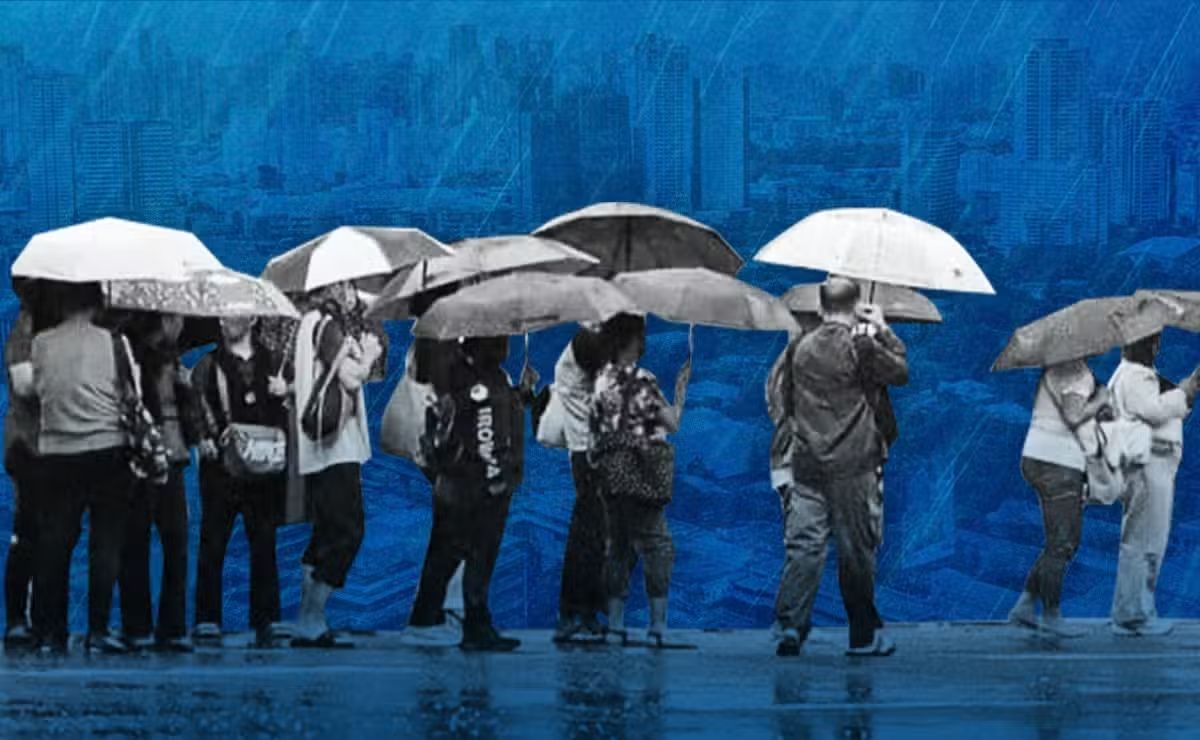
The deluge that swept across Metro Manila between 5 and 14 August has become a stark reminder of the region's vulnerability to extreme weather events and the pressing need to overhaul its approach to flood management. Data compiled from 23 monitoring stations operated by the Philippine Atmospheric, Geophysical and Astronomical Services Administration revealed that nearly half a metre of rain accumulated over this brief ten-day window, a volume that underscores not merely a meteorological event but a systemic failure in infrastructure readiness and government accountability.
Dr Alicor Panao, an associate professor at the University of the Philippines and data scientist, scrutinised the rainfall patterns during this period when the southwest monsoon, known locally as Habagat, combined with a succession of tropical cyclones to unleash intense precipitation across Luzon. The averaged cumulative total of 483.4 millimetres across the monitoring network translated to roughly 48.3 millimetres daily, though this figure masks significant variation between different locations. The sheer volume becomes comprehensible only when translated into human terms: if distributed evenly across Metro Manila's approximately 620 square kilometres, the accumulated water would fill roughly 120,000 Olympic-sized swimming pools, or approximately 193 pools for every square kilometre of the metropolis.
Perhaps most striking was the temporal concentration of this rainfall. Nearly half the total amount fell within a single 48-hour window on 9 and 10 August, with the Pagasa Airport station alone recording 226.5 millimetres on 9 August. This intensity prompted Panao to describe the phenomenon as extraordinary, though historical records reveal that Metro Manila has endured more severe single-day rainfall events. Tropical Storm Ondoy in 2009 delivered 455 millimetres at the Pagasa Science Garden station in a single day, exceeding the previous record of 334 millimetres set in June 1967.
Despite this historical context, the cumulative impact of the August 2024 event warrants serious consideration. Certain monitoring locations recorded substantially higher totals than the regional average. Sitio Wawa accumulated 708.0 millimetres over the ten-day period, equivalent to 708 litres of water per square metre, while San Mateo-2 recorded 701.0 millimetres and La Mesa Dam captured 645.5 millimetres. These disparities highlight the uneven distribution of rainfall across the metropolitan area and suggest that some districts faced particularly acute flood risks during this period.
What distinguishes this episode from previous extreme rainfall events is the relentless succession of heavy precipitation, leaving urban drainage systems and natural water conveyance mechanisms virtually no opportunity for recovery between storms. Panao emphasised this critical distinction, noting that the repeated intensity prevents the gradual dissipation that might occur with more spaced-out rainfall. This compounding effect transforms what might be manageable individual rainfall events into a cascading crisis that overwhelms infrastructure designed for more conventional precipitation patterns.
The data scientist's analysis pointed to a fundamental reorientation needed in how policymakers approach flood protection. Building additional concrete structures and expanding the physical capacity of drainage networks represents only one dimension of the challenge. More critically, the region requires honest assessment of whether existing infrastructure has been properly engineered to contemporary standards, constructed with appropriate quality controls, and subjected to adequate maintenance protocols. These procedural questions often receive less political attention than ribbon-cutting ceremonies for new projects, yet they determine whether invested resources actually translate into practical flood mitigation.
Underlying this technical discussion lies a more troubling governance dimension. Multiple investigations have recently uncovered evidence of ghost projects, substandard construction, and inflated contract prices within the flood-control portfolio. These allegations suggest that substantial public resources ostensibly dedicated to flood protection may have been diverted or squandered, leaving communities without the defence systems they should have received. Criminal prosecutions reportedly remain underway in several cases, indicating that the problem extends beyond mere bureaucratic inefficiency into the realm of potential fraud and corruption.
For Metro Manila residents and businesses, the August rainfall event functioned as a stress test that revealed the fragility of the current system. The metropolitan region's dense concentration of population, critical infrastructure, and economic activity means that flooding carries cascading consequences far beyond immediate water damage. Supply chain disruptions, power outages, and transportation gridlock ripple through the entire Philippine economy. Southeast Asian observers might recognise similar patterns in their own cities, where rapid urbanisation has frequently outpaced flood management infrastructure investment.
Moving forward, authorities face a choice between continuing incremental improvements to a fundamentally inadequate system or undertaking more comprehensive reform. This would necessarily involve transparent auditing of existing infrastructure, rigorous vetting of new projects to prevent the corruption that has plagued previous initiatives, and adaptation of engineering standards to reflect the intensifying rainfall patterns associated with climate change. The 483.4 millimetres that fell in ten days represents not merely a weather statistic but a measure of how urgently this reckoning has become.
The broader implications extend beyond Metro Manila's borders. As climate patterns shift and extreme weather events become more frequent, cities throughout Southeast Asia will increasingly face similar challenges. The Philippine capital's experience offers both cautionary lessons about the dangers of underinvestment and mismanagement in critical infrastructure, and a template for how systematic reform might proceed. Whether Manila's policymakers will heed these lessons and undertake the necessary institutional and infrastructural changes will significantly influence the city's resilience to future precipitation events.

