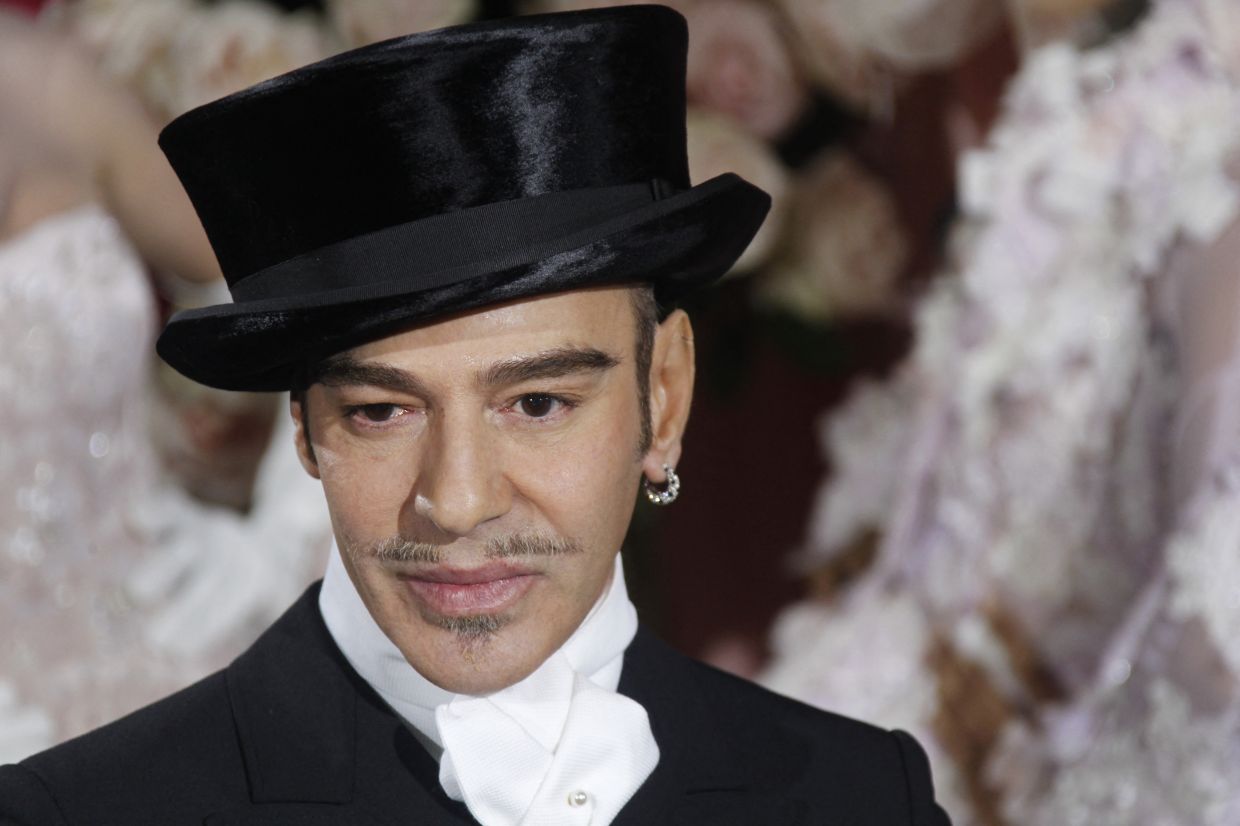
The Metropolitan Museum of Art's prestigious Costume Institute has announced that next year's Met Gala will centre on British designer John Galliano, making him only the third living fashion creator to receive a solo exhibition at the institution. The decision represents a significant moment in fashion's reckoning with artistic genius intertwined with personal reckoning, as the museum plans to examine both the designer's extraordinary innovations and the deeply troubling conduct that upended his career trajectory.
Galliano's ascent through the fashion world seemed meteoric. As creative director at Christian Dior for nearly fifteen years, he occupied one of the most coveted positions in global fashion, overseeing collections that defined an era of haute couture excess and theatrical elegance. His tenure at the French fashion house represented the apex of his professional influence, a position many designers spend entire careers pursuing. Yet this prominence would be shattered by revelations that fundamentally altered perceptions of his work and legacy.
Between 2010 and 2011, the designer made a series of antisemitic and racist comments that circulated widely online, eventually leading to his conviction by a Paris court for public insults based on race, religion, ethnicity, and origin. Most damaging was a video in which he expressed admiration for Hitler, a statement that proved catastrophic to his reputation. The fallout was swift and severe: Dior terminated his employment, his eponymous label dissolved, and he found himself effectively exiled from the industry he had helped define. The incident became a watershed moment in fashion's public consciousness, forcing both industry insiders and consumers to grapple with uncomfortable questions about separating artistic merit from personal ethics.
Following his dismissal, Galliano underwent a period of intensive rehabilitation, including treatment for substance addiction and extensive private engagement with his conduct and its consequences. His public acknowledgment of these issues and efforts to address them gradually paved the way for a comeback. In 2014, Paris-based Maison Margiela extended an opportunity, hiring him as creative director. This ten-year tenure allowed him to rebuild his professional standing while maintaining the innovative spirit that had defined his early success, demonstrating that career resurrection remained possible even after such profound public transgression.
The museum's decision to mount this retrospective does not ignore the complications it presents. Curators emphasized that the exhibition will directly confront Galliano's problematic history rather than sidestepping it. Andrew Bolton, the primary curator who oversees nearly all major fashion exhibitions at the Met, framed the show as examining "how Galliano has remapped the world through fashion and how his conduct, its consequences, and changing cultural values have reshaped our understanding of his work." This approach reflects broader cultural conversations about accountability within artistic fields and whether, or under what circumstances, artists who have committed serious wrongs deserve continued platforms.
Preparing the exhibition required unprecedented sensitivity. Museum officials held extensive meetings with Jewish community leaders in New York to gauge their perspectives on mounting such a show, recognizing that the subject matter touched deeply felt concerns about antisemitism in high-profile institutions. These discussions included the curator, Galliano himself, and Anna Wintour, editor of Vogue, underscoring the gravity with which the institution approached the project. This consultation process itself signals how far contemporary museums have moved toward acknowledging their responsibilities to affected communities, a significant shift from earlier eras of more insular curatorial decision-making.
The exhibition will unfold across three distinct thematic sections, each designed to illuminate different dimensions of Galliano's career. The first, titled "Bearings," confronts the rupture caused by his conduct head-on. Rather than burying or minimizing this history, the section directly addresses the antisemitic, racist, and anti-Asian statements of 2010 and 2011, his dismissal from both Dior and his personal label, his Paris court conviction, his substance addiction treatment, and his subsequent public reckoning. This opening movement establishes the exhibition's commitment to unflinching examination, refusing the comfortable narrative that would privilege artistic accomplishment over ethical accountability.
The second section, "Horizons," shifts focus to Galliano's creative inspiration sources, tracing how history, geography, art, storytelling, and theatrical performance informed his design philosophy. This portion allows visitors to understand the conceptual underpinnings of his most celebrated work, the intellectual and aesthetic frameworks that made his creations resonate with fashion audiences worldwide. By exploring these influences, the exhibition contextualizes his genius within broader cultural and artistic traditions, demonstrating how serious designers draw from deep wells of knowledge and imagination.
The final section, "Atlas Of Transformation," concentrates on Galliano's technical mastery, craftsmanship, and experimental approach to garment construction. This celebration of his innovative contributions to fashion architecture and his willingness to push boundaries in material and construction techniques forms the exhibition's affirmative conclusion. Rather than ending on condemnation, the show allows space for recognizing genuine achievement, though always in dialogue with the ethical concerns articulated in earlier sections.
For Malaysian audiences and Southeast Asian fashion observers, this exhibition carries particular relevance. The region has increasingly engaged with global fashion discourse, and Galliano's influence permeates contemporary design across Asia. The Met's approach offers a template for how cultural institutions might address similar tensions between artistic legacy and ethical responsibility. It suggests that neither wholesale erasure nor uncritical celebration represents an adequate response to complex figures who have both contributed significantly to their fields and caused genuine harm.
The May 2025 Met Gala itself will undoubtedly generate intense scrutiny and conversation. Fashion's most visible figures will walk the red carpet wearing contemporary interpretations of Galliano's aesthetic legacy, creating visually arresting moments that invite reflection on the themes the exhibition explores. These sartorial choices will become texts through which the fashion world collectively processes its relationship with a designer whose work remains influential even as his personal history remains contested.
Ultimately, the museum's decision to proceed with this exhibition while maintaining unflinching commitment to ethical examination represents a maturation in how cultural institutions approach their responsibilities. By refusing easy resolution and instead creating space for the exhibition's three-part structure to hold both artistic achievement and ethical accountability in productive tension, the Met offers a model for institutions wrestling with how to preserve cultural memory while maintaining moral integrity. For Galliano himself, this retrospective represents a kind of vindication—not absolution, but recognition that some forms of damage, once acknowledged and reckoned with, need not permanently foreclose the possibility of revisiting and reassessing a complicated legacy.

