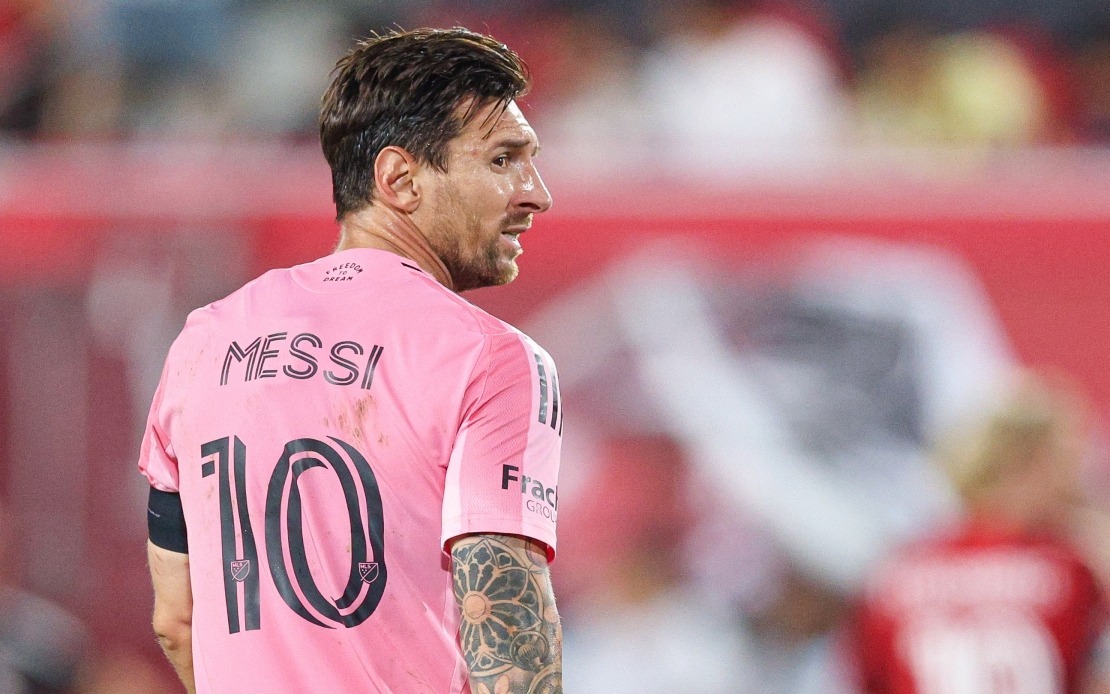
Lionel Messi made his emotional return to Inter Miami's pitch on Wednesday evening, taking the field as a half-time substitute in the Leagues Cup's final group stage match against Leon. The match ended in a 3-2 defeat for the American club, but the focal point remained Messi's poignant comeback following the passing of his father Jorge, who had been central to the footballer's life and career for nearly five decades.
The loss of his father came as a profound shock to the Argentine captain, prompting him to share deeply personal reflections on social media earlier in the week. In an anguished statement that laid bare his emotional turmoil, Messi questioned whether he possessed the will to continue his legendary career. "I don't know what I'm going to do without you," he wrote, expressing the magnitude of his grief. "I don't know how to carry on. I used to just play football, and now I'm really not sure if I'll carry on doing it for much longer." The vulnerability in his words resonated across the sporting world, highlighting how even the sport's greatest talents are human beings susceptible to overwhelming loss.
Jorge had served as both father and guide throughout Messi's extraordinary trajectory in professional football. Beginning their partnership when Lionel was merely fourteen years old, Jorge witnessed his son's transformation into arguably the finest footballer ever to grace the game. The elder Messi was instrumental in navigating the complex landscape of international football, securing opportunities that shaped his son's legendary status. Most recently, Jorge had urged Lionel to participate in one final World Cup despite his deteriorating health—advice the player heeded when Argentina reached the Qatar 2022 final, which the nation won to secure Messi's long-coveted World Cup triumph.
Messi's absence from Inter Miami's fixture against Monterrey on Saturday underscored the gravity of his circumstances. Instead of preparing for competition, he attended a private funeral service at a cemetery in Perez, a town near his hometown of Rosario in Argentina. This marked a defining moment where football, ordinarily the centre of his universe, yielded to the imperatives of family mourning and personal grief.
The circumstances surrounding his father's passing were particularly poignant because Jorge had envisioned one final accomplishment alongside his son. After guiding Messi through a 2022 World Cup victory in Qatar, Jorge had encouraged him toward participation in this summer's Copa América tournament. Argentina advanced to that competition's final but ultimately fell to Spain in extra time by a single goal, denying Messi the opportunity to achieve another major tournament triumph alongside his ageing father.
When Messi did return to action on Wednesday, his presence carried symbolic weight beyond the usual metrics of athletic performance. Guillermo Hoyos, Inter Miami's coach, acknowledged the profound nature of parental loss in his post-match comments, drawing parallels to his own experience of losing his father. He described grief as something requiring considerable time to process, and recognized the devastating impact such a loss inflicts on extraordinary individuals and their families. His measured words reflected an understanding that Messi's return transcended sporting considerations.
The opposing coach, Javier Gandolfi of Leon, offered his own tribute to the Argentine, framing Messi's significance in terms that extended beyond statistical accomplishment. Gandolfi asserted that Messi represented not merely the greatest player in football history from a technical perspective, but also embodied qualities of human character that distinguished him from his peers. His appearance on Wednesday, Gandolfi suggested, once again demonstrated the essence of what made Messi extraordinary—a commitment that persisted even amid personal devastation.
For Malaysian readers and Southeast Asian observers, Messi's story carries particular resonance in the context of regional football culture, where familial structures and filial piety remain deeply embedded in values and traditions. The narrative of a parent's role in nurturing athletic excellence mirrors patterns evident across Asian sporting development, where family involvement and parental guidance frequently form the bedrock of an athlete's journey. Messi's visible struggle to reconcile his vocation with his bereavement speaks to universal human experiences that transcend geographical and cultural boundaries.
The return to competition, modest though it appeared in the context of a losing effort, signified not triumph but rather the resumption of routine in the aftermath of irreplaceable loss. For a player accustomed to controlling matches and dictating outcomes, this particular appearance represented something different—a tentative step forward in processing grief while maintaining connection to the activity that has defined his existence since childhood.
As Messi navigates the coming weeks and months, questions regarding his future in professional football will likely persist. His cryptic statements about the possibility of retirement suggest that his father's passing has prompted fundamental reflection on his continued participation in the sport. Whether he ultimately decides to extend his career or conclude it will depend on personal factors only he can evaluate—though his father's absence will undoubtedly influence whatever decision he reaches.

