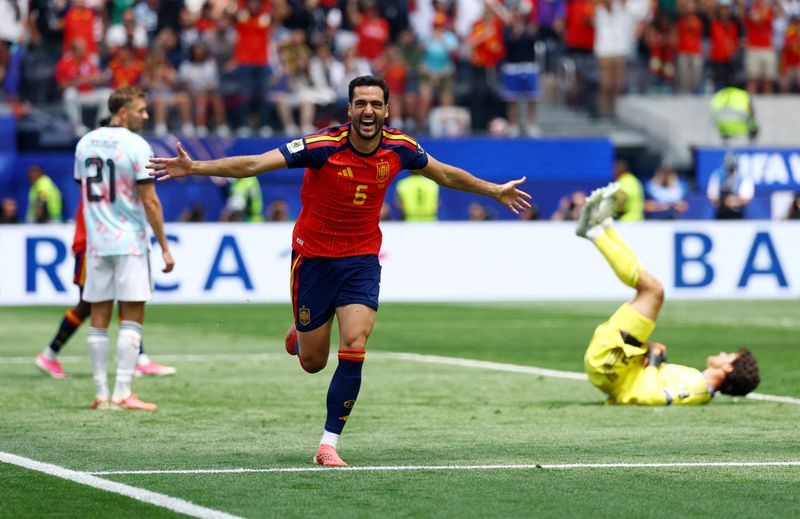
Spain reached the World Cup semifinals for the first time since winning the tournament in 2010, securing a hard-fought 2-1 victory over a severely weakened Belgium side at the Los Angeles Stadium on Friday. The decisive moment came in the 86th minute when substitute Mikel Merino pounced on a rebound after Belgian goalkeeper Senne Lammens failed to hold Pau Cubarsi's low strike, sending a sold-out crowd that largely favoured the European champions into raptures on a brutally hot afternoon in Inglewood, California.
The match represented a tale of two narratives: Spain's relentless tactical discipline and attacking prowess against Belgium's mounting injury crisis that rendered their defence increasingly vulnerable as the contest progressed. Belgium arrived at the Los Angeles Stadium already compromised, with midfielder Amadou Onana sidelined following an anterior cruciate ligament tear sustained during their previous knockout victory over the United States. The situation deteriorated further when captain Youri Tielemans was withdrawn from the starting lineup mere minutes before kickoff due to an injury sustained during warm-ups, forcing coach to shuffle his midfield with Hans Vanaken stepping in.
Fabian Ruiz's 30th-minute opener provided Spain with a platform from which to build their control. The Paris Saint-Germain midfielder capitalised on an error of judgement by Belgian captain Thibaut Courtois, who had initially impressed with an outstanding diving save before losing concentration to leave Ruiz with a straightforward finish between Timothy Castagne's legs. The goal vindicated Spain coach Luis de la Fuente's bold selection decision to start Ruiz ahead of Pedri, a controversial call that would pay immediate dividends as the midfielder's industry and movement began to dictate the rhythm of proceedings.
Belgium's response came swiftly and provided an encouraging signal for their supporters. Charles De Ketelaere equalised 11 minutes after Ruiz's opener with a perfectly-timed header from Castagne's cross, marking the first goal Spain had conceded throughout the tournament. The leveller shifted the momentum and gave the Belgian contingent genuine hope heading into the interval, though the relentless heat and Spain's territorial dominance suggested that fatigue might become a factor as the second half unfolded.
Spain emerged from the dressing room with renewed vigour, immediately reimposing their midfield authority and suffocating Belgium's attacking ambitions. The introduction of Pedri for Ruiz allowed Spain to shift tactical emphasis, and the young Barcelona midfielder's creativity began opening additional passing lanes that stretched Belgium's increasingly disorganised backline. Electric 18-year-old Lamine Yamal proved particularly troublesome, his directional running and technical ability forcing Belgian defenders into desperate situations throughout the half. The relentless Spanish pressure felt inevitable in its progression toward another goal, and that breakthrough duly arrived through Merino.
Merino's significance in this victory extends beyond the mere statistics of his goalscoring contribution. The substitute striker is now the first player in World Cup history to score the winning goal in two separate knockout-stage matches as a substitute, having previously netted in Spain's 1-0 last-16 victory over Portugal. The midfielder's composure and clinical finishing, combined with his ability to impact matches from the bench, represents precisely the kind of impact substitution that frequently determines knockout football outcomes. "There are no such things as coincidences," Merino reflected after the final whistle. "If you go into a match well-prepared, things tend to happen again."
Belgium's attempts to force another equaliser in the remaining moments proved futile despite featuring attacking talent in the form of Kevin De Bruyne and Romelu Lukaku. The Belgian veterans, whilst occasionally threatening, could not overcome Spain's defensive solidity and the physical toll of playing with such limited midfield options. Spain's defensive unit, anchored by goalkeeper Unai Simon and a well-marshalled back line, proved capable of withstanding the late pressure without significant difficulty.
The semifinal assignment presents an altogether more formidable challenge for de la Fuente's side. France enters the contest as tournament favourites and possesses the attacking dynamism that could trouble Spain's admittedly impressive but occasionally vulnerable defensive structure. The Tuesday fixture in Dallas will represent the highest quality opposition Spain have encountered in this tournament, and the mental demands of a potential World Cup final appearance should not be underestimated. Nevertheless, de la Fuente's confidence appeared unshaken as he addressed the gathered media. "We're going to work hard to try and beat France. They'll be just as worried as we are," he stated, suggesting that the Spanish coaching staff believes their team's superior midfield control and tactical flexibility might offer a pathway to victory.
Merino himself articulated the unbridled ambition driving Spain's campaign. "We are two matches away from winning the World Cup and that is what we are going after," he declared, crystallising the belief permeating the Spanish camp that a second World Cup triumph within two decades remains entirely achievable. For Malaysia and Southeast Asian observers, Spain's reinvention under de la Fuente demonstrates how a football nation can successfully rebuild following a disappointing campaign, transitioning from a fading generation to a younger squad combining technical excellence with tactical coherence.
The celebrity attendance at the Los Angeles Stadium underscored the global significance of this tournament and the magnetic appeal of Spain's entertaining football. Musicians Courtney Love and Noel Gallagher, American actor Brad Pitt, and Spanish stars Penelope Cruz and Javier Bardem mingled among the sold-out crowd, reflecting how World Cup football transcends sports to become a genuine cultural phenomenon commanding attention across entertainment and media sectors worldwide.

