Dataran Putrajaya transformed into a sea of national pride on August 31 as Malaysia marked 69 years since independence, drawing tens of thousands of citizens across age groups and ethnic backgrounds to the Federal Administrative Capital. The celebrations, organised under the theme "Malaysia MADANI: Kesejahteraan Dinikmati", underscored the government's vision of shared prosperity while reinforcing the bonds of national unity that have defined the Malaysian experience since Merdeka.
The choice of Putrajaya as the venue reflected the government's commitment to decentralising major national events beyond Kuala Lumpur. This marked the eighth occasion the federal administrative centre has hosted the primary National Day festivities, having previously done so in 2003, 2005, 2018, 2019, 2023, 2024, and 2025. The frequency of celebrations at this purpose-built capital demonstrates how Putrajaya has evolved from an administrative hub into a symbolic venue for national occasions, accessible to Malaysians from across the peninsula and beyond.
Proceedings commenced at 7.53 am with the arrival of Prime Minister Datuk Seri Anwar Ibrahim and his spouse, Datuk Seri Dr Wan Azizah Wan Ismail, who took their positions at the ceremonial stage amid the resonant strains of "Hormat Perdana". The early morning timing allowed residents and visitors sufficient opportunity to secure vantage points along the parade route, with families and community groups assembling from dawn to witness the nation's most significant patriotic observance.
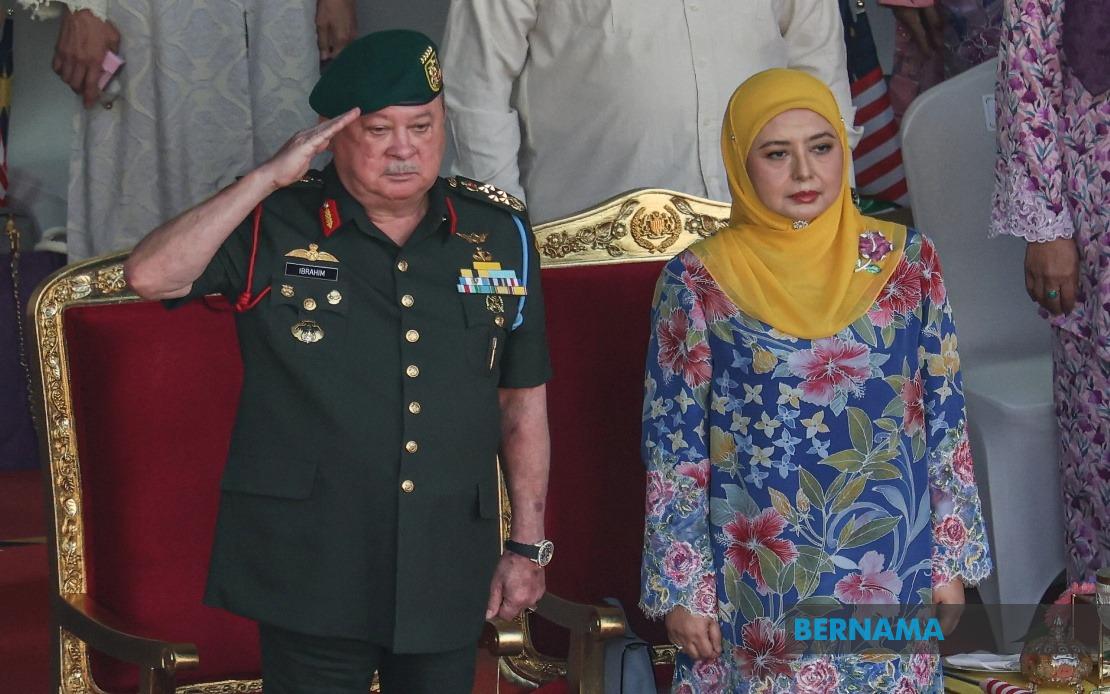
At 8 am sharp, Sultan Ibrahim and Raja Zarith Sofiah arrived at the royal stage, signalling the formal commencement of the day's principal ceremonies. The monarchs' entry was marked by a striking airborne display as five military helicopters executed a coordinated flypast while trailing the Jalur Gemilang, a visual spectacle that captured the pageantry integral to Malaysia's democratic traditions. The simultaneous performance of Negaraku and "Hormat Diraja" created an emotionally resonant opening that set the ceremonial tone for the hours ahead.
The gathering encompassed the nation's political hierarchy and diplomatic corps, with Deputy Prime Minister Datuk Seri Dr Ahmad Zahid Hamidi, Cabinet ministers including Communications Minister Datuk Seri Fahmi Fadzil (who chairs the 2026 National Day and Malaysia Day celebration committee), alongside foreign envoys and international dignitaries. This cross-section of attendees symbolised Malaysia's dual identity as both a proud sovereign nation and an engaged participant in the regional and global community, underscoring that National Day celebrations extend beyond domestic commemoration to reinforce international relationships.
The formal ceremony progressed through rituals that have anchored Malaysian National Day observances for decades. Following Negaraku's rendition, the 41st Battery of the Royal Artillery Regiment (Ceremonial), commanded by Major Hafizan Mat Ghani, executed a 14-gun salute as the Jalur Gemilang was ceremonially raised, with each shot symbolising one of Malaysia's states. This artillery salute, a convention borrowed from Westminster parliamentary traditions, reinforces the nation's democratic heritage while adding gravitas to the flag-raising moment.
The recitation of the Rukun Negara introduced a unifying spiritual dimension to the proceedings, transcending the military pomp and political ceremonies. Led by Malaysian Fire and Rescue Department Deputy Commissioner Datuk Abdul Razak Muda and performed alongside 69 uniformed firefighters representing the nation's age, this moment carried particular resonance given JBPM's frontline role in protecting Malaysian lives. The inclusion of sign language interpreter Nur Alyanatasha ensured the recitation remained inclusive, enabling deaf and hard-of-hearing Malaysians to participate meaningfully in this foundational civic moment.
The climactic seven-fold cry of "Merdeka" that followed the Rukun Negara recitation remains the most emotionally charged instant of National Day proceedings nationwide. At Dataran Putrajaya, the chant reverberated across the expansive plaza as hundreds of thousands of Malaysians simultaneously raised miniature national flags, a grassroots assertion of collective identity that transcends the political machinery surrounding the formal ceremonies. This participatory dimension transforms National Day from a top-down governmental observance into a genuine expression of popular patriotism.
For Malaysian audiences and the Southeast Asian region, this year's celebrations carried particular significance in their emphasis on inclusive prosperity through the "Malaysia MADANI" theme. This framing addresses contemporary concerns among Malaysians about economic inequality, social cohesion, and equitable development—preoccupations that resonate throughout Southeast Asia as nations grapple with post-pandemic recovery and technological disruption. By anchoring National Day messaging around shared wellbeing rather than nationalist triumphalism, the government signalled responsiveness to citizen anxieties while reasserting the foundational social contract underlying Malaysian independence.
The success of the 2026 National Day celebrations at Dataran Putrajaya reflects broader patterns in how modern Malaysia calibrates patriotic expression. Unlike some nations where National Day commemorations have become contested political terrain, Malaysia's observances have evolved to emphasise inclusive representation—evident in the deliberate inclusion of sign language interpretation, the symbolic deployment of ordinary firefighters alongside state apparatus, and the multi-ethnic composition of crowds. This gradualist approach to nation-building, carried forward across decades since 1957, distinguishes Malaysia's path within Southeast Asia and continues shaping how successive generations understand their relationship with the nation.
As Malaysians reflected on 69 years of independence amid the charged atmosphere of Dataran Putrajaya, the celebratory mood carried implications extending beyond August 31. The ability to marshal such large, diverse gatherings around shared patriotic themes demonstrates social capital that many developing democracies struggle to maintain. For Malaysia and its Southeast Asian neighbours facing pressures toward polarisation and fragmentation, the Merdeka commemoration served as annual reminder that inclusive national narratives remain achievable and worth defending through deliberate institutional commitment.

