The Malaysian government's Menu RAHMAH initiative continues to gain traction among food industry players, with Domestic Trade and Cost of Living Deputy Minister Datuk Dr Fuziah Salleh confirming that 3,210 food and beverage establishments have registered as participating operators as of July this year. The programme, designed to alleviate the financial pressures facing Malaysian households, demonstrates growing willingness among food business owners to collaborate with government efforts aimed at stabilising living costs across the nation.
The diversity of participating venues underscores the programme's broad appeal and accessibility. Food stalls and food court operators comprise the largest segment of participants with 1,016 registrations, reflecting the significant role of informal dining establishments in Malaysia's food landscape. Beyond these, the initiative has attracted traditional restaurants, independent hawkers, mobile food trucks, and bazaar operators, creating a multifaceted network of affordable dining options that reaches consumers across urban and rural settings. This spectrum of participation suggests the programme has successfully bridged the gap between government policy objectives and commercial interests within the food service sector.
Fuziah emphasised that Menu RAHMAH represents a long-term government commitment rather than a temporary relief measure, signalling to both industry stakeholders and consumers that price stability in the food sector remains a sustained policy priority. This positioning is significant in the Malaysian context, where food costs constitute a substantial portion of household budgets, particularly for lower and middle-income families. By framing the initiative as a permanent fixture of government support rather than an emergency response, authorities aim to build business confidence in the programme's continuity and encourage further merchant participation.
The Ministry of Domestic Trade and Cost of Living has strategically prioritised high-demand locations, with particular attention directed toward Rest and Service Areas along Malaysia's highways. These locations serve millions of travellers annually, representing a critical touchpoint for reaching individuals beyond their home constituencies. The decision to expand Menu RAHMAH into R&R facilities reflects an understanding that cost-of-living pressures affect consumers regardless of location, and that strategic placement maximises the programme's impact across diverse demographics and geographic regions.
Promotion efforts have been amplified through the 'Jom Cari Menu RAHMAH' campaign, a public engagement initiative designed to raise awareness and encourage patronage. The Ministry continues engaging with traders' associations, industry groups, and individual operators to expand menu variety and geographic coverage. This collaborative approach harnesses market mechanisms and business incentives rather than relying solely on government mandates, creating a more sustainable ecosystem where participation stems from mutual benefit rather than regulatory obligation.
Complementing Menu RAHMAH is the MADANI RAHMAH Sales Programme, which has demonstrated exceptional performance against its targets. Through July 2026, the PJRM had been implemented 19,322 times, surpassing the annual target of 17,500 implementations and generating over 25 million transactions nationwide. This extraordinary uptake suggests substantial demand for subsidised essential goods and indicates that government pricing interventions effectively address consumer purchasing patterns and financial constraints.
The PJRM initiative delivers savings ranging from ten to thirty percent compared with prevailing market prices, making essentials substantially more affordable for budget-conscious households. The programme encompasses a carefully curated selection of necessities including poultry, seafood, eggs, cooking oil, flour, rice, fresh produce, and household items—categories representing core household expenditures. By targeting these fundamental goods, the government directly reduces the financial burden on families struggling with inflation and wage stagnation.
Geographic reach has been deliberately structured to maximise accessibility. The PJRM operates across all 600 state constituencies and 40 Federal Territories zones, with implementation focused on areas demonstrating greatest need. This targeted distribution strategy prevents resources from being dispersed across affluent regions while ensuring vulnerable communities receive adequate support. The expansive geographic footprint reflects a comprehensive approach to addressing regional inequality in access to affordable goods.
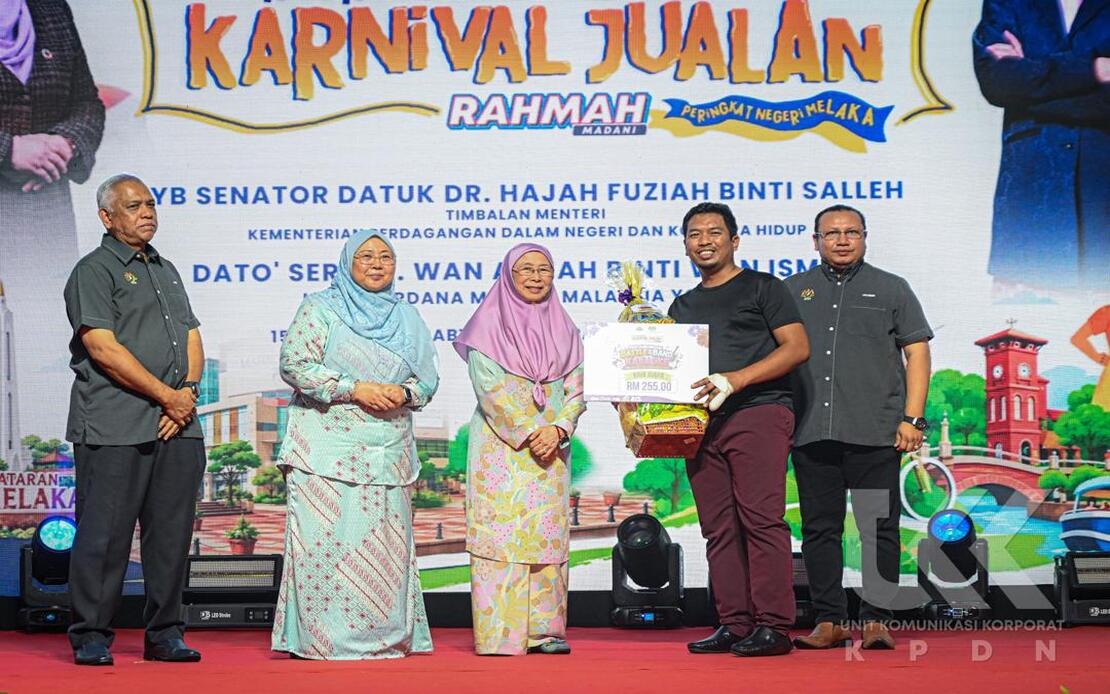
The Ministry leveraged the recently concluded Melaka KPDN Mini Carnival to showcase these cost-of-living initiatives through integrated experiential programming. The event consolidated multiple government programmes under a single umbrella, enabling residents to engage with both Menu RAHMAH and PJRM while accessing direct advisory services and business networking opportunities. Twenty-seven traders participated in offering discounted goods, while complementary activities including competitions and an electronic sports tournament curated with Todak diversified the event's appeal across age groups and interests.
Attendance figures underscored the initiatives' resonance with the public. Nearly 3,000 visitors attended the first day alone, with expectations of sustained or growing visitor numbers through the carnival's conclusion. This enthusiastic response reflects not merely curiosity but genuine appreciation for tangible government support addressing household financial pressures. For Malaysian policymakers, such attendance metrics represent validation that cost-of-living interventions enjoy popular support and effectively connect government action with lived consumer experience.
The expanding Menu RAHMAH and PJRM ecosystem carries broader implications for Malaysia's economic policy framework. These programmes demonstrate the government's commitment to market-based interventions that work through existing supply chains rather than attempting supply-side transformation or price controls. By incentivising merchant participation and directly subsidising consumer transactions, the approach maintains market functionality while reducing financial strain on households—a delicate balance increasingly critical as inflation pressures persist across Southeast Asia.
The programmes' evolution reflects learning from earlier cost-of-living initiatives. The emphasis on sustainability, geographic coverage, program diversification, and merchant engagement suggests sophistication in programme design informed by implementation experience. As other Southeast Asian nations grapple with similar inflation and affordability challenges, Malaysia's approach offers a model emphasising collaborative partnerships and consumer accessibility rather than top-down mandates or supply rationing.

