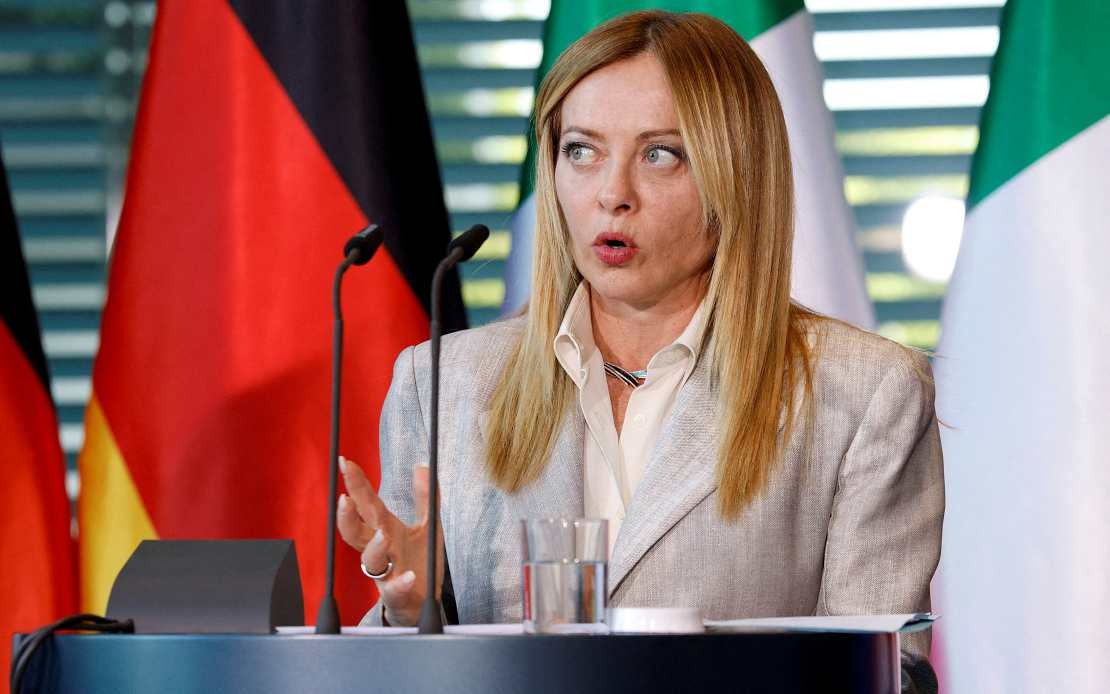
Italian Prime Minister Giorgia Meloni has launched a bold initiative to reshape how the European Union handles irregular migration, proposing the establishment of migrant return and processing hubs in non-EU nations as a centralized response to the continent's ongoing border pressures. The proposal, which will feature prominently during this week's informal meeting of EU home affairs ministers, represents an escalation of Meloni's approach to migration management and reflects growing frustration among member states over uncontrolled movements of people across European borders. Interior Minister Matteo Piantedosi will present Italy's case at the gathering, signalling the high priority Rome places on gaining consensus for this controversial strategy.
The timing of Meloni's initiative is no coincidence. The recent migration crisis in Ceuta, the Spanish autonomous city perched on Morocco's northern coast, has dramatically illustrated the scale and speed of irregular cross-border movements. In late July, the enclave of roughly 85,000 residents experienced an extraordinary surge when approximately 60,000 migrants entered the city within a single 24-hour period, overwhelming local infrastructure and forcing Spain to deploy additional police, Civil Guard units, and military personnel to manage the situation. This incident has galvanized EU member states to seek more robust solutions to prevent similar humanitarian crises at their own borders.
Meloni's proposal hinges on establishing agreements with third countries modelled directly on Italy's existing arrangement with Albania. Rome is targeting the conclusion of such agreements by year's end, with the first offshore processing centres potentially opening in 2027. The financial burden would largely fall on the European Union itself rather than individual nations, a key selling point designed to broaden support among member states already stretched by migration pressures. The strategy deliberately mirrors successful diplomatic initiatives currently underway with African nations, particularly Rwanda and Uganda, which have proven willing to engage in such arrangements with European governments. Denmark, Austria, the Netherlands, and Germany are leading the diplomatic charge in advancing similar bilateral negotiations.
International backing for the initiative is substantial. Danish Prime Minister Mette Frederiksen has publicly endorsed the approach, while 22 EU countries have formally written to European Commission President Ursula von der Leyen and European Council President Antonio Costa requesting consideration of new protective mechanisms against irregular migration. Greece, facing its own significant migration challenges, has similarly aligned itself with the proposal and identified 2027 as the target year for launching experimental operations. This broad coalition reflects a fundamental shift in European migration policy toward externalization—moving processing and detention operations beyond EU jurisdiction to reduce irregular arrivals on European soil.
Italy's existing migrant centre operations abroad provide both a blueprint and a cautionary tale. The country currently operates processing facilities in non-EU territories under its own jurisdiction, handling asylum applications while facilitating detention and expulsion of undocumented migrants. However, the practical implementation has faced substantial obstacles. Italian courts have repeatedly intervened to prohibit migrant detention, ordering individuals returned to Italian territory and challenging expedited border procedures even for citizens of designated safe countries. This judicial oversight reflects fundamental tensions between executive migration control ambitions and Italy's constitutional protections.
The Albania operation itself demonstrates the difficulties inherent in this approach. Between May 2025 and mid-July 2026, merely 685 migrants were transferred to the Albanian facility, yet fewer than 15 percent of these individuals were ultimately repatriated. The outcome reveals a significant gap between policy intentions and practical results, raising questions about the effectiveness of the proposed expansion. Operating costs prove similarly sobering: maintaining the Gjader centre in Albania during 2025 alone required an estimated €50 million, or approximately US$57.67 million—a substantial investment for relatively modest numbers of processed migrants.
For Malaysia and Southeast Asian nations monitoring European migration trends, the Italian initiative carries several analytical implications. The externalization model represents a significant shift in developed nations' approaches to migration management, potentially influencing policy discussions within ASEAN and among countries in the region managing their own transit and destination migration challenges. The proposal demonstrates how wealthier nations increasingly seek to shift migration costs and processing burdens to poorer countries, a dynamic that may eventually extend to Asian contexts as development disparities persist.
The proposal also reveals persistent tensions between securing borders and respecting international legal obligations. Meloni's strategy aims to process asylum claims outside EU territory, potentially circumventing some protective mechanisms embedded in European law. Similar approaches in Asia—particularly in Southeast Asia where irregular maritime migration remains significant—could face comparable legal and humanitarian scrutiny. The success or failure of Italian offshore processing will likely influence regional approaches to managing transnational migration flows.
Moreover, the initiative underscores how irregular migration has become a central organizing principle in European electoral politics. Meloni's government derives significant domestic political capital from hardline migration positions, and expanding offshore processing centres allows her government to claim tangible progress on a core campaign promise. This political dimension parallels migration debates across Southeast Asia, where public anxiety over border control and demographic change frequently drives electoral outcomes and policy shifts.
The Ceuta crisis specifically highlights how migration patterns can shift rapidly and unpredictably. Morocco's apparent decision to facilitate the crossing suggests that transit nations retain substantial leverage over European border security, a dynamic equally relevant to Southeast Asian nations managing irregular movements. When Moroccan authorities allowed the massive influx into Ceuta, they demonstrated how migration can be weaponized as a negotiating tool—a pressure point that Southeast Asian transit nations similarly possess.
Looking forward, the success of Meloni's proposal depends on concluding binding agreements with third countries willing to accept processing operations on their soil. Rwanda and Uganda's advanced negotiations indicate that financial incentives and development assistance can motivate participation, yet such arrangements remain politically contentious in recipient countries. Public opposition in Uganda and Rwanda to hosting processing facilities reflects broader concerns about being treated as repositories for wealthy nations' migration problems—concerns that would likely intensify if the model expands beyond Africa.

