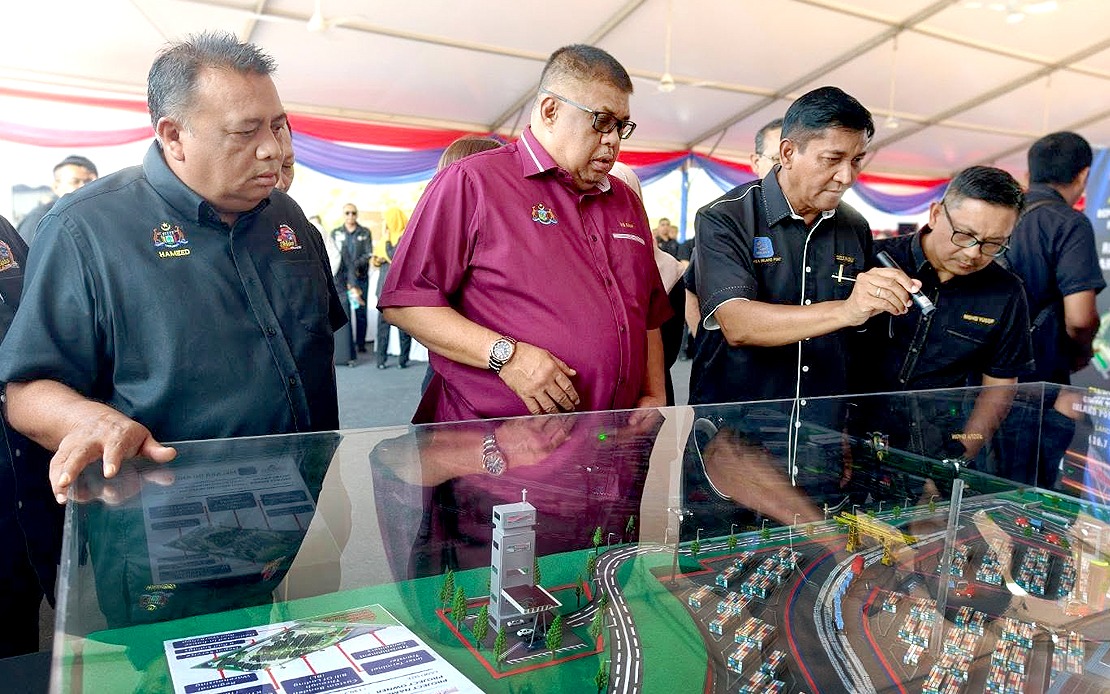
The Melaka government has unveiled plans to build a 12-kilometre road valued at RM129 million, creating a direct corridor between Kuala Linggi International Port (KLIP) and Ayer Molek via Kuala Sungai Baru. The infrastructure project, announced by State Public Works, Infrastructure, Public Facilities and Transport Committee chairman Datuk Hameed Mytheen Kunju Basheer, represents a strategic initiative to consolidate Melaka's position as a competitive logistics hub within Malaysia's port ecosystem.
The new thoroughfare will run through the Melaka Inland Port (MIP) area, a crucial development that aims to streamline cargo movements across interconnected port facilities. By integrating KLIP, MIP, and surrounding port networks into a cohesive transport corridor, the state seeks to eliminate current inefficiencies that force vehicles and freight to navigate circuitous routes. This design consideration signals recognition that modern logistics demand seamless inter-port connectivity rather than isolated facility operations.
Currently, the journey between these key nodes spans approximately 28 kilometres. The proposed road would slash this distance to roughly 12 kilometres, fundamentally restructuring supply chain economics for businesses operating within Melaka's port ecosystem. For trucking companies, warehousing operators, and freight forwarders, such distance reduction translates directly into fuel savings, reduced labour hours, and improved turnaround times—competitive advantages essential in Southeast Asia's increasingly crowded logistics market.
The initiative carries particular significance for Malaysia's broader port development strategy. As Port Klang and other peninsular ports face capacity pressures, Melaka's multi-port infrastructure presents an alternative destination for cargo operations. Enhanced road connectivity between KLIP and MIP could redirect substantial shipping volumes toward these facilities, distributing maritime traffic more evenly across the country and potentially easing congestion at traditional bottlenecks.
According to state officials, the Works Ministry is currently advancing the design phase, with competitive procurement processes scheduled for 2025. Contractor appointment and formal tender procedures will follow, positioning the project for construction commencement within a realistic timeframe. This staged approach reflects standard Malaysian infrastructure development practices, though completion timelines extending toward 2028-2029 suggest implementation may face the usual delays common in large-scale road projects.
Parallel initiatives underscore Melaka's comprehensive port-logistics modernisation agenda. The government simultaneously plans road widening work from Tangga Batu to Sungai Udang, which feeds into Tanjung Bruas Port, another significant facility within the state's port network. These complementary projects demonstrate strategic thinking about systemic connectivity rather than addressing isolated bottlenecks.
Another planned six-kilometre road stretching from Telok Gong through Kampung Pulau to Paya Lebar, budgeted at RM49 million, will create additional pathways linking these peripheral areas to MIP. The route's design deliberately avoids traditional villages, addressing both operational efficiency and community impact concerns—a consideration increasingly important in Malaysian infrastructure planning as projects face growing local opposition.
For the Paya Lebar to Kampung Pulau segment, the project has advanced to quotation stages, while the Kampung Pulau to Telok Gong alignment remains in preliminary design phases. This staggered advancement suggests portions may be completed ahead of the broader 2028-2029 timeline, potentially allowing phased operational benefits before the entire integrated network becomes fully functional.
The investment reflects recognition that Melaka's geographic position—proximate to major regional shipping lanes and strategically positioned relative to Peninsular Malaysia's industrial heartland—warrants modern logistics infrastructure. As Southeast Asian trade intensifies and supply chains become increasingly complex, ports without efficient inland connections risk losing competitiveness to better-integrated competitors.
For Malaysian businesses engaged in import-export activities, these infrastructure developments carry tangible implications. Reduced shipping costs through port facilities, faster vessel turnaround times, and improved last-mile delivery options enhance overall competitiveness in regional and global markets. Manufacturing clusters in central and southern Peninsular Malaysia would particularly benefit from reliable port access via efficient road networks.
The RM178 million combined investment in these road projects (RM129 million plus RM49 million) represents substantial public capital allocation toward logistics infrastructure. Such commitment suggests Melaka's state government views port-logistics development as crucial for economic diversification and growth, particularly given the state's historical reliance on tourism and manufacturing.
These infrastructure enhancements also position Melaka advantageously within potential future port consolidation scenarios. As Malaysian ports face competition from increasingly sophisticated regional competitors in Singapore, Thailand, and Vietnam, differentiation through integrated logistics ecosystems becomes essential. By linking multiple port facilities through efficient road networks, Melaka creates value propositions extending beyond individual port operations.
The projects await implementation during a period of regional supply chain restructuring, where companies increasingly evaluate port alternatives and logistics pathways. Melaka's coordinated infrastructure development could capture freight volumes currently flowing through established routes, benefiting state revenues and employment while contributing to national logistics resilience.

