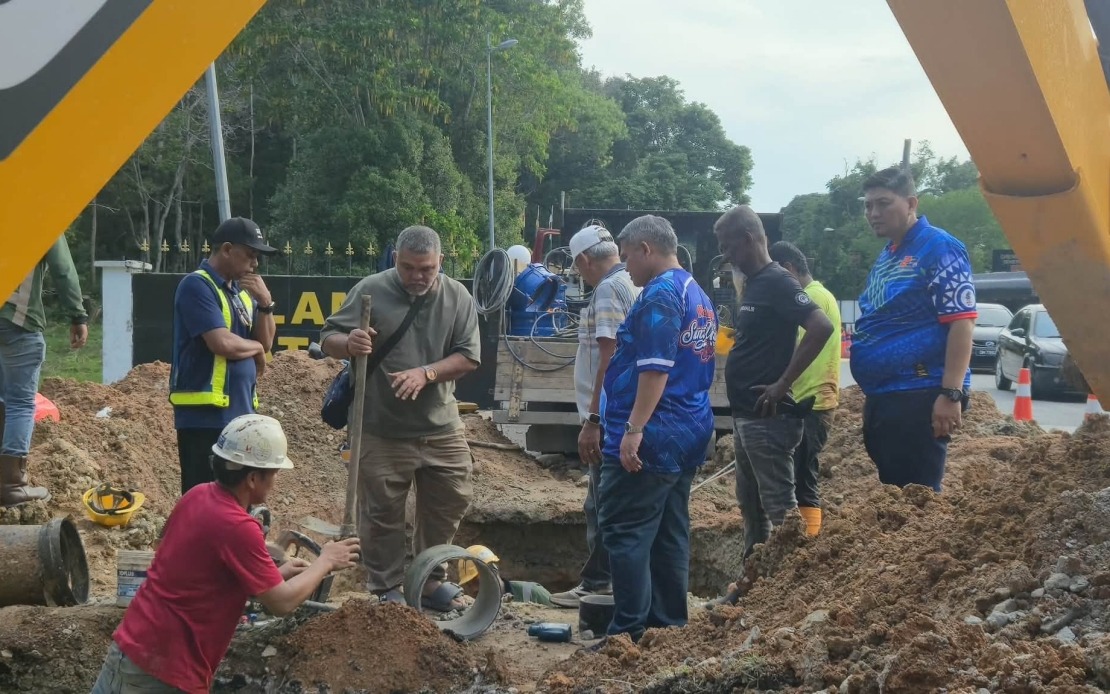
Melaka's government has put forward a proposal to install a temporary water tank at Kem Terendak in Sungai Udang as an interim solution to the military camp's ongoing water supply problems. The initiative, spearheaded by Syarikat Air Melaka Berhad (SAMB), represents the state's attempt to provide immediate relief while longer-term infrastructure improvements are underway. This move underscores the severity of the water crisis affecting the camp and the urgency with which state authorities are attempting to resolve it.
The proposal comes as Datuk Rais Yasin, the senior exco member overseeing housing, local government, drainage, climate change and disaster management, acknowledged that a comprehensive solution will take considerable time. The Development and Upgrade of the Water Reticulation System project at Kem Terendak is not expected to be fully operational until April 2028, leaving a significant gap during which residents and military personnel will continue to experience disruptions. This extended timeline has prompted the state government to explore stopgap measures that can provide tangible relief in the near term.
However, the implementation of the temporary tank faces an important bureaucratic hurdle. The proposal requires formal approval from the Ministry of Defence, as Kem Terendak falls under federal jurisdiction and the purview of Mindef. Rais, who represents the Sungai Udang constituency, explained that while the water infrastructure technically falls under the Public Works Department and Mindef's oversight, the state government remains committed to assisting affected residents and military families. This dual responsibility situation reflects the complex interplay between state and federal authorities when addressing infrastructure problems in military installations.
The water crisis came to a head when a significant pipe burst along Jalan Kampung Payasum in Sungai Udang disrupted supplies to approximately 2,000 military personnel, numerous households, and five educational institutions within the camp. Among the affected facilities is a MARA Junior Science College, highlighting how the water shortage extends beyond residential areas to impact educational services. The disruptions, which had persisted for five days at the time of Rais's statement, prompted the state government to deploy an emergency response involving mobile water tankers and temporary storage solutions.
To address the immediate crisis, SAMB has been delivering 25,000 gallons of water daily using a fleet of 25 tanker lorries since the disruptions began. Despite this substantial emergency supply operation, Rais acknowledged that the current provision falls short of actual demand given the scale of affected populations. The disparity between supply and need illustrates the magnitude of the challenge facing the camp and underscores why temporary infrastructure improvements are necessary even as longer-term solutions are being planned and implemented.
The state authority's response has extended beyond simply delivering water to affected residents. SAMB has also distributed water containers to schools within the camp to ensure educational activities could continue with minimal disruption. This demonstrates a comprehensive approach to managing the crisis that considers not just household needs but also the operational requirements of educational institutions and military facilities. Rais issued a public apology to residents and affected families, signalling the government's acknowledgment of the inconvenience and commitment to finding solutions.
Rais outlined that repairs to the burst pipe were expected to be completed by the evening of his statement, though full restoration of normal water supply would require an additional one to two days. This phased restoration approach reflects the complexity of repairing major infrastructure in an area serving such a large population. The temporary nature of this repair underscores why the state government believes a more permanent solution through infrastructure upgrades is essential to prevent similar crises in the future.
The handover of two 5,000-litre water tanks from SAMB to Kem Terendak represented a symbolic commitment to addressing the crisis, with the ceremony attended by the Terendak Garrison Headquarters commanding officer Lt Col Annuar Kaliman and SAMB chief executive officer Datuk Mohd Saleh Jusman. These fixed storage facilities, while modest in capacity, provide a buffer against sudden disruptions and demonstrate a multi-layered approach combining mobile tanker deliveries, permanent storage facilities, and longer-term infrastructure development.
For Malaysian readers concerned with infrastructure resilience, this situation at Kem Terendak illustrates broader challenges facing urban water management systems. The burst pipe incident and the resulting supply disruption affect not just civilian populations but also military operations and educational institutions, demonstrating the cascading impacts of water infrastructure failures. The state government's response reveals both the limitations of existing systems and the complexity of coordinating responses across state and federal jurisdictions.
The proposal for a temporary tank also highlights how state governments can sometimes take initiative in addressing federal infrastructure problems, even when jurisdictional boundaries technically place responsibility elsewhere. SAMB's involvement demonstrates a pragmatic approach where state water authorities work alongside federal stakeholders to implement solutions. This collaborative model, assuming Mindef approval is obtained, could serve as a template for addressing similar infrastructure challenges in other military installations across Malaysia.
Looking ahead, the timeline for completing the comprehensive water reticulation upgrade by April 2028 is crucial for preventing recurrent disruptions. Until that date arrives, the temporary tank and mobile tanker service will likely remain essential components of the water management strategy at Kem Terendak. The success of this interim arrangement will depend on identifying an appropriate location for the tank, securing Defence Ministry approval, and maintaining consistent funding for ongoing mobile water deliveries.
For military personnel and families stationed at Kem Terendak, the government's proposals offer hope that relief measures are being actively pursued, even as the longer-term solution remains several years away. The incident serves as a reminder that military installations, while falling under federal oversight, are integrated into state-level water distribution networks and that effective crisis management requires cooperation between different levels of governance. Residents and families affected by the disruption can take some assurance that multiple strategies are being deployed to mitigate their hardship.

