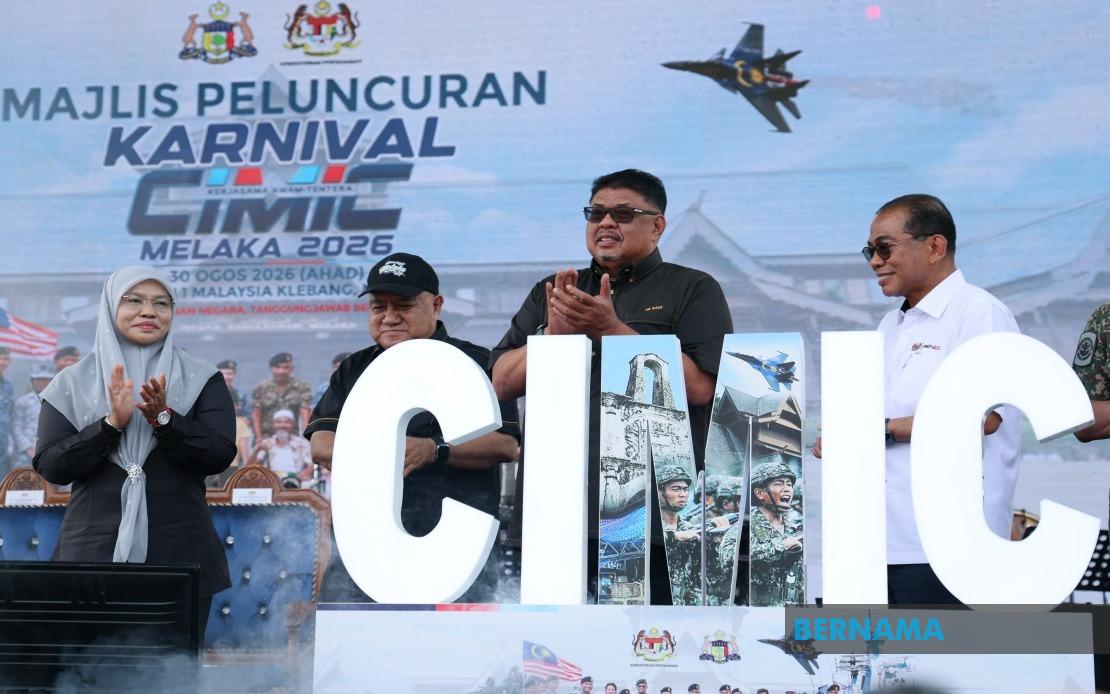
Defence Minister Datuk Seri Mohamed Khaled Nordin has signalled the government's willingness to relocate the Langkawi International Maritime and Aerospace Exhibition (LIMA) to Melaka, contingent on substantial infrastructure investment and capacity planning. The announcement, made during the Civil-Military Cooperation Carnival in Klebang, marks a strategic shift in how Malaysia approaches one of its most significant defence and aerospace showcases, potentially reshaping the biennial event's future direction.
The proposal centres on leveraging Melaka's geographic advantages and transportation connectivity. Specifically, officials point to the Klebang area as a prime candidate for development, given its proximity to Batu Berendam Airport and accessible deepwater berthing facilities for maritime vessels. Unlike Langkawi, which presents logistical constraints for attendees from across the peninsula, a Melaka-based LIMA would theoretically attract broader national participation and reduce travel barriers for industry professionals, government officials, and the general public interested in Malaysia's defence capabilities.
Mohamed Khaled acknowledged the substantial financial implications of such a transition. The Defence Ministry would need to coordinate with relevant federal agencies to assess infrastructure gaps, including exhibition facilities, accommodation capacity, transportation networks, and security arrangements. The minister framed this not as an imminent replacement but rather as a contingency strategy should Langkawi eventually prove unsuitable as the permanent host venue. This measured approach reflects awareness that LIMA has established brand recognition and stakeholder expectations tied to its current location.
Melaka Chief Minister Datuk Seri Ab Rauf Yusoh expressed the state government's openness to hosting the exhibition while emphasising the need for preliminary evaluation. His statement underscores the complexity of such decisions at the federal-state level, where economic benefits, operational feasibility, and resource allocation must be carefully weighed. The Chief Minister's caveat that discussions would occur at the federal level suggests LIMA's future venue remains subject to intergovernmental deliberation rather than unilateral decision-making.
The Melaka proposal gained traction following the participation of six Royal Malaysian Navy ships in the state's 2024 National Day celebrations, a demonstration of how naval presence and maritime infrastructure could support large-scale military exhibitions. This practical experience appears to have convinced officials that Melaka possesses inherent capabilities for hosting defence-focused international events. The visible maritime component highlighted Melaka's existing assets and suggested that incremental infrastructure enhancements could make the state competitive as an exhibition host.
From a regional perspective, relocating LIMA to Melaka could enhance Southeast Asia's perception of Malaysia's defence modernisation initiatives. Melaka's historical significance as a maritime trading hub adds symbolic weight to hosting an aerospace and maritime exhibition, reinforcing Malaysia's positioning as a regional defence innovator. The move would also distribute economic benefits beyond Langkawi, potentially creating employment and tourism opportunities across Melaka's hospitality, transport, and service sectors during exhibition periods.
The Defence Ministry's broader strategy appears to involve decentralising major defence events and capability demonstrations. The Civil-Military Cooperation Carnival itself, held in Klebang, exemplifies efforts to bring armed forces engagement into state-level venues rather than concentrating such activities in the federal capital or isolated islands. This democratisation of defence engagement reflects governmental intent to build public awareness of military capabilities and foster civil-military understanding beyond traditional power centres.
Industrial considerations also underpin this exploration. Malaysia's defence and aerospace sectors, including local manufacturers and international partners participating in LIMA, would benefit from improved accessibility. A centrally located Melaka venue could facilitate greater participation from companies based in the Klang Valley, Selangor, and other western corridor states, potentially enhancing commercial outcomes and technology transfer opportunities. The exhibition serves as a crucial marketplace for defence procurement, research partnerships, and skill development within Malaysia's growing aerospace industry.
However, the transition faces practical hurdles. Langkawi has invested decades in establishing LIMA's infrastructure, brand recognition, and logistical frameworks. Disrupting this established ecosystem would require significant capital expenditure and logistical replanning. Additionally, Langkawi's economy has become partially dependent on LIMA's biennial visitor influx and associated spending. Any relocation would necessitate compensation measures or alternative economic development strategies for the island state.
The Defence Ministry's exploration also reflects broader Malaysian governance trends toward regional dispersal of national events and infrastructure investment. Similar patterns appear in decisions to decentralise government functions, establish growth centres in multiple states, and distribute major conferences and exhibitions beyond Kuala Lumpur. Melaka's status as a UNESCO World Heritage Site and established tourism destination positions it advantageously within this framework, though security and crowd management considerations remain paramount for defence-focused exhibitions.
Stakeholder consultation will prove essential moving forward. Beyond federal-state coordination, the Defence Ministry would need to engage Langkawi authorities, private sector participants in LIMA, maritime and aerospace companies, and international defence agencies already accustomed to the Langkawi format. Such comprehensive engagement would extend any final decision timeline significantly, suggesting that any transition would occur gradually rather than abruptly.
Ultimately, the Melaka proposal represents strategic thinking about Malaysia's long-term defence exhibition strategy. Rather than immediately committing to relocation, the government is preserving optionality while recognising potential advantages of geographic repositioning. Whether this exploration materialises into actual relocation depends on cost-benefit analyses, stakeholder consensus, and the government's capacity to mobilise requisite investment—factors that will likely occupy defence ministry deliberations over the coming years. For Melaka and Malaysia's defence sector, the proposal opens possibilities for enhanced regional participation in one of Asia's most significant maritime and aerospace showcases.

