Melaka has moved decisively to anchor its approach to environmental stewardship through a combination of statutory protections and technological modernisation. Speaking at the National Landscape Day 2026 celebration, Chief Minister Datuk Seri Ab Rauf Yusoh outlined how the state is leveraging both legal instruments and digital innovation to transform the way trees and green spaces are managed, creating a model that could offer valuable lessons for other Malaysian states grappling with balancing development and environmental preservation.
The foundation of this approach rests on the Tree Preservation Order established under the Town and Country Planning Act 1976 (Act 172), a mechanism designed to protect significant tree specimens that contribute substantially to Melaka's visual character and ecological value. This legal framework operates as a safeguard, preventing the indiscriminate removal of trees and ensuring that development decisions account for arboricultural considerations. Complementing this protective legislation, the Melaka State Landscape Guidelines introduced in 2022 provide implementing agencies, local authorities, developers and other stakeholders with comprehensive direction on executing landscape projects in ways that are orderly, aesthetically distinguished and environmentally sound. The guidelines essentially operationalise the state's vision by translating abstract commitments to sustainability into practical design and management standards.
Perhaps the most innovative aspect of Melaka's strategy is the MyTrees@Melaka system, a state-developed digital platform that fundamentally recasts tree management from a reactive, decentralised function into a coordinated, data-driven operation. Since its inception in 2017, this system has accumulated an inventory of 70,753 tree records accumulated through systematic collaboration between Melaka's four local authorities and the state Forestry Department. The scale of this dataset underscores the systematic effort required to establish baseline information about the state's tree canopy. By digitising tree records, Melaka creates multiple benefits: planners can avoid duplicative planting efforts, maintenance crews receive evidence-based guidance on which trees require attention, and policymakers gain visibility into the distribution and health of green infrastructure across municipalities.
The practical impact of this digitalisation agenda becomes apparent in Melaka's planting achievements. As of June last year, the state had successfully established 10,588 new trees. Yet what distinguishes this effort is not merely the numerical target but the commitment that each planted tree enters the MyTrees@Melaka inventory, where it is monitored and maintained according to data-informed protocols. This approach recognises that tree-planting campaigns often falter during the maintenance phase; by building systematic tracking and care standards into the programme from inception, Melaka addresses a chronic weakness in many greening initiatives across the region.
Beyond arboreal management, Melaka is channelling investment into transforming public spaces through a series of landscape projects that blend recreation, heritage preservation and ecological consideration. During the previous year, three significant initiatives came to fruition: the SDG Park at Sungai Melaka, the Kampung Felda Air Kangkung Recreation Park, and Taman Kejiranan Pulai Indah. The state is continuing this momentum with additional projects scheduled for completion this year, including the Dataran Sejarah Ayer Keroh landscape upgrade, the Ayer Keroh Art Lanai, and the Bukit Beringin Masjid Tanah MADANI Recreational Park. According to Chief Minister Ab Rauf, these projects represent a philosophy that views progress not merely as physical construction but as the deliberate creation of community spaces that enhance both environmental integrity and quality of life.
Particularly noteworthy is Melaka's pursuit of the Aspiring Melaka Geopark designation, a concept that bridges geological heritage, biological diversity, cultural assets and local identity. This initiative aims to transform Melaka's natural and cultural treasures into educational resources and tourism attractions that generate economic value for local communities while maintaining conservation standards. The geopark model, increasingly adopted internationally, demonstrates that preservation and economic development need not be antagonistic; properly managed heritage landscapes can become generators of sustainable livelihoods while protecting the very features that make them distinctive.
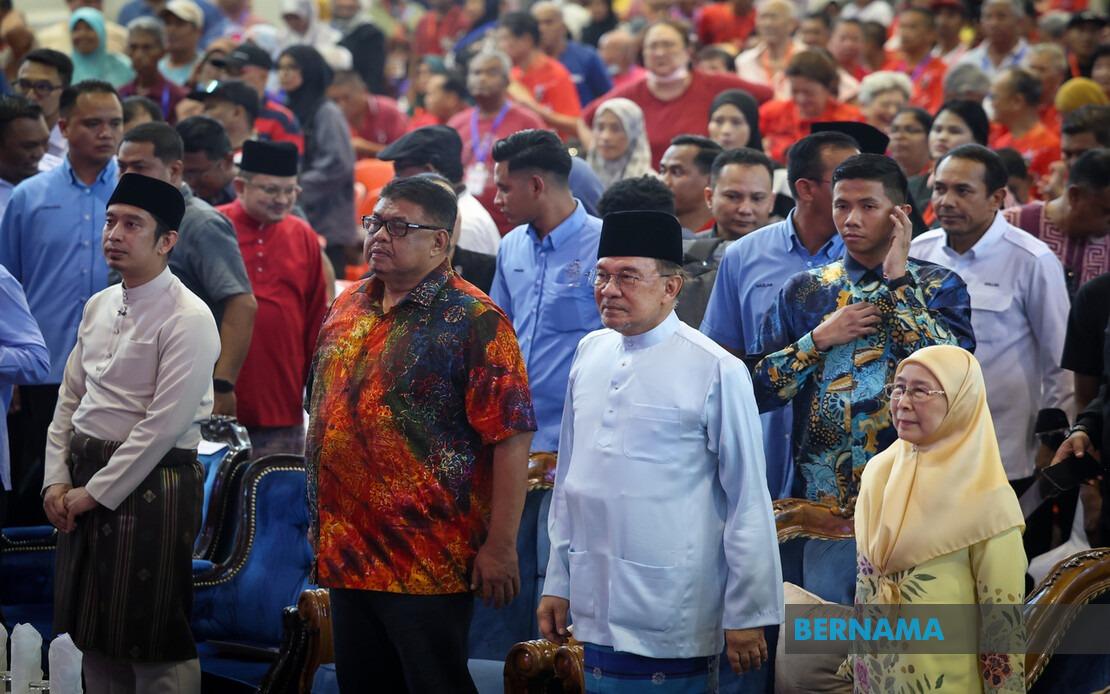
The National Landscape Day 2026 celebration, which drew nearly 3,000 participants including landscape professionals, municipal representatives, industry stakeholders, academics and enthusiasts, served as a demonstration of Melaka's commitment to positioning itself as a thought leader in the landscape sector. The event featured pavilions from twelve local authorities showcasing their respective approaches to landscape identity and innovation, essentially creating a marketplace of ideas and practices that accelerate peer learning across municipal boundaries.
For Malaysian policymakers and environmental managers, Melaka's integrated approach offers several replicable elements. The combination of statutory protection, clear planning guidelines, digital infrastructure and sustained funding for green projects creates a system more resilient than initiatives relying on any single instrument. The emphasis on data collection and systematic monitoring addresses a persistent gap in how Malaysian cities manage environmental assets. Moreover, the deliberate linking of landscape development to economic outcomes through tourism and education provides municipalities and state governments with a compelling justification for investment in green infrastructure—an argument increasingly needed as fiscal pressures mount.
Chief Minister Ab Rauf's framing of landscape development as intrinsic to progress, rather than a luxury good contingent on budget surpluses, signals a philosophical reorientation that Southeast Asian governments are gradually adopting. As urbanisation accelerates throughout the region and climate impacts intensify, states that can demonstrate that environmental stewardship and economic prosperity coexist will likely attract investment, talent and international recognition. Melaka's trajectory suggests that with adequate planning, technology adoption and cross-agency coordination, smaller Malaysian states can pioneer sustainability models that larger, more complex jurisdictions eventually scale up.
The event, officiated by Prime Minister Datuk Seri Anwar Ibrahim and attended by Housing and Local Government Minister Nga Kor Ming, underscored federal support for Melaka's initiatives and potentially signals direction for broader national policy. Whether other states will adopt comparable frameworks—particularly the MyTrees digital system and the geopark concept—remains to be seen. However, Melaka has demonstrated that moving beyond symbolic gestures toward landscape management to comprehensive, data-informed systems is both feasible and beneficial, offering a practical blueprint for a region increasingly focused on marrying development imperatives with environmental responsibility.

