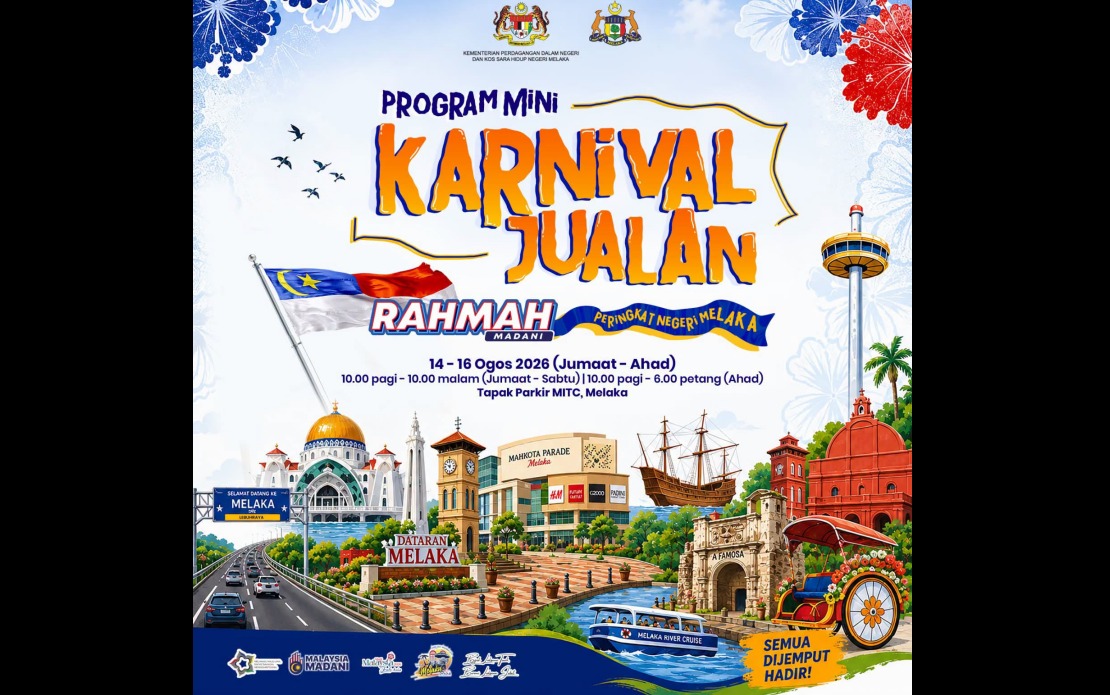
The Melaka Domestic Trade and Cost of Living (KPDN) Mini Carnival will open its doors tomorrow at the Melaka International Trade Centre (MITC), expecting to draw an audience exceeding 10,000 visitors over three days. Organised by the ministry responsible for domestic commerce and household affordability, the event represents a strategic effort to connect government programmes directly with ordinary Malaysians in a setting designed for ease of access and community engagement rather than formal bureaucratic settings.
Senator Datuk Dr. Fuziah Salleh, deputy minister at KPDN, framed the carnival as part of a broader ministry strategy to demystify its work and bring its services into spaces where families naturally gather. Rather than requiring citizens to navigate government offices or ministerial websites, this approach prioritises an environment that is relaxed, interactive, and explicitly welcoming to diverse age groups and backgrounds. This reflects a wider shift within Malaysian governance toward what officials term "people-centric" service delivery, though the practical impact of such initiatives on consumer welfare remains contested.
The centrepiece of the carnival's commercial appeal is the MADANI Rahmah Sales Programme (PJRM), a government-backed retail initiative designed to offer essential household items at significantly discounted prices. In the context of persistent inflationary pressures affecting Malaysian households since 2022, programmes of this nature carry particular weight for middle and lower-income families navigating rising food, utilities, and transport costs. The carnival provides a concentrated opportunity for shoppers to access these subsidised goods without the logistical complexity of tracking multiple retail locations or programme schedules elsewhere.
Beyond the merchandise itself, Fuziah emphasised that the carnival serves an informational purpose. Visitors will gain direct knowledge of KPDN's consumer protection frameworks, its price-monitoring mechanisms, and its enforcement activities against market manipulation. For ordinary Malaysians often disconnected from how government institutions function, such transparency can build confidence in institutional legitimacy and demonstrates tangible government action on issues ranked consistently high in public concern surveys across Southeast Asia regarding cost of living.
The carnival's programming extends well beyond retail transactions. An esports tournament co-hosted with Todak will appeal to younger demographics, while Menu Rahmah food trucks—another government affordability programme—will provide meals at subsidised rates. A children's colouring competition, live performances, and exhibitions showcasing antique vehicles and classic motorcycles create diversified entertainment options. This deliberate mixing of commercial access with family-oriented entertainment reflects modern thinking about civic engagement, where institutional messaging embeds itself within leisure rather than occupying dedicated formal time.
The breadth of activities suggests organisers recognised that attendance requires offering something beyond shopping efficiency. Local families attending for entertainment or to participate in competitions become exposed to government messaging about cost-of-living support and consumer rights in a context stripped of administrative friction. This model, increasingly adopted by state agencies across Malaysia, attempts to overcome the traditional disconnect between government programmes and community awareness, a persistent challenge particularly in states beyond the capital corridor.
Venue logistics support the carnival's ambitious 10,000-visitor projection. The Melaka International Trade Centre possesses adequate capacity and infrastructure to accommodate simultaneous retail transactions, exhibition browsing, tournament participation, and performance attendance without creating bottlenecks that would diminish visitor experience. Operating hours across the three-day period—ten hours daily on Friday and Saturday, reducing to eight hours on Sunday—accommodate working professionals while ensuring accessibility for families with school-age children.
From a policy perspective, this carnival exemplifies how Malaysian authorities increasingly use experiential and community-based approaches to publicise government initiatives rather than relying solely on digital promotion or traditional media advertising. The strategy acknowledges that awareness of programmes like PJRM, Menu Rahmah, and consumer protection services remains patchy in smaller urban and semi-urban areas, where residents may lack regular access to digital information or simply experience low engagement with government announcements through conventional channels.
The event occurs within a broader political context where cost-of-living concerns dominate public discourse and electoral calculations. By materialising government responses into tangible, accessible experiences where families can simultaneously save money and explore government services, the ministry positions itself as responsively addressing immediate household pressures. For Melaka specifically, as one of Malaysia's smaller states, such carnival events carry outsized symbolic importance in demonstrating that government attention and resources extend beyond Kuala Lumpur and major commercial hubs.
Fuziah's explicit invitation to local communities and the public to attend reflects organisational awareness that attendance remains partially discretionary. Despite the carnival's attractions and the genuine economic benefits of accessing discounted essentials, competing demands on family time and transport costs to reach MITC may deter some residents. The deputy minister's framing of carnival attendance as a civic participation opportunity attempts to reposition it from a consumer transaction into a collective community event worthy of deliberate scheduling.
The combination of retail access, entertainment, information dissemination, and family activities within a single three-day event indicates sophisticated understanding of how public engagement strategies succeed in Malaysian contexts. By removing the artificial separation between "shopping," "learning about government," and "family entertainment," the carnival creates conditions where institutional messaging becomes absorbed naturally rather than resisted as unwanted interruption. Whether this approach materially shifts public awareness of KPDN functions and cost-of-living programmes beyond the immediate carnival period will likely inform whether similar events expand to other Malaysian states.

