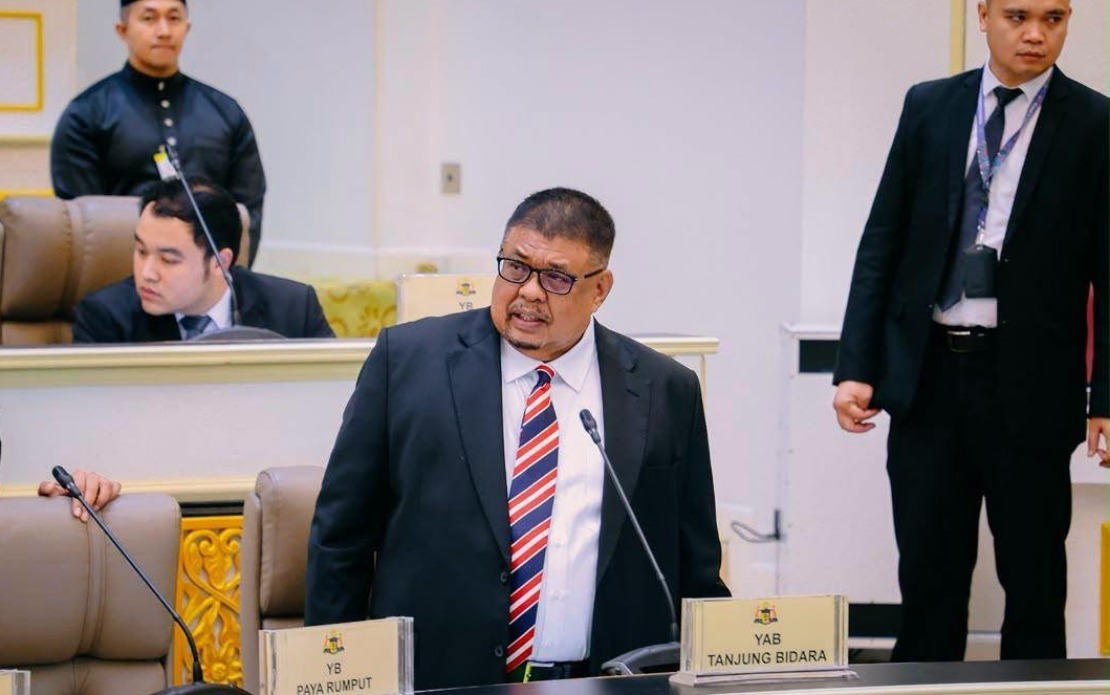
Melaka's government machinery will maintain its regular operations despite the Democratic Action Party's abrupt exit from the state administration, Chief Minister Datuk Seri Ab Rauf Yusoh declared on Monday, seeking to calm public anxieties following a sudden political realignment in the northeastern state.
The reassurance came immediately after four DAP state assemblymen—Allex Seah Shoo Chin from Kesidang, Low Chee Leong from Kota Laksamana, Leng Chau Yen from Banda Hilir, and Kerk Chee Yee from Ayer Keroh—tendered their resignations from the state government. Their departure marks a significant fracture in the coalition that had governed Melaka since 2018, raising questions about the stability of power-sharing arrangements across Malaysia's states.
The resignation followed a contentious constitutional amendment approved by the State Legislative Assembly, which would permit the appointment of state assemblymen rather than requiring them to be directly elected. The DAP's position hardened after this vote, viewing the amendment as fundamentally altering the democratic character of the legislative body and threatening the integrity of the coalition arrangement. The party's swift departure suggested deep-seated disagreements had reached an irreversible breaking point.
At a press conference held at the Seri Negeri Complex in Ayer Keroh, Ab Rauf sought to position the government as a stable, functioning institution unshaken by coalition dynamics. He pledged that service delivery, developmental initiatives, and administrative functions would proceed without disruption, signalling continuity to the civil service, business community, and potential investors. The reassurance was deliberately framed to prevent panic or uncertainty that might emerge from the unexpected political upheaval.
The Chief Minister maintained a diplomatic tone regarding the DAP's departure, refusing to demonise the party or engage in recriminatory politics. Instead, he emphasised that disagreements over governance principles need not translate into mutual antagonism, particularly when both coalitions share a fundamental commitment to Melaka's welfare. This measured response contrasts sharply with the acrimonious tone that sometimes characterises Malaysia's fractious state-level politics, where coalition breakdowns frequently spiral into public finger-pointing.
Notably, Ab Rauf acknowledged Prime Minister Datuk Seri Anwar Ibrahim's appeal for negotiations and a postponement of the resignation decision. However, he observed that such diplomatic intervention came too late, as the DAP had formalised its exit through written resignation letters submitted immediately after its own press conference. Once formal documentation had been submitted, he suggested, the space for negotiated compromise had effectively closed, regardless of higher-level political pressure.
The handling of vacant executive positions reflects pragmatism rather than panic. Rather than rushing to appoint replacements, Ab Rauf indicated that the state government would temporarily redistribute portfolios among existing administrative members. This approach avoids the spectacle of immediate replacement appointments that might provoke further controversy, while maintaining functional governance capacity. It also signals that the government views this as a temporary adjustment rather than a fundamental reconstitution of power.
Melaka's political realignment carries implications extending beyond the state itself. The coalition instability demonstrated here highlights vulnerabilities in multi-party governance arrangements across Malaysia, where different political coalitions frequently govern at state and federal levels. The DAP's withdrawal from Melaka, following its earlier exit from Perak and other states, suggests that party leaders increasingly view conditional coalition participation as preferable to being locked into power-sharing arrangements that conflict with their core governance principles.
The constitutional amendment that precipitated the DAP's departure reflects broader tensions in Malaysian politics regarding electoral legitimacy and democratic representation. The ability to appoint assemblymen rather than requiring electoral victories raises fundamental questions about the democratic mandate of state governments. For the DAP, this crossed a threshold that made continued participation untenable, particularly given the party's historical positioning as a champion of electoral democracy and accountability.
From a Malaysian governance perspective, this episode illustrates the delicate balance required for multi-party coalitions to function effectively. The Melaka situation demonstrates that symbolic and procedural matters—such as how legislators are chosen—carry weight equal to substantive policy differences. When one coalition partner views another's actions as violating foundational democratic principles, personal relationships and electoral calculations become secondary.
The broader Southeast Asian context renders Malaysia's coalition dynamics particularly significant. As the region's most established democracy, Malaysia's approach to managing coalition governance influences how other emerging democracies navigate similar challenges. The Melaka case suggests that when disagreements reach the level of constitutional interpretation, political consensus becomes difficult to maintain, regardless of economic performance or developmental achievements.
Looking forward, Melaka's administration faces the practical challenge of governing without the DAP's legislative seats while maintaining policy coherence and public confidence. The Chief Minister's reassurances about continuity will require demonstration through concrete outcomes in service delivery and development. Whether the state can maintain momentum while absorbing this political shock will test the resilience of Malaysia's devolved governance systems and the political maturity of actors at the state level.

