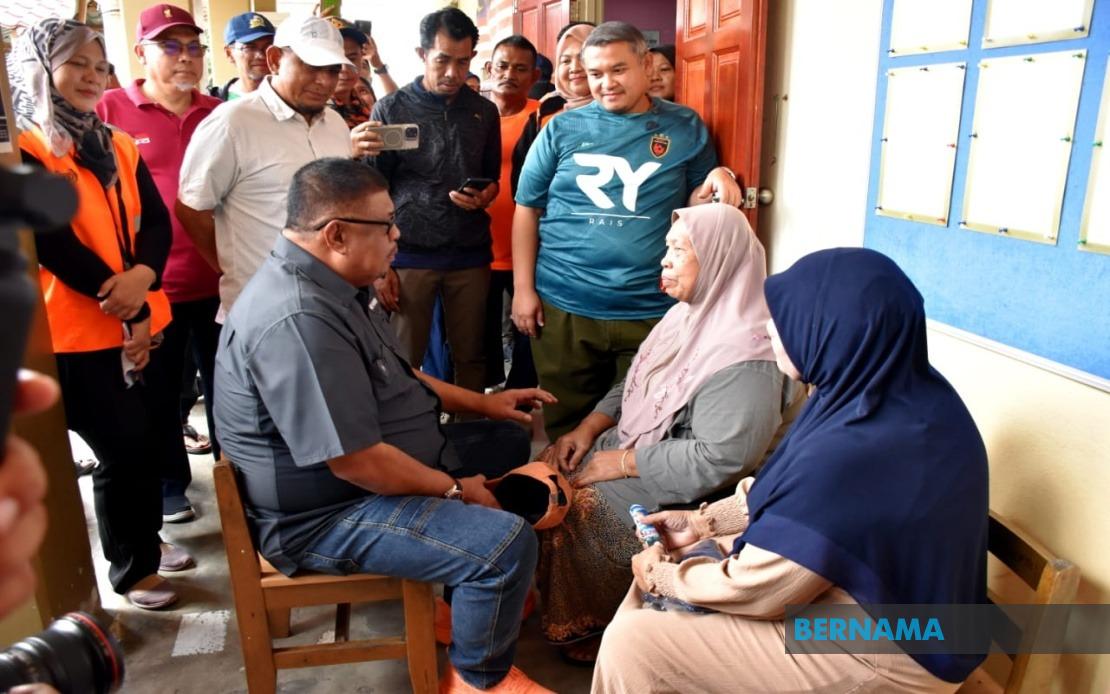
Melaka Chief Minister Datuk Seri Ab Rauf Yusoh has committed to breaking a cycle of disaster that has haunted the Tanjung Minyak community for more than 30 years. Speaking after inspecting flood victims sheltered at Sekolah Kebangsaan Tanjung Minyak 2, he vowed that the state government will undertake a comprehensive examination of all existing proposals and technical recommendations from relevant agencies to develop sustainable interventions for the chronically affected area.
The Chief Minister's pledge comes as the state grapples with one of its most severe flooding episodes in recent memory. Exceptionally intense rainfall—the heaviest recorded in over two decades—overwhelmed the region's water management infrastructure, causing retention systems to spill into nearby residential zones. The Melaka Irrigation and Drainage Department confirmed that rainfall in Melaka Tengah and Alor Gajah districts exceeded 100 millimetres by mid-afternoon, surpassing the deluge experienced during Tropical Storm Senyar late last year, underscoring the unprecedented nature of the weather event.
The scale of displacement underscores the vulnerability of residents in flood-prone areas. More than 900 individuals from approximately 300 households have been relocated to multiple relief centres across the state. Ab Rauf assured that the state government would prioritise the welfare of these families, ensuring continuous support until normalcy returns and they can safely resettle in their homes. This commitment reflects broader recognition that emergency relief must extend beyond immediate shelter to encompass sustained assistance during the recovery phase.
The Chief Minister indicated that the state will rigorously evaluate technical approaches recommended by competent agencies to address the underlying causes of recurrent inundation, particularly those related to excessive rainfall management and drainage capacity. His statement suggests an intent to move beyond reactive crisis response toward proactive infrastructure investment and long-term planning that acknowledges climate variability and extreme weather patterns likely to intensify in coming years.
Also present at the relief centre were Datuk Rais Yasin, chairman of the state's Senior Housing, Local Government, Drainage, Climate Change and Disaster Management Committee, and Halyjah Muhamad, director of the Melaka Social Welfare Department. Their attendance signals whole-of-government engagement with the issue, reflecting recognition that addressing chronic flooding requires coordination across housing, infrastructure, environmental management, and social services portfolios.
The Tanjung Minyak flooding carries broader implications for Melaka's urban development and climate adaptation strategy. The district has endured repeated inundation cycles, suggesting that either existing drainage infrastructure is inadequate for contemporary rainfall intensity, or that development patterns have altered natural water flow and retention capacity. A genuine resolution will likely demand investment in upgraded drainage systems, possible relocation of the most vulnerable settlements, and integration of climate resilience principles into all future development approvals in flood-vulnerable zones.
For Malaysian readers across the region, the Melaka situation illustrates a growing reality: monsoon patterns and extreme weather episodes are challenging drainage infrastructure designed decades ago. As urbanisation accelerates and climate conditions shift, many Malaysian municipalities face similar pressures. The Melaka case study will likely inform how other states approach flood risk assessment and mitigation strategies, making the Chief Minister's commitment to finding lasting solutions significant beyond Melaka's borders.
The coordination of relief efforts through the District Office and state government channels demonstrates institutional capacity to respond at scale. However, the presence of over 900 evacuees highlights the need for both immediate humanitarian support and medium-term recovery planning. Families displaced from their homes face psychological stress, income disruption, and potential property damage, requiring holistic assistance encompassing financial aid, housing support, and livelihood restoration.
The timing of this commitment also reflects political accountability. When communities endure the same disaster repeatedly across generations, public confidence in governance erodes. By explicitly acknowledging the 30-year history of the problem and pledging comprehensive action, the Chief Minister is signalling that the issue has reached a threshold demanding decisive intervention rather than incremental adjustments to existing systems.
Going forward, the state will need to communicate transparently with affected residents about the technical proposals under review and the timeline for implementation. Public trust depends on demonstrating that agencies have genuinely diagnosed root causes and that proposed solutions are grounded in sound engineering principles rather than symbolic gestures. The involvement of the Irrigation and Drainage Department in this process suggests technical expertise will inform decision-making, though outcomes will ultimately depend on funding availability and political will to undertake potentially disruptive infrastructure projects.

