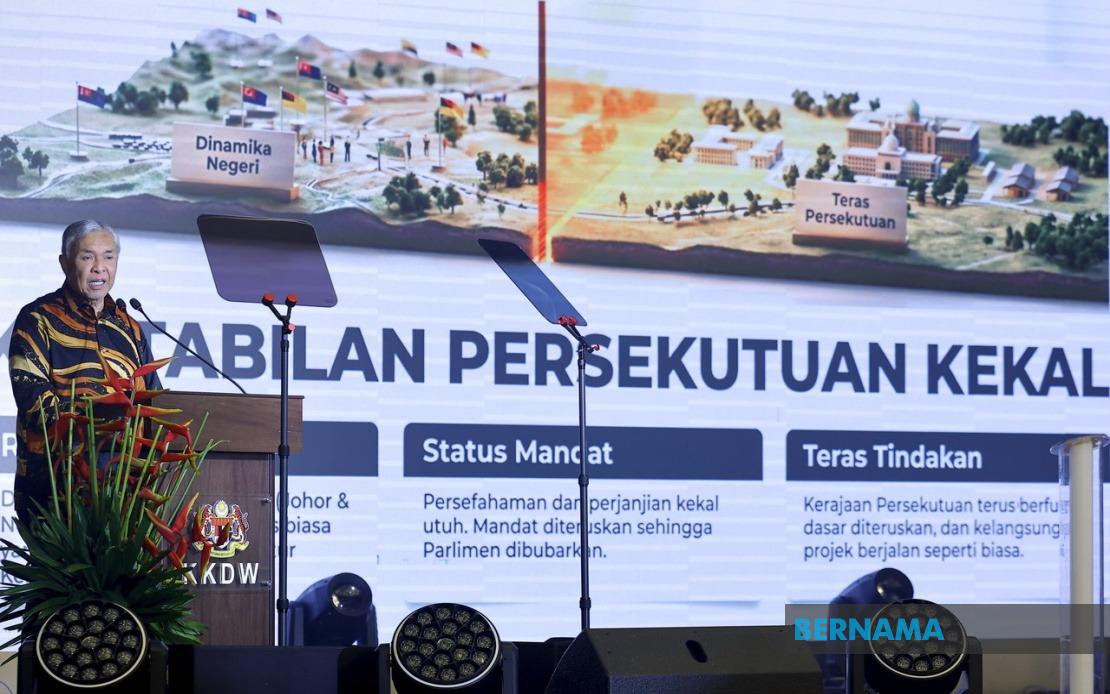
Barisan Nasional has set an ambitious target to capture all 21 state seats in Melaka's upcoming 16th state election, marking a bid for complete political dominance in the southern state. The announcement came from BN chairman Datuk Seri Dr Ahmad Zahid Hamidi, who disclosed that Melaka Chief Minister Datuk Seri Ab Rauf Yusoh had communicated this objective to the national party leadership. The timing of this declaration underscores BN's confidence in the state, where the coalition maintains significant grassroots support and administrative machinery.
Ahmad Zahid's comments, made during a press engagement following the Rural and Regional Development Ministry's monthly assembly in Putrajaya, reflect the coalition's conviction that it can replicate or exceed its previous electoral performance. The Melaka chief minister has personally spearheaded preparations for the election, emphasising the party's resolve to maintain its stranglehold on state politics. This full-seat strategy represents a departure from the coalition's more cautious approach in other state contests, where it has occasionally accommodated smaller allied parties or independent candidates to broaden appeal.
However, the BN leadership has deliberately left room for flexibility in its pre-election positioning. Ahmad Zahid emphasized that while the 21-seat target represents the coalition's primary aspiration, discussions with potential coalition partners remain ongoing. This diplomatic language suggests that BN recognises the value of maintaining broader political alliances, even if such arrangements might result in fewer BN candidates contesting certain seats. The coalition's experience in recent years has demonstrated that electoral mathematics sometimes favour negotiated settlements over winner-take-all confrontation.
The question of seat allocation carries particular significance in Malaysian state politics, where demographic shifts and voter sentiment can dramatically alter electoral outcomes. Melaka, as a relatively compact state with a diverse socioeconomic base spanning urban Malacca City and rural districts, presents both opportunities and challenges for BN. The coalition's performance in previous elections has shown strength in traditional Malay-majority constituencies and some mixed-race areas, though urban centres have increasingly shown volatility in their voting patterns.
BN's openness to understanding with other parties likely refers to potential arrangements with Gabungan Parti Sarawak, Democratic Action Party, or other smaller political entities that have occasionally worked within the broader pro-establishment political framework. Such negotiations typically involve determining which party contests which seats, effectively carving up the electoral battlefield to minimise three-cornered contests that could divide opposition votes while strengthening alternative political forces. These behind-the-scenes arrangements are a standard feature of Malaysian politics, though they remain sensitive topics publicly.
The role of the state BN apparatus, led by Chief Minister Ab Rauf, cannot be overstated in executing this electoral strategy. As the sitting chief minister, Ab Rauf possesses the institutional advantages of incumbency, including control of state resources, media access, and the ability to highlight government achievements through development announcements. His personal credibility and standing among Melaka voters will substantially influence whether BN can indeed retain all 21 seats. Previous elections have shown that chief ministers who enjoy strong local support can significantly boost their coalition's performance.
The central BN leadership's ultimate decision on coalition arrangements will involve calculations that extend beyond Melaka itself. National party strategists must consider how agreements struck in Melaka might establish precedents for other state elections, particularly upcoming contests in Terengganu and potentially Perlis or Kedah. The party structure's hierarchical approach to decision-making means that while state-level leaders express aspirations, the final determination rests with Ahmad Zahid and the national steering committee. This framework prevents individual state leaders from unilaterally committing the coalition to particular electoral arrangements.
For Malaysian observers, Melaka's election carries broader significance as a barometer of BN's continued political dominance in the peninsula's southern region. The state has historically served as a testing ground for new political strategies and serves as a symbol of political stability under BN stewardship. An overwhelming victory would reinforce the coalition's narrative of voter confidence and administrative competence, while any slippage could trigger recalibrations across other contested states. The international business community and foreign observers often view Melaka elections as indicators of Malaysia's broader political trajectory.
The timing of this announcement, coming ahead of the official election date, allows BN to set expectations and mobilise party machinery accordingly. Supporters interpret such statements as signals of leadership confidence, while critics may view them as overambitious rhetoric disconnected from ground-level voter sentiment. The announcement also serves to discipline BN's internal factions, signalling that party leadership expects candidates to deliver comprehensive victories rather than accepting marginal seats as sufficient outcomes.
Looking ahead, Melaka BN's campaign will likely emphasise infrastructure development, economic opportunities, and the coalition's track record in governance. The party will probably highlight investments in the state's port facilities, tourism sector, and manufacturing base as evidence of effective administration. Campaign messaging will stress continuity and stability, themes that historically resonate with Melaka's electorate, particularly among older voters and those in traditional constituencies.
The broader coalition landscape remains fluid, with the outcome of Melaka's election potentially influencing BN's strategic approach in subsequent state contests. Should the coalition achieve or approach its 21-seat target, it would validate Ahmad Zahid's leadership and strengthen his position within the party hierarchy. Conversely, significant losses would necessitate strategic recalibration and potentially prompt senior leadership to reconsider coalition arrangements and candidate selection criteria for future elections.

