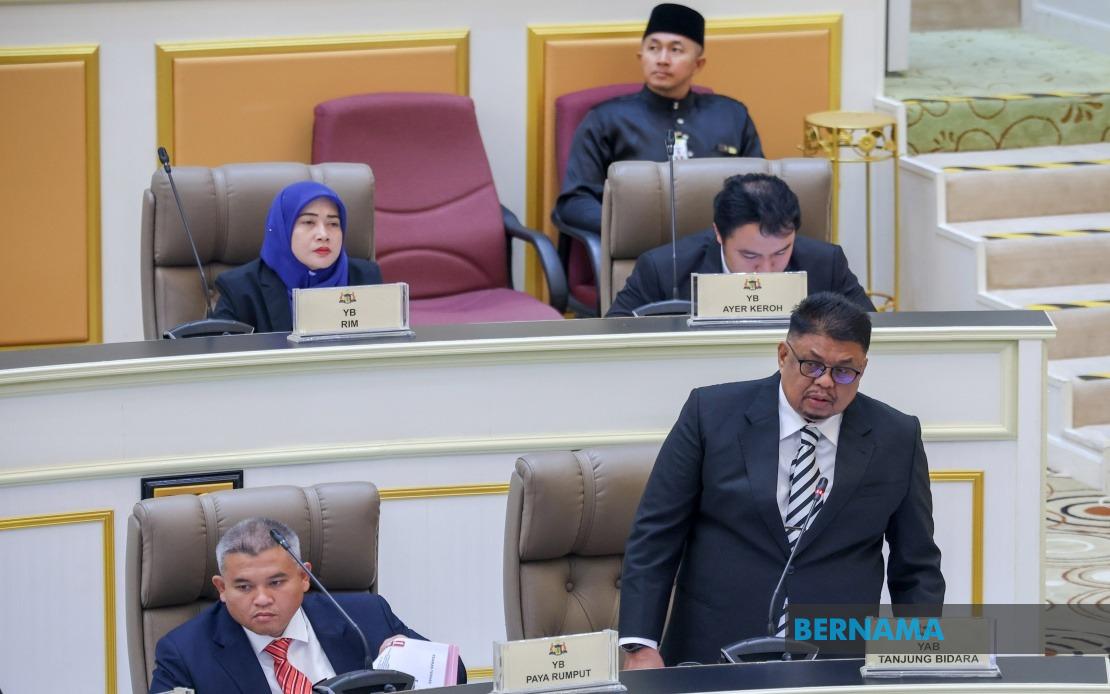
The Melaka State Legislative Assembly has cleared the way for introducing appointed members into its chambers, endorsing a constitutional amendment that would allow for the nomination of up to seven state assemblymen. Voting 23 in favour and five against on July 14, legislators accepted the Melaka State Constitution (Amendment) Bill 2026, a measure designed to supplement the existing system of democratically elected representatives with individuals selected for their specialised knowledge and experience.
Chief Minister Datuk Seri Ab Rauf Yusoh, who introduced the legislation alongside Senior State Executive Councillor Datuk Rais Yasin, framed the change as an institutional upgrade rather than a departure from democratic principles. The fundamental rationale centres on broadening the pool of voices contributing to state governance. By recruiting appointed members from disciplines including law, economics, education, investment, technology and state development strategy, policymakers can draw on expertise that might otherwise remain outside the legislative process. This approach recognises that electoral competition does not necessarily surface the most technically qualified individuals in specialist fields.
A secondary aim involves expanding participation among groups that historically face barriers to election. Women, young people, indigenous communities, religious and ethnic minorities, and business and professional leaders often struggle to secure sufficient electoral support despite possessing valuable knowledge and credentials. The appointment mechanism creates an alternative pathway for these constituencies to influence state affairs. Ab Rauf explicitly noted that the reform could elevate participation from these underrepresented segments, acknowledging that democratic elections, while legitimate, sometimes filter out talented individuals whose expertise would strengthen governance.
The Chief Minister also advanced an argument about legislative quality and institutional checks. Appointed members, operating outside the electoral calculus that shapes elected representatives' behaviour, could theoretically offer more detached and analytically grounded assessments of proposed legislation, budgets and administrative policies. Without the need to campaign for voter support, these nominees might be freer to express technical objections or to engage in sustained scrutiny of complex policy matters. This complementary relationship—elected members providing popular legitimacy and accountability, appointed members offering specialised insight—underpins the reform's intellectual foundation.
Notably, the opposition faction in Melaka endorsed the amendment, a result that lends it broader legitimacy across the partisan divide. Opposition Leader Dr Mohd Yadzil Yaakub, while leading the smaller opposition caucus, articulated support for the initiative conditional on transparent appointment procedures genuinely serving the public interest. His framing drew an instructive parallel to Malaysia's federal Senate, the Dewan Negara, where appointed members have long participated in parliamentary deliberations. That precedent, operating at the national level for decades, furnished a proof-of-concept argument that appointed chambers can function within Malaysia's democratic framework without displacing electoral accountability.
This reform registers as the fulfilment of an earlier pledge. Barisan Nasional's manifesto for the 2021 Melaka state election explicitly committed to constitutional changes enabling appointed representation, positioning the measure under a broader campaign theme of political stability and mature governance. That the amendment now advances nearly five years after that electoral promise reflects both the deliberative pace of constitutional work and the sustained political will needed to navigate the formal amendment process. The passage of the bill demonstrates that this commitment retained traction through subsequent political developments and coalition adjustments.
For Malaysian constitutional scholars and comparative governance observers, the amendment carries significance beyond Melaka. State-level constitutional reforms often serve as testing grounds for institutional innovations before or alongside federal consideration. If the appointed assemblymen system functions effectively in practice—delivering genuine expertise to debates, genuinely broadening participation among previously excluded groups, and maintaining public trust through transparent selection—the model could attract interest from other state governments. Conversely, if implementation stumbles or appointment procedures become vehicles for patronage rather than merit, it may discourage replication.
The practical implications for Melaka's governance warrant close monitoring. The expansion from a purely elected assembly to a hybrid institution introduces new dynamics. Appointed members might operate with greater independence from constituency pressure, potentially enabling frank discussion of unpopular but necessary policies. Alternatively, if appointment authority becomes concentrated in executive hands, the change could tilted power further away from elected legislators toward the Chief Minister's office. The transparency and independence of the selection mechanism will substantially determine whether the reform strengthens or weakens internal checks and balances.
For Malaysian voters and civil society observers, the amendment reflects an ongoing philosophical debate about representation and democratic legitimacy. Pure electoral democracy assumes that legitimacy flows solely from voter choice, and that those elected by voters possess the authority to make decisions binding on the community. The appointed-member model posits that expertise and inclusiveness hold independent value, potentially justifying exceptions to that principle when transparent procedures ensure merit-based selection. The Melaka case offers a real-world venue to examine how these competing values interact in practice.
Regionally, Melaka's move occurs amid broader conversations across Southeast Asia about how legislative institutions can balance electoral accountability with technical capacity and social representation. As societies face increasingly complex policy challenges—from climate adaptation to digital governance to inclusive development—some policymakers question whether purely elected chambers capture sufficient expertise and diversity. Malaysia's experience with appointed senatorial bodies provides historical context, yet state-level application represents relatively new terrain. The Melaka amendment therefore constitutes a modest but substantive experiment in democratic institutional design, with potential lessons extending beyond the state boundaries.

