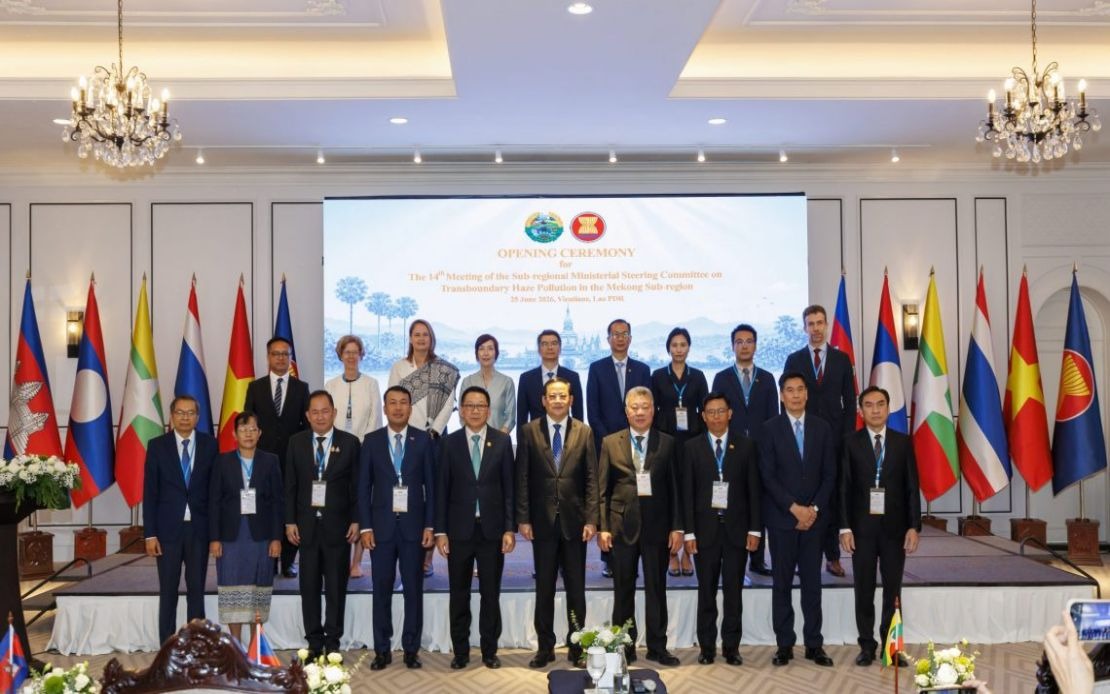
Governments across the Mekong subregion are mobilising coordinated responses to combat an emerging environmental crisis as rising temperatures and anticipated El Niño patterns converge to heighten the danger of widespread forest fires and transboundary air pollution. The alarm has intensified following recent ministerial discussions in Vientiane, where regional leaders acknowledged that the combination of climate pressures threatens not only ecosystems but also agricultural productivity, public health systems, and the broader economic stability of Southeast Asia.
Lao Prime Minister Sonexay Siphandone articulated the severity of the challenge during the 14th Meeting of the Sub-Regional Ministerial Steering Committee on Transboundary Haze Pollution in the Mekong Sub-Region, held on June 25 in Vientiane. He emphasised that forest fires and transboundary air pollution have evolved into critical threats across the Greater Mekong Subregion, causing measurable losses in biodiversity, degrading public health outcomes, and inflicting substantial economic consequences on communities throughout the area. His warnings underscore how interconnected environmental challenges in one nation rapidly cascade across borders, affecting neighbours regardless of their own land management practices.
The statistical evidence supporting these concerns is troubling. Hotspot counts—a key indicator of fire activity—surged by approximately eight per cent between December 2025 and May 2026 compared with the corresponding period in the prior year, signalling an acceleration of fire incidents across the subregion. This upward trajectory coincides with unusual weather patterns that have confounded seasonal expectations. Despite the arrival of the monsoon season, which historically brings relief through consistent rainfall, many areas have experienced sporadic and insufficient precipitation, creating conditions ideal for fire spread and persistence.
Major metropolitan centres across the Mekong region are already experiencing the consequences of this environmental convergence. Ho Chi Minh City and Bangkok, two of Southeast Asia's largest urban centres, have endured severe heatwaves that persist even as the rainy season theoretically arrives. Weather scientists attribute these anomalies to the combined effects of long-term climate change and El Niño oscillation patterns, which disrupt normal precipitation cycles and elevate temperatures beyond historical norms. The situation extends beyond discomfort; sustained heat stress threatens public health infrastructure, particularly in densely populated areas where vulnerable populations lack adequate cooling resources.
The Lao Ministry of Agriculture and Environment has issued specific predictions that crystallise the challenge ahead. Meteorological forecasts indicate temperatures in certain zones could reach between 35 and 38 degrees Celsius, accompanied by erratic rainfall distribution, extended dry periods, and diminished water availability in critical regions. These conditions create a cascade of secondary threats: heightened drought risk, acute water scarcity affecting both urban consumption and irrigation systems, elevated forest fire probability, and direct damage to agricultural yields and livestock populations. For nations whose rural economies depend substantially on subsistence and commercial farming, such impacts reverberate through food security and rural livelihoods.
The regional response, formalised during the Vientiane ministerial gathering, reflects growing recognition that no single nation can manage transboundary pollution unilaterally. ASEAN member states have collectively pledged to intensify efforts to suppress fire hotspots and contain haze pollution during the critical dry seasons. This commitment signals acknowledgment that effective intervention requires coordinated monitoring, shared early warning systems, cross-border information exchange, and potentially synchronised fire suppression operations. The pledges, however, must translate into sustained resource allocation and operational coordination, which remain persistent challenges in a region with varying institutional capacities and competing development priorities.
Weather scientists have issued an additional caution that compounds existing concerns: the possibility of a Super El Niño event developing during the current year. A Super El Niño represents an intensified manifestation of the phenomenon, with more pronounced impacts on global and regional weather patterns. Such a development would substantially amplify the risks already present, potentially extending drought conditions, further reducing precipitation, and creating sustained high-temperature regimes that dramatically increase fire ignition and spread potential. The prospect of a Super El Niño event suggests that 2026 could witness more severe haze episodes than recent years, possibly exceeding the air quality crises that have periodically paralysed regional cities and strained healthcare systems.
For Malaysia and other ASEAN members, the Mekong haze situation carries particular significance despite geographical distance from the subregion's core. Transboundary air pollution does not respect borders, and historical episodes have demonstrated how haze originating in Indonesia and other neighbouring regions can reach Malaysian airspace within days, affecting millions of residents and disrupting economic activity. The Mekong experience offers both a cautionary example and an opportunity to observe regional coordination mechanisms that could inform or enhance existing ASEAN frameworks for environmental crisis management. Malaysia's own experience with transboundary haze has generated technical expertise and policy frameworks that could contribute to subregional learning and cooperation.
The underlying driver of this escalating crisis—climate change—reflects patterns that demand attention beyond immediate fire management and haze control. The irregular monsoon behaviour, sustained temperature elevation, and increased frequency of extreme weather events all point toward fundamental shifts in the region's climate system. Addressing transboundary haze in the medium to long term requires parallel efforts to reduce greenhouse gas emissions, enhance ecosystem resilience through reforestation and wetland restoration, and adapt agricultural practices to emerging climate realities. Reactive crisis management, while necessary, cannot substitute for systemic mitigation and adaptation strategies.
The economic implications of transboundary haze extend beyond direct health expenditures and agricultural losses. Persistent poor air quality deters international investment, disrupts tourism industries, and generates productivity losses through worker absenteeism and reduced industrial output. Regional supply chains face disruption when air quality reaches hazardous levels, affecting manufacturing hubs and logistics networks. These broader economic consequences create incentives for serious governmental engagement with the problem, though political commitment often weakens as immediate crises fade from public attention.
Moving forward, the effectiveness of the Mekong subregion's response will depend on translating ministerial pledges into concrete mechanisms. This requires establishing robust fire monitoring and early warning systems, securing adequate financing for fire suppression operations, developing coordinated response protocols that permit cross-border firefighting assistance, and creating accountability frameworks that track progress toward stated targets. The 14th Ministerial Steering Committee meeting represents an important moment of regional consensus, but the critical test lies in implementation during the approaching dry seasons when fire risk peaks and haze threatens to choke regional cities once again.

