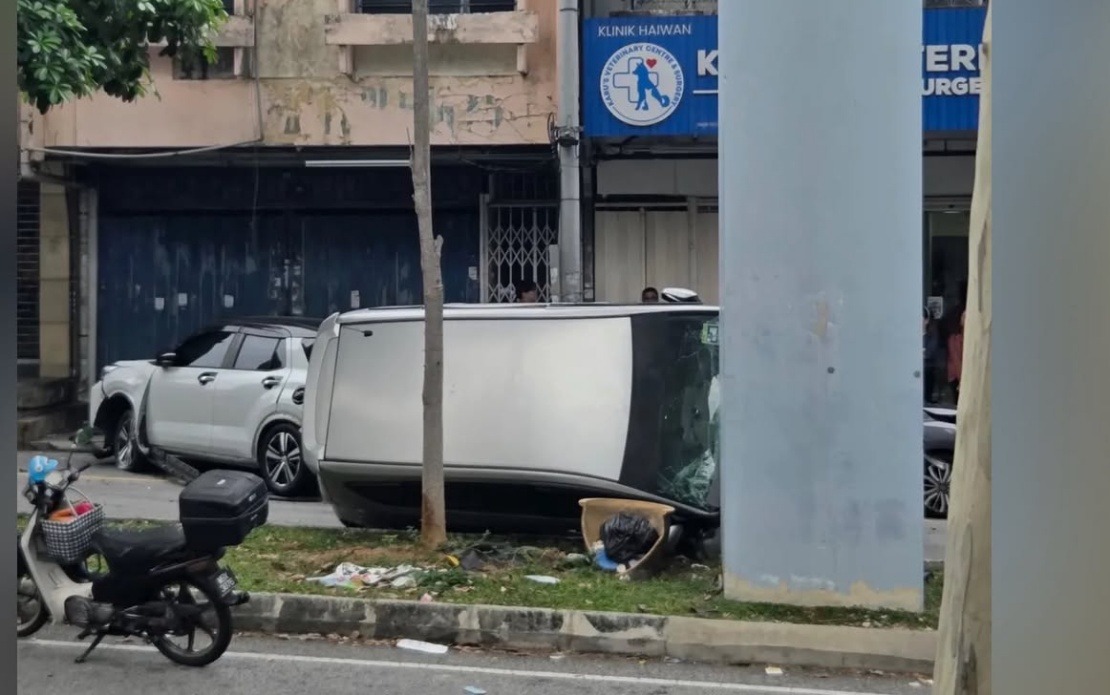
A health crisis behind the wheel turned into a traffic incident yesterday morning in Kuala Lumpur when a 28-year-old motorist suffered a sudden seizure while operating his BMW 320i, leading to a collision with six unoccupied vehicles parked alongside Jalan Midah 1 in the Taman Midah 1 area of Cheras. The incident, which unfolded around 8.30 am, underscores the potential dangers posed by drivers with known medical conditions operating vehicles on busy urban roads, particularly during peak commute hours when neighbourhood streets see substantial traffic flow.
According to ACP Mohd Zamzuri Mohd Isa, chief of the Kuala Lumpur Traffic Investigation and Enforcement Department, the driver was en route from his residence to his workplace when the medical episode occurred. The seizure rendered him unable to maintain control of the vehicle, which subsequently veered from its intended path and struck the parked cars positioned along the left shoulder of the road. The impact affected six separate vehicles, each belonging to different owners, though fortuitously none of the vehicles had occupants at the moment of collision.
The vehicles involved in the incident belonged to diverse ownership profiles. Four belonged to women ranging between 29 and 43 years of age, one was registered to a 39-year-old male, and another was a company vehicle. While the financial and administrative implications of the damage will likely extend over weeks, the absence of human casualties represented a significant stroke of good fortune given the chaotic nature of the event. Police assessments confirmed that the collision resulted exclusively in vehicular damage, with no individuals requiring medical attention as a direct consequence of the crash.
Investigations conducted at the scene revealed critical information regarding the driver's medical background. The man has contended with seizure episodes for approximately a decade, suggesting an underlying neurological condition requiring ongoing management and monitoring. This extended medical history raises pertinent questions about licensing protocols and periodic medical evaluations for drivers with documented seizure disorders, a matter of growing significance across Malaysian traffic safety discourse. The duration of his condition indicates he may have been managing it through pharmaceutical or other therapeutic interventions prior to the incident.
Breathalyser testing performed on the driver immediately after the incident returned a clear result, with a reading of zero milligrammes per 100 millilitres of breath, definitively ruling out alcohol consumption as a contributing factor to the loss of vehicle control. This finding proved crucial in establishing that the collision resulted specifically from the medical episode rather than impaired judgment or reduced coordination stemming from intoxication. The negative alcohol reading simplifies the investigative focus and liability considerations, concentrating attention squarely on the underlying health crisis.
The authorities classified the incident under Rule 10 of LN 166/59, the regulatory framework governing traffic violations and accidents in Malaysia. This classification typically encompasses accidents resulting from sudden medical incapacity or other unforeseeable circumstances rather than deliberate negligence or traffic violations. The legal categorization carries implications for insurance claims, potential charges against the driver, and how the incident factors into broader road safety statistics and analysis.
Investigations remain ongoing as police work to document all aspects of the incident and determine any further action. The involvement of six separate vehicle owners means authorities must coordinate with multiple insurance companies and property damage assessments, a logistical undertaking that will likely consume considerable time and administrative resources. Officers from the department are assembling comprehensive accident reconstruction data and witness testimony to create an authoritative record of events.
Public assistance is being actively solicited in the investigative process. The Tun H.S. Lee traffic police station, reachable at 03-2071 9999, and neighbouring police facilities are accepting information from any members of the public or witnesses who may have observed the incident or possess relevant details. Such citizen participation has historically proven valuable in fleshing out incomplete official records and providing perspectives that assist in understanding traffic incidents from multiple vantage points.
This incident highlights a broader intersection between public health and road safety in Malaysia, where individuals managing chronic medical conditions including seizure disorders must navigate complex decisions about driving privileges and public safety. The case illustrates how sudden medical episodes can cascade into property damage and potential injury within seconds, even when drivers exercise caution and operate vehicles in residential areas at moderate speeds. It raises pertinent discussion about whether existing medical evaluation frameworks for driver licensing adequately address risks posed by drivers with documented seizure histories, and whether periodic reassessment protocols require enhancement to reflect the realities of modern urban traffic patterns and the concentrated vehicular activity characteristic of Kuala Lumpur's residential neighbourhoods.

