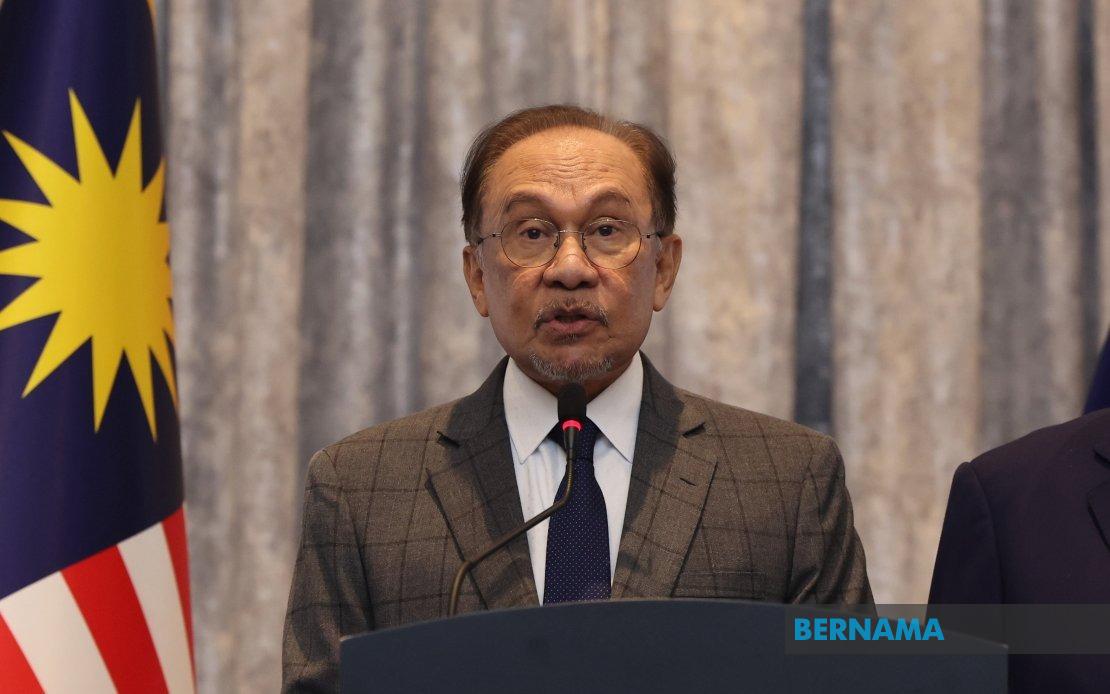
Prime Minister Datuk Seri Anwar Ibrahim delivered a pointed message to Malaysia's media industry this week: the rush to harness emerging technologies must not come at the expense of fundamental editorial principles and national sovereignty. Speaking at the Malaysian Press Night 2025 and the Malaysian Press Institute-PETRONAS Journalism Awards 2026 in Kuala Lumpur, Anwar cautioned that without vigilance, the country risks losing its way as technological change accelerates across communications, digital platforms and artificial intelligence.
The Prime Minister's remarks reflect growing regional anxiety about the globalised nature of modern information systems. He stressed that while freedom in technology deployment remains essential, these tools must remain tethered to ethical frameworks and cultural values. Anwar emphasised that columnists and opinion leaders bear particular responsibility in this conversation, suggesting that debate around technology's societal impact remains insufficient within Malaysian discourse.
Anwar drew a historical parallel that resonates deeply across Southeast Asia. He noted how Western media dominance has historically enabled powerful nations to construct and export narratives aligned with their geopolitical interests, often marginalising alternative perspectives from smaller economies. This pattern has long concerned policymakers in developing nations who view media narratives as extensions of soft power.
Today's technological landscape, according to Anwar, presents a different but equally concerning threat. A new global power is leveraging technological control to advance ideological and cultural agendas that may contradict local values and societal norms. The Prime Minister's oblique reference appears aimed at concerns about non-Western technological dominance, particularly regarding artificial intelligence systems, algorithmic content curation and platform governance.
Central to Anwar's argument was the concept of the "captive mind"—a phenomenon traditionally associated with colonial and political subjugation. The Prime Minister contended that this dynamic has evolved in the digital age. Rather than explicit political coercion, today's capture of minds occurs through technological systems that shape information consumption, structure narratives and influence societal discourse often without transparent mechanisms or democratic oversight. As nations race to develop technological capabilities, they simultaneously confront the challenge of maintaining cultural and intellectual independence.
The government has assigned clear institutional responsibility for navigating this tension. Communications Minister Datuk Seri Fahmi Fadzil and the Malaysian Communications and Multimedia Commission will coordinate with media organisations to develop frameworks that accommodate innovation while preserving standards. Anwar indicated that the government views this as a shared undertaking requiring sustained dialogue rather than top-down mandates, pledging to listen openly to media perspectives and accept constructive criticism.
Anwar commended the Malaysian Press Institute, supported by PETRONAS, alongside the Malaysian Media Council for driving innovation and institutional reforms intended to prevent the country from becoming ensnared in narratives shaped entirely by external technological interests. These organisations represent an attempt to develop distinctly Malaysian approaches to media modernisation rather than simply importing wholesale foreign models.
The Prime Minister also acknowledged the broader contribution of journalists to Malaysia's democratic functioning. He recognised their role in upholding press freedom, providing critical scrutiny of government and institutions, and offering recommendations for policy improvement. This acknowledgment, while ceremonial, signals official recognition that media independence strengthens rather than threatens national development.
For Malaysian readers, the implications extend beyond journalism circles. The debate Anwar raised touches fundamental questions about how Southeast Asian nations can participate in technological advancement without surrendering control over their information environments. Malaysia, as a middle-income country with significant digital infrastructure ambitions, faces genuine choices about whose systems underpin its digital transformation. Whether through investment in homegrown platforms, regulation of foreign platforms, or international partnerships, these decisions will shape what news Malaysian citizens encounter and how algorithms structure their understanding of public issues.
The timing of these remarks matters. Global competition over artificial intelligence standards, social media governance and digital infrastructure has intensified. Countries that fail to establish clear principles about technology's role in their societies risk finding themselves as passive consumers of systems designed elsewhere. Anwar's intervention suggests Malaysia intends to be more intentional, bringing together government, media institutions and industry players around shared principles.
The challenge remains implementation. Defining which values must be preserved, how ethics should be operationalised in technological systems, and where appropriate lines between innovation and tradition lie involves difficult tradeoffs. Malaysian media will need to develop concrete standards and practices reflecting these principles while competing internationally and serving audiences with diverse expectations about news and information.
Ultimately, Anwar's message reflects a broader Southeast Asian concern: technological progress and national identity need not be antagonistic, but achieving this balance requires intentional effort, institutional coordination and honest conversation among media leaders, policymakers and society. Malaysia's approach to this challenge will likely influence how other regional nations frame their own technology governance frameworks.

