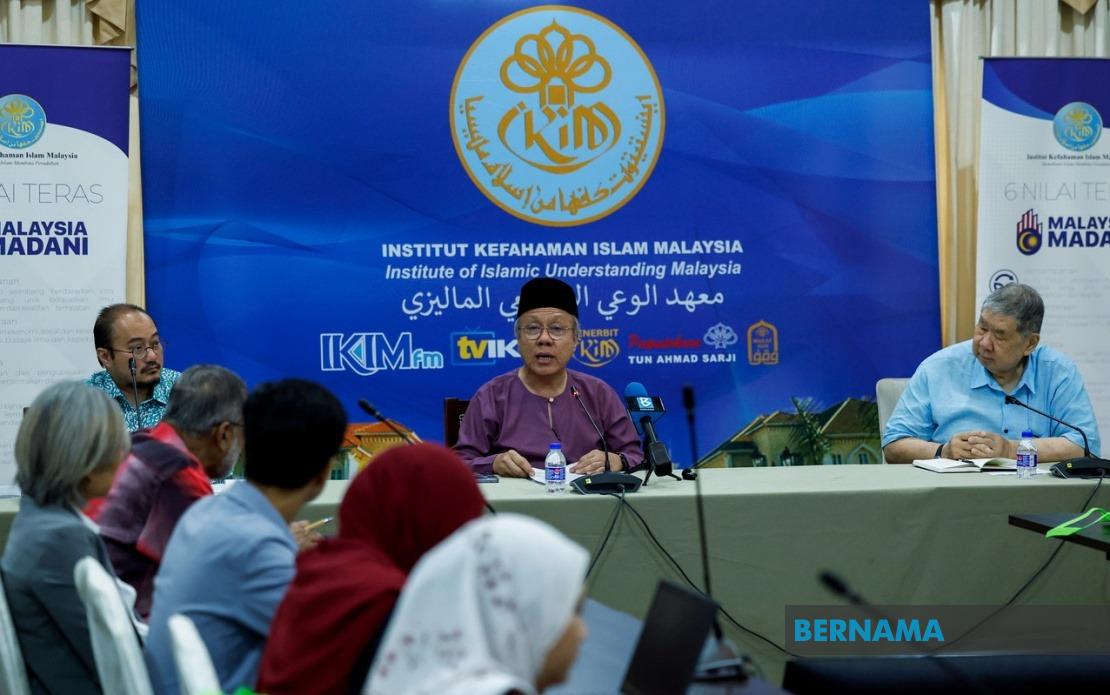
A coordinated effort to bridge the gap between institutional reform and public understanding unfolded in Kuala Lumpur on August 14, when three major organisations—the Malaysian Press Institute (MPI), the Institute of Islamic Understanding Malaysia (IKIM), and Lembaga Tabung Haji (TH)—jointly convened a media literacy programme focused on the Tabung Haji Royal Commission of Inquiry. The closed-door session, held at IKIM's headquarters, brought together more than 20 journalists and senior officials including TH Group Managing Director and Chief Executive Officer Mustakim Mohamad, MPI president Datuk Yong Soo Heong, and IKIM Director-General Associate Professor Datuk Dr Mohamed Azam Mohamed Adil.
The initiative reflects a growing recognition among Malaysia's institutional leadership that the narrative surrounding high-profile inquiries requires careful stewardship to prevent misinformation and public misunderstanding. Tabung Haji, as the trustee of pilgrimage funds and a cornerstone of Islamic finance in Southeast Asia, occupies unique significance in Malaysian society. The Royal Commission of Inquiry into its operations has attracted considerable attention, yet media coverage risks oversimplifying complex governance and financial matters into sensationalised storylines. By facilitating direct engagement between journalists and institutional leaders, the three organisations sought to provide context and factual grounding that might otherwise be lost in rapid-cycle news cycles.
During the nearly two-hour session, Mustakim presented detailed briefings on the RCI's scope and findings, addressing specific queries from attending journalists. This format—combining prepared remarks with an extended question-and-answer component—allowed practitioners to probe beyond surface narratives and develop nuanced understanding of the issues at stake. Such direct access to decision-makers remains relatively uncommon in Malaysian media relations, making the programme a notable departure from standard press release distribution.
Yong articulated the broader purpose of the collaboration, emphasising that the platform enabled journalists to access authoritative information on Tabung Haji's corrective measures and strategy for restoring stakeholder confidence. He positioned the initiative as a model for future cooperation, suggesting that similar programmes could be rolled out across Malaysian states through dialogue sessions and town halls. This expansion strategy indicates an awareness that media literacy around institutional issues cannot remain confined to Kuala Lumpur's national press corps but must reach regional correspondents and local news outlets that shape how communities understand these matters.
The emphasis on accuracy proved central to the programme's messaging. Yong stressed that ensuring precise public communication about Tabung Haji's future direction represents a shared responsibility between the institution and media. By providing journalists with vetted information and direct institutional access, the programme aimed to reduce the likelihood of misreporting while acknowledging that media gatekeeping ultimately rests with editorial teams rather than the briefing organisers themselves.
Mohamed Azam's remarks introduced a crucial interpretive framework that warrants scrutiny. He explicitly cautioned against viewing the Tabung Haji RCI as a controversy involving religious or racial dimensions, instead characterising it as fundamentally a matter of management integrity and accountability. This framing carries significant implications for how the Malaysian public processes institutional failings. By divorcing the inquiry from identity politics and focusing attention on governance standards, IKIM sought to establish common ground across Malaysia's diverse population—an approach that recognises how easily institutional crises can become mobilised along communal lines if alternative narratives fail to take hold.
The trust element featured prominently in Mohamed Azam's appeal to journalists. He urged media practitioners to communicate a narrative that reinstils confidence in Tabung Haji as an Islamic financial institution uniquely entrusted with managing the Hajj pilgrimage fund, framed as the fifth pillar of Islam. This framing acknowledges that Tabung Haji operates within distinct theological and cultural contexts that non-Muslim financial institutions do not. The emphasis on trust responds to legitimate concerns that governance lapses at religiously-significant institutions carry heightened reputational consequences.
The programme underscores broader questions about media responsibility in covering institutional crises. Malaysian journalists face competing pressures: delivering investigative scrutiny of governance failings while also respecting institutions' legitimate interests in correcting misinformation and contextualising findings. The literacy session attempted to navigate this tension by providing journalists with authoritative voices and detailed factual grounding rather than attempting to constrain editorial independence. Whether such efforts successfully improve coverage accuracy depends partly on institutional follow-through and partly on newsroom cultures that may prioritise impact and narrative coherence over nuance.
For Malaysian news organisations and their regional counterparts, the Tabung Haji briefing offers instructive lessons about institutional communication during controversy. The collaboration between a civil society media body (MPI), an Islamic understanding organisation (IKIM), and the institution under scrutiny (TH) created a configuration that reduced appearance of bias while providing authoritative information. The willingness to hold extended engagement sessions rather than relying on brief statements suggests institutional confidence in the substantive quality of responses to likely journalist queries.
The programme also reflects the particular salience of Tabung Haji within Malaysian and broader Southeast Asian Islamic finance. As a pioneering institution managing pilgrimage-related finances for hundreds of thousands of Muslims annually, governance lapses carry implications beyond Malaysia's borders. Media practitioners across the region increasingly cover Tabung Haji developments, making domestic media literacy efforts relevant to international coverage of Islamic financial institutions.
Moving forward, the success of such initiatives ultimately hinges on whether improved journalist understanding translates into substantively different reporting. The Malaysian Press Institute and institutional partners will likely monitor subsequent media coverage to assess whether the programme achieved its stated objective of ensuring accurate information reached the public. Whether future literacy programmes expand to cover other institutional inquiries or governance controversies will signal whether this model gains traction as a preferred mechanism for bridging institutional and journalistic interests during periods of institutional scrutiny.

