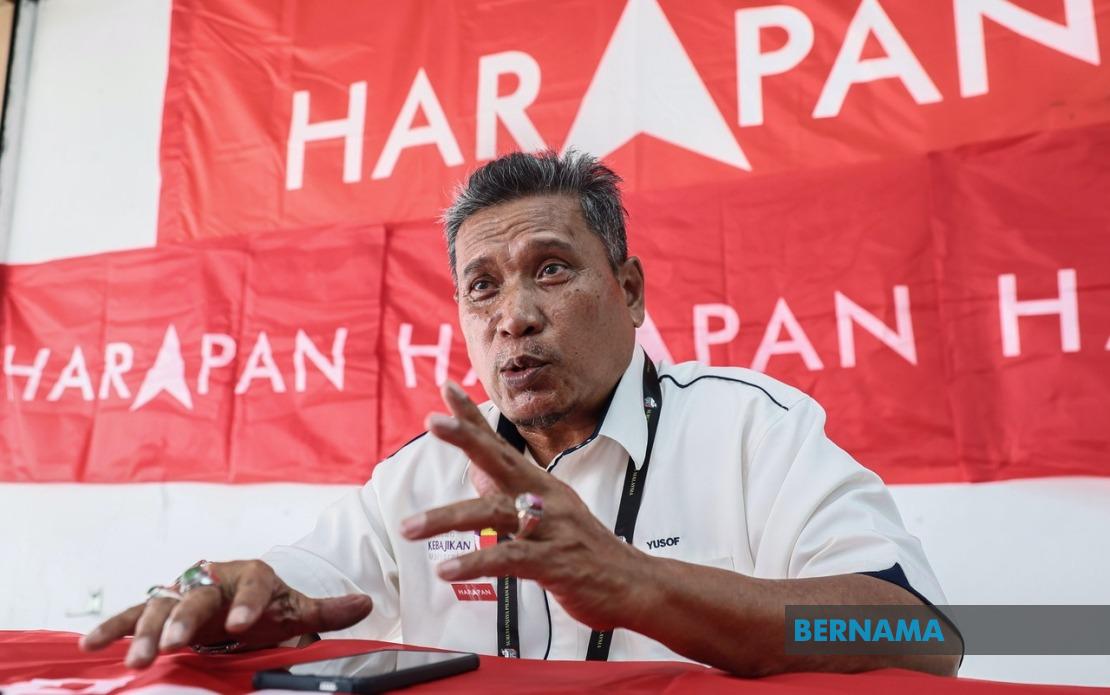
Md Yusof Dawam, the Pakatan Harapan candidate contesting the Tenggaroh state seat in the Johor state election, has put forward a comprehensive development platform that tackles longstanding challenges facing Felda communities whilst seeking to reverse rural-to-urban migration patterns threatening settler sustainability. The 64-year-old retired educator has identified second-generation housing as a critical social issue and economic bottleneck, one that demands urgent intervention through structured planning and government support.
Central to Md Yusof's vision is addressing what he characterises as a systemic failure in settlement planning within the Tenggaroh Felda scheme. Young residents, he contends, have had limited pathways to establish independent households, forcing many to either remain dependent on aging parents or abandon the settlement entirely for opportunities in urban centres. This demographic drainage, he argues, imperils the intergenerational continuity of family-managed oil palm estates, risking asset dilution and external acquisition that would strip wealth from the community.
To reverse this trend, Md Yusof proposes establishing a purpose-built second-generation settlement encompassing between 10 and 20 acres, developed according to modern urban planning principles rather than the ad-hoc arrangements that currently characterise Felda housing stock. Such planning, he maintains, serves a dual function: it resolves immediate accommodation shortages while strategically preserving agricultural assets within family hands across successive generations. This approach reflects an understanding that rural retention is fundamentally an economic problem requiring comprehensive solutions beyond traditional land grants.
Beyond housing, Md Yusof has identified the retail and commercial landscape as an arena requiring systematic modernisation. The commercial premises dotting Felda settlements have, according to his assessment, remained static since the 1980s, failing to evolve with changing consumer expectations and market dynamics. His proposal to introduce temporary land grants for constructing contemporary business establishments aims to catalyse a vibrant commercial hub that functions as a self-contained economic ecosystem, reducing residents' dependence on distant urban centres like Mersing for everyday commerce.
The candidate illustrates his point with a telling example: residents seeking basic items like keropok lekor face a 70-kilometre journey to Mersing town, reflecting inadequate local commercial infrastructure. By engineering a compact "small town" model within Tenggaroh, complete with modern retail spaces and services, Md Yusof anticipates that economic circulation would remain internally generated, strengthening local purchasing power and entrepreneurial capacity. This represents a departure from extractive development models that typically drain rural wealth toward urban centres.
Tourism and island resources present another untapped economic frontier that Md Yusof seeks to unlock for local benefit. Mersing's surrounding islands, notably Pulau Besar, Pulau Tinggi, and Pulau Aur, have increasingly attracted international film and production companies seeking picturesque locations. Yet the financial spillover from these activities has remained negligible for local youth, largely because no tourism or maritime transport enterprises have emerged under younger-generation ownership or management. Md Yusof argues that capturing this economic potential requires deliberate intervention to enable young entrepreneurs to establish tourism-related businesses.
The paradox he identifies reflects a broader Southeast Asian pattern whereby international capital flows through rural communities without establishing local ownership stakes or sustainable employment structures. Mersing's islands possess genuine tourism appeal, yet that appeal translates into minimal direct income for residents. By fostering locally-owned tourism operators and transport services, Md Yusof envisions redirecting external economic activity into revenue streams benefiting Tenggaroh residents and generating sustainable livelihoods for younger generations.
Md Yusof's campaign methodology reflects his conviction that grassroots connection precedes electoral victory. Rather than mass rallies or media-heavy strategies, he emphasises small-group engagement sessions designed to authentically understand community aspirations and concerns. This approach gains credibility from his personal biography: a Tangkak-born native who has resided in Mersing for four decades, he brings established community rootedness that distinguishes him from transient political figures.
His 16-year tenure as an educator within Felda Nitar and broader educational sector experience furnish him with institutional knowledge of rural-settler dynamics and inter-generational challenges. This background suggests he approaches policy formulation not as external prescription but as problem-solving informed by lived understanding of Felda community structures and aspirations. Such positioning holds particular resonance in constituencies where residents frequently perceive politicians as urban-based outsiders disconnected from rural realities.
The Tenggaroh contest occurs within the broader 16th Johor state election framework, which features 172 candidates competing across 56 state seats. This competitive landscape means Md Yusof's platform must distinguish itself from alternative visions offered by competing candidates and parties. His focus on tangible, area-specific development addressing demonstrable housing and economic constraints represents a practical counterweight to generic opposition or ruling-coalition messaging.
Polling takes place on July 11, with advance voting for security personnel scheduled for the preceding day. The timing creates a compressed campaign window within which candidates must consolidate support and communicate their visions effectively. For rural constituencies like Tenggaroh, where mobility limitations and dispersed settlement patterns complicate campaign logistics, Md Yusof's commitment to intensive personal engagement may offer a strategic advantage.
The broader significance of his campaign extends beyond Tenggaroh itself. Felda settlements throughout Peninsular Malaysia confront comparable challenges: aging populations, youth outmigration, underdeveloped commercial infrastructure, and uncertain agricultural futures amid commodity price volatility. Any political party successfully articulating comprehensive responses to these interconnected challenges could strengthen its rural support base substantially. Md Yusof's platform, if implemented, would constitute a replicable model addressing these systemic issues, potentially influencing electoral outcomes across multiple Felda-dependent constituencies.

