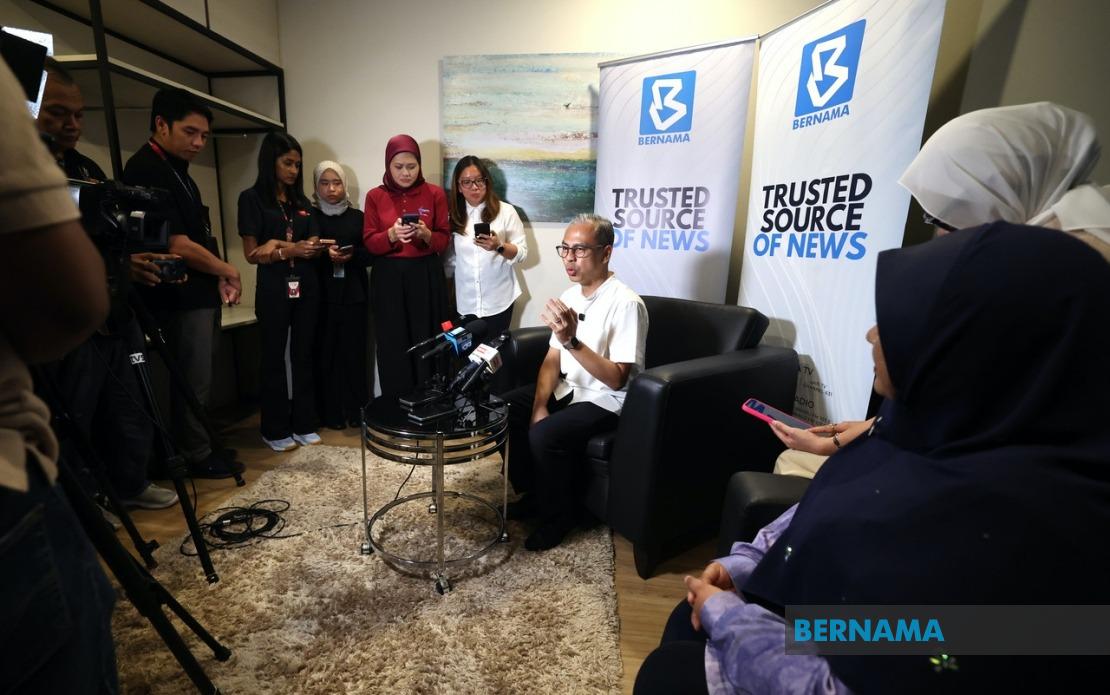
The Malaysian Communications and Multimedia Commission has been assigned the responsibility of guaranteeing robust 4G and 5G network coverage at the Johor Bahru-Singapore Rapid Transit System Link stations well ahead of the facility's scheduled opening on January 1, 2027. Communications Minister Datuk Fahmi Fadzil disclosed this priority during a visit to Bernama's operations room in Johor Bahru, underscoring the government's commitment to delivering a world-class digital experience to passengers using the cross-border rail corridor from day one.
The minister's directive reflects growing recognition that modern transport infrastructure must integrate seamlessly with contemporary telecommunications standards. Rather than treating network connectivity as an afterthought, officials are now embedding digital readiness into project planning from the outset. Fahmi indicated he intends to conduct a personal inspection alongside MCMC representatives during a forthcoming visit to the RTS Link construction sites, though this will occur at a strategic moment when progress assessments can meaningfully inform remaining work schedules.
The RTS Link represents a significant bilateral achievement, comprising a four-kilometre railway shuttle connection featuring two stations: one at Bukit Chagar in Johor Bahru and another at Woodlands North in Singapore. The project underscores deepening integration between Malaysia and Singapore's transport networks, creating new opportunities for cross-border commerce, employment mobility, and tourism. However, realising these benefits depends critically on ensuring that travellers maintain uninterrupted digital connectivity throughout their journey, from ticketing platforms to real-time journey information and payment systems.
Fahmi's concurrent observations regarding weak internet penetration in rural areas illuminate broader infrastructure challenges that extend beyond the RTS Link itself. He attributed persistent connectivity gaps in numerous regional communities partly to the prolonged deployment timelines required for telecommunications tower construction. The typical installation process demands between 12 and 24 months, factoring in land acquisition negotiations, environmental assessments, and approvals from local authorities—complexities that can substantially defer service expansion into less densely populated regions.
Where feasible, the ministry is exploring expedited solutions through passive infrastructure utilisation, leveraging existing tower networks that require only equipment upgrades rather than entirely new installations. However, this approach carries limitations; many established towers currently lack the requisite telecommunications equipment to deliver next-generation services. This gap between physical infrastructure availability and actual service delivery represents a persistent bottleneck in the government's broader digital access agenda.
The ministry is simultaneously advancing Phase Two implementation of the National Digital Network programme, which officials expect will address most outstanding rural connectivity deficiencies. This phased approach allows for systematic expansion while managing capital expenditures and procurement timelines. Nevertheless, Fahmi acknowledged that certain geographical and demographic realities continue to complicate coverage strategies, particularly in northern Johor and the east coast regions where challenging terrain, extensive oil palm estates, and scattered populations necessitate geographically tailored solutions.
Recognising that traditional tower construction may lack commercial viability in low-density areas, the government is evaluating alternative delivery mechanisms. Satellite-based internet services, particularly Starlink's constellation technology, represent an emerging option for reaching communities where conventional terrestrial infrastructure investments remain economically unviable. These supplementary approaches reflect pragmatic acceptance that one-size-fits-all solutions cannot adequately serve Malaysia's diverse geography and settlement patterns.
Fahmi delegated final technical assessment and implementation strategy regarding these alternative technologies to the MCMC, reflecting appropriate institutional boundaries between policy direction and regulatory expertise. This division of responsibility allows communications specialists to evaluate technical feasibility, cost-effectiveness, and integration requirements without political pressures circumscribing engineering judgments. The commission's autonomy in selecting optimal approaches—whether traditional tower deployment, passive infrastructure recycling, or satellite augmentation—enhances the likelihood of proportionate, evidence-based decisions.
For Malaysian commuters and cross-border workers who will utilise the RTS Link, reliable mobile connectivity carries tangible implications. Modern transport systems increasingly depend on digital interfaces for ticketing, payment processing, emergency communication, and real-time service information. Travellers accustomed to seamless connectivity in urban centres should expect comparable standards at international gateways; inadequate coverage could undermine the project's value proposition and discourage adoption among time-conscious professionals and leisure travellers.
The RTS Link initiative also carries significance for broader Southeast Asian transport integration efforts. Successful cross-border rail projects demonstrating reliable digital infrastructure create precedents and best practices for other regional connectivity proposals. Malaysia's visible commitment to ensuring communications readiness signals to neighbouring countries and infrastructure investors that the nation approaches major transport development with comprehensive, forward-thinking standards encompassing not merely physical construction but the digital ecosystems upon which contemporary mobility depends.
Beyond immediate RTS Link implications, the minister's public emphasis on rural connectivity challenges and emerging technological solutions suggests evolving government thinking about digital equity across Malaysia's economic landscape. The acknowledgment that terrain, land use patterns, and population density require differentiated approaches represents mature policy recognition. Rather than pursuing uniform deployment timelines, officials increasingly accept that achieving universal broadband access demands hybrid strategies combining conventional infrastructure, infrastructure sharing, and satellite technologies adapted to specific regional circumstances.
The January 2027 deadline provides a concrete timeline for achieving stated connectivity objectives, though construction, regulatory approval, and equipment deployment timelines must align precisely to prevent launch delays. MCMC's receipt of formal directive establishes clear accountability and institutional responsibility. As the RTS Link progresses toward completion, monitoring network coverage development at both Bukit Chagar and Woodlands North stations will become a visible benchmark for evaluating government effectiveness in integrating digital infrastructure with major transport projects.

