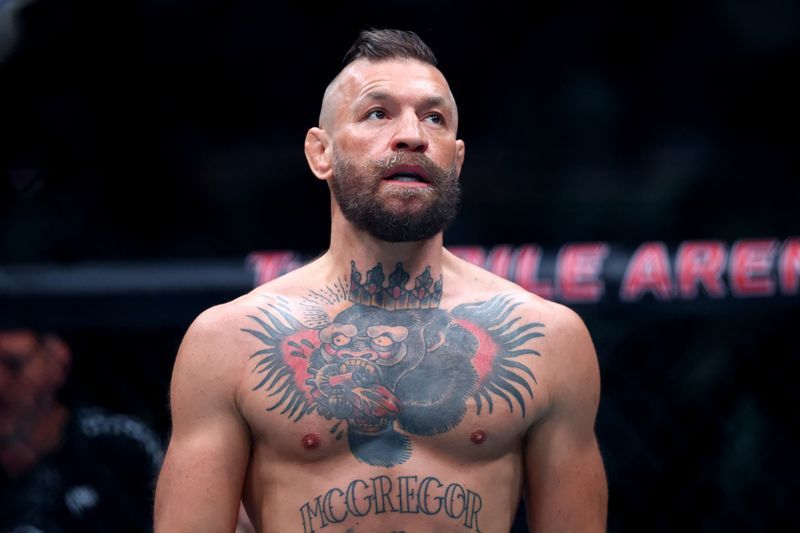
Conor McGregor's long-awaited return to the Ultimate Fighting Championship ended in heartbreak on Saturday night at the T-Mobile Arena in Las Vegas. The Irish mixed martial artist's much-anticipated bout with Max Holloway at UFC 329 lasted merely 63 seconds before McGregor was forced to retire due to a severe knee injury, dealing another blow to a career already derailed by multiple setbacks over the past four years.
The injury occurred early in the opening round when McGregor, seeking to assert his dominance from the outset, attempted an aggressive flying kick. The manoeuvre, designed to signal his competitive intent and commanding presence, instead backfired catastrophically. McGregor landed awkwardly, and the damage to his knee was immediately apparent. He briefly attempted to continue, but within seconds recognised the severity of his injury and gestured to the referee that he could not proceed, bringing the contest to an abrupt conclusion.
The 37-year-old's return represented a significant moment for the sport and his legion of fans worldwide. McGregor had been absent from professional competition since July 2021, when he suffered a broken leg in his fight against Dustin Poirier. That injury marked the beginning of an extended period away from the octagon during which multiple complications prevented his comeback. The gap of nearly three years between professional fights made Saturday's booking one of the most anticipated matchups in recent UFC history, with global media attention and elevated expectations surrounding his reemergence.
McGregor's recent history illustrates a troubling pattern of obstacles extending beyond physical injury. His scheduled June 2024 bout against Michael Chandler never materialised after he sustained a broken toe during training camp. Beyond the sporting realm, a jury in an Irish civil court found McGregor liable in a 2018 case involving Nikita Hand. Additionally, the Combat Sports Anti-Doping agency imposed an 18-month ban on McGregor for whereabouts violations after he missed three sample collection attempts in 2024. Although the ban was backdated and expired in March 2025, these accumulated complications have significantly undermined his ability to maintain an active fighting schedule and public momentum.
The context of this injury carries particular significance for McGregor's legacy and future prospects. At 37 years old, serious knee injuries represent a particularly serious threat to an athlete's career longevity and competitive viability. Recovery from such trauma typically requires extensive rehabilitation, potentially extending well beyond the standard recovery timeline. For McGregor, whose technical prowess depends substantially on lower body mobility and explosive movement, a major knee injury poses fundamental questions about his ability to return to elite competitive levels.
Max Holloway, the former featherweight champion and McGregor's opponent, demonstrated sportsmanship following the unfortunate conclusion. Rather than celebrate a victory he did not earn, Holloway indicated openness to rematching McGregor once the Irish fighter recovers from his injury. This was the second encounter between the fighters, with McGregor having secured a unanimous decision victory over Holloway in 2013. Holloway's willingness to pursue another confrontation suggests confidence in his abilities and recognition of McGregor's drawing power for the promotion.
The UFC has a documented history of promoting rematches between prominent fighters, particularly when initial encounters end unexpectedly or controversially. Should McGregor successfully rehabilitate and return to competition, a second bout between himself and Holloway could generate substantial commercial interest. However, the path to recovery remains uncertain, and medical assessments will determine whether McGregor can restore his knee to championship-standard functionality.
The timing of this injury also carries implications for broader UFC scheduling and fighter rankings. McGregor's participation in major events commands premium ticket prices, broadcasting rights revenue, and global media attention that extends beyond typical professional fights. His absence from the competitive landscape diminishes the promotion's marquee offerings and forces the organisation to develop alternative main-event pairings.
In the co-main event that evening, Britain's Paddy Pimblett demonstrated the effectiveness of technical proficiency when he subdued France's Benoit Saint-Denis in their lightweight encounter, requiring less than a minute to secure a chokehold victory. This rapid conclusion emphasised that McGregor's misfortune was not unique, though the manner of Pimblett's victory—a dominant submission—contrasted sharply with McGregor's involuntary withdrawal.
For Malaysian and Southeast Asian combat sports enthusiasts, McGregor's situation underscores the unpredictability of elite athletic competition and the genuine physical perils involved in professional fighting. The region has developed a substantial following for the UFC, with growing numbers of local fighters competing in various international promotions. McGregor's inability to overcome injury and return to peak performance serves as a cautionary reminder about the demands and dangers of professional mixed martial arts at the highest levels.
The broader narrative surrounding McGregor extends beyond Saturday's unfortunate conclusion. His comeback represented an opportunity to demonstrate that time and multiple complications had not fundamentally diminished his competitive abilities. Instead, the brief duration of the bout left fans and observers with questions rather than answers about his true current capacity. His next steps—whether pursuing rehabilitation and eventual return or contemplating retirement—will likely define the final chapter of one of professional fighting's most polarising yet commercially successful careers.

