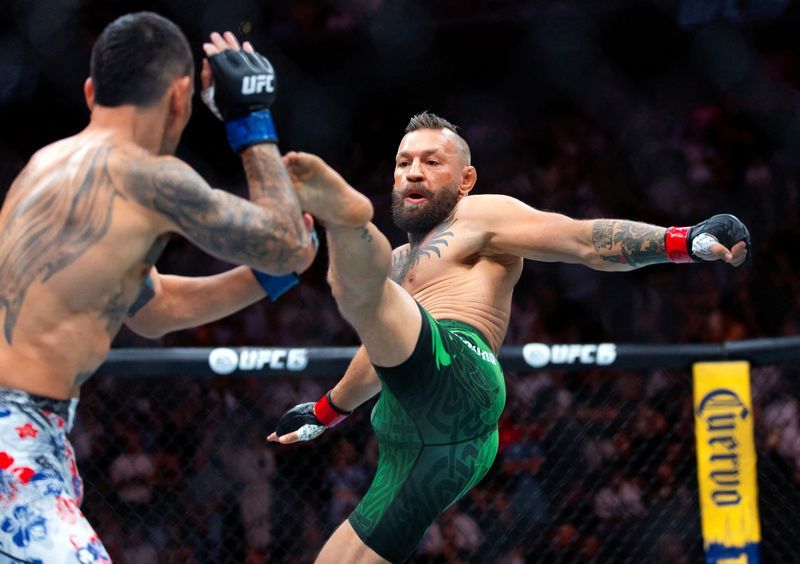
Conor McGregor's much-publicized return to mixed martial arts competition lasted merely 69 seconds before a gruesome knee injury forced him to abandon the octagon. The former two-weight champion sustained the injury during the opening moments of his Saturday showdown with Max Holloway in Las Vegas when his body buckled awkwardly following an attempted jump kick. Despite his initial determination to continue, McGregor quickly signalled to the referee that he could not proceed, bringing his comeback effort to an abrupt and deflating conclusion.
In a statement posted to Instagram on Monday, the 37-year-old Irish fighter expressed his resolve to move forward with the rehabilitation process. McGregor announced his intention to undergo surgery and subsequently engage in prehabilation training before returning to martial arts practice. He indicated his desire to compete once more, framing this final bout as the closing chapter of his current contract. His message conveyed a spiritual dimension to his recovery, with references to faith and belief underpinning his determination to make another comeback attempt.
McGregor's career trajectory over the past half-decade illustrates a troubling pattern of disruptions that have consistently interrupted his competitive ambitions. Five years prior, he suffered a significant leg fracture during an encounter with Dustin Poirier, a setback that necessitated an extended absence from competition. More recently, plans for a June 2024 matchup against Michael Chandler evaporated when McGregor aggravated an injury to his toe during training sessions, forcing event promoters to shelve the engagement.
Beyond the physical toll of repeated injuries, McGregor has encountered substantial obstacles outside the sporting arena that have complicated his position within the combat sports ecosystem. In a civil court proceeding conducted in Ireland, a jury determined that McGregor bore liability for misconduct of a serious nature involving a woman named Nikita Hand dating to 2018. That legal determination carried significant reputational implications for the athlete and raised questions about his future marketability and standing within the sport.
The fighter's troubles intensified further when international anti-doping authorities imposed disciplinary consequences for compliance failures. In October 2025, McGregor accepted an 18-month suspension imposed by Combat Sports Anti-Doping following his repeated inability to be located for biological sample collection attempts during 2024. Although the ban was applied retroactively and technically expired by March of this year, the sanction underscored the institutional complications surrounding his return to active competition.
For Malaysian and Southeast Asian fight fans, McGregor's situation reflects broader challenges facing elite athletes attempting to navigate the intersection of professional sport, legal accountability, and institutional governance. The region has witnessed growing interest in mixed martial arts over the past decade, with local promotions expanding their viewership and athlete recruitment efforts. However, cases like McGregor's demonstrate how personal conduct, legal consequences, and regulatory frameworks can substantially constrain even the most accomplished competitors.
The timing of McGregor's injury carries symbolic weight given the prolonged absence preceding this latest comeback attempt. His previous departure from competition spanned years rather than months, leading many observers to question whether he retained the physical capacity and competitive sharpness to remain relevant at elite levels. This weekend's outcome, while obviously not the comeback narrative anyone anticipated, may have been viewed by some as a cautionary indicator regarding the challenges of extended absences from sport.
From a promotional perspective, McGregor's return generated substantial commercial interest despite his extended layoff and the various controversies shadowing his reputation. The Las Vegas event attracted significant viewership and media attention, suggesting that his celebrity status and fighting pedigree retain drawing power even amid personal and legal complications. However, another extended injury layoff threatens to further erode his marketability and competitive relevance within an increasingly deep talent pool of younger fighters.
The question of whether McGregor can realistically achieve another competitive return hinges on multiple variables extending beyond his physical recovery. Medical rehabilitation from serious knee injuries typically requires substantial time and intensive therapeutic intervention. Additionally, the psychological toll of repeated setbacks and the mounting accumulation of life circumstances working against his competitive aspirations may eventually exhaust even a fighter of considerable mental resilience. His statement about a final contracted bout suggests McGregor envisions limited remaining opportunities within his current agreement with the organization.
For the broader combat sports industry, McGregor's ongoing struggles carry implications regarding fighter health, career longevity, and the institutional capacity of promotions to manage athlete welfare. The incident also raises questions about whether proper medical screening and readiness protocols were in place before permitting McGregor to compete after such an extended absence. These considerations resonate particularly strongly in emerging markets across Asia where regulatory frameworks governing combat sports remain less developed than in established Western markets.

