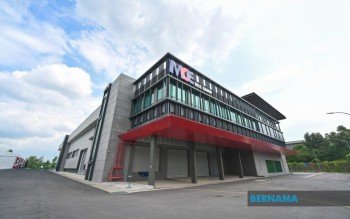
MCE Holdings Bhd has officially inaugurated its MCE Auto Hub, a RM50 million advanced manufacturing facility located within UMW High Value Manufacturing Park in Serendah, Hulu Selangor. The facility represents a strategic expansion of the company's operational footprint and represents the opening salvo in an ambitious long-term investment strategy that could eventually reach RM200 million. Investment, Trade and Industry Minister Datuk Seri Johari Abdul Ghani officiated the launch, underscoring the government's backing for the initiative and its importance to Malaysia's automotive ecosystem development.
The MCE Auto Hub spans 5.52 hectares and is engineered as an Industry 4.0-ready manufacturing hub, incorporating clean room production areas and precisely controlled manufacturing environments suited to the production of cutting-edge automotive electronics. The facility is capable of handling both traditional internal combustion engine components and next-generation electric vehicle electronics, reflecting the dual trajectory Malaysia's automotive industry must navigate as global markets shift toward electrification. This versatility positions MCE to serve a broader customer base during the transitional period ahead.
MCE's trajectory in the automotive sector spans more than thirty years, during which the company has evolved from a supplier of basic automotive components into a tier-1 manufacturer capable of offering original equipment manufacturing and original design manufacturing services. The company's inaugural contract in 1990 involved supplying remote alarms and central locking systems to the domestic market, but its portfolio has since diversified significantly into sophisticated mechatronic solutions and advanced automotive electronics. This evolutionary path demonstrates the company's ability to adapt to technological shifts and customer demands.
The new facility will serve as MCE's primary hub for design, engineering and manufacturing operations. With the hub now operational, the group's total workforce has expanded to 680 employees, including 90 engineers distributed across operational sites in Johor Bahru, Port Klang and Serendah. This concentration of engineering talent positions the company to manage increasingly complex product development cycles and respond more rapidly to customer requirements across Malaysia, ASEAN and the United States.
MCE group managing director Dr Goh Kar Chun articulated the company's strategic vision during the launch, emphasising that the Auto Hub represents another chapter in MCE's continuous investment in capability building. He noted that the company has systematically strengthened its technical foundation, allowing it to move beyond traditional automotive components into advanced electronics and mechatronic solutions. Goh highlighted MCE's ambition for Malaysian engineering and manufacturing capabilities to achieve global competitive standing, particularly as Asian markets consolidate their automotive electronics expertise.
The facility's opening carries significance beyond MCE's individual business interests. Investment minister Johari emphasised that the project demonstrates confidence in Malaysia's automotive future and reflects the nation's capacity to attract manufacturing investment during a period of profound industry transformation. He underscored that maintaining competitive advantage requires local suppliers to cultivate engineering expertise, embrace innovation and deploy advanced technologies—precisely the capabilities the MCE Auto Hub has been designed to facilitate.
MCE's expansion strategy aligns closely with Malaysia's broader push toward higher-value manufacturing activities within the automotive ecosystem. The facility is expected to catalyse greater localisation within the industry, creating pathways for Malaysian engineers, technology firms and component suppliers to participate in designing, developing and manufacturing advanced automotive technologies domestically. This cascading effect could strengthen upstream supplier networks and generate employment opportunities across related sectors including semiconductors and electrical and electronics manufacturing.
Goh articulated a collaborative vision for Malaysia's automotive future, arguing that tier-1 suppliers like MCE must work closely with original equipment manufacturers and ecosystem players to create opportunities for Malaysian-developed technologies to be integrated into automotive applications and supply chains. This ecosystem approach recognises that no single company can dominate the complex technical and commercial landscape of modern automotive electronics manufacturing. By positioning MCE as a nexus connecting carmakers with local technology providers, the company can amplify the impact of its investment across the broader industry.
The MCE Auto Hub's Industry 4.0 architecture represents a forward-looking approach to manufacturing. The facility incorporates digital connectivity, automation and data analytics capabilities that enable real-time production monitoring, quality control and predictive maintenance. These features are essential as automotive electronics become increasingly complex and quality tolerances tighten, particularly in safety-critical applications for electric vehicles where reliability requirements are stringent. The clean room environments specifically accommodate the precision requirements of advanced electronics assembly.
The facility's capacity to serve both internal combustion and electric vehicle segments positions MCE strategically as the automotive market undergoes its most significant technological transition in a century. While many established suppliers face the challenge of managing dual portfolios, MCE's new hub has been purposefully designed to accommodate this complexity. This flexibility provides the company with resilience as the market's composition shifts, while simultaneously allowing it to support original equipment manufacturers navigating their own electrification timelines.
Malaysia's automotive sector has historically relied on Japanese multinational investment and expertise, with limited development of indigenous tier-1 supplier capabilities. MCE's expansion into advanced electronics manufacturing and engineering services suggests a maturation of local supplier competencies. As global automotive supply chains diversify away from concentrated geographic dependencies, Malaysia's proximity to Southeast Asian markets and its established manufacturing infrastructure position it as an attractive alternative production location for international carmakers and electronics firms seeking to reduce geographic concentration risk.
The RM200 million investment trajectory outlined by MCE suggests confidence in sustained demand for automotive electronics manufactured in Malaysia. If subsequent phases of expansion proceed as planned, the investment would represent one of the more substantial recent commitments to automotive electronics capability development in the country. The creation of a specialised facility for next-generation mobility solutions signals MCE's intention to participate in emerging automotive technology domains including autonomous driving systems, vehicle connectivity platforms and energy management systems for electric vehicles.
For Malaysian technology firms and engineers, the MCE Auto Hub opens opportunities to demonstrate capabilities in advanced automotive applications. The company's emphasis on collaboration within the ecosystem suggests it will actively seek local partnerships for component supply, software development and engineering services. This approach could stimulate cluster formation around automotive electronics in Malaysia, similar to models developed successfully in Southeast Asian automotive hubs, ultimately strengthening the country's position in regional and global automotive supply networks.

