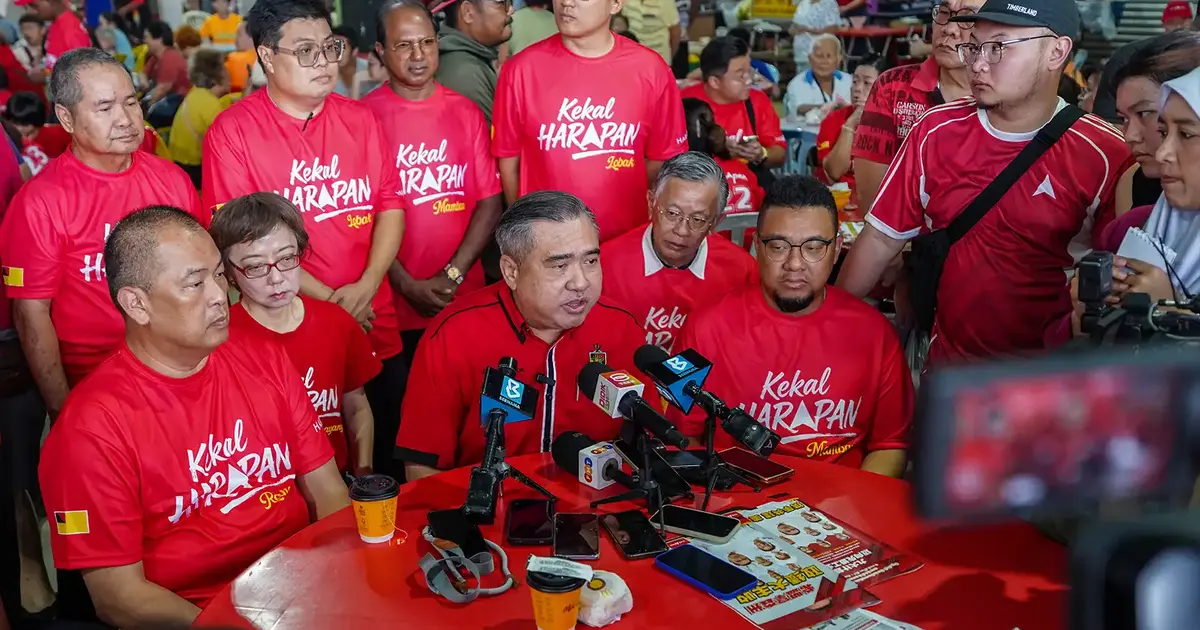
The Malaysian Chinese Association (MCA) has emerged as the principal casualty of the electoral cooperation framework between Barisan Nasional (BN) and Perikatan Nasional (PN) in Negeri Sembilan, according to DAP secretary-general Loke Siew Fook, who questioned whether the arrangement has delivered the intended benefits for the Chinese-majority party.
Loke's assessment highlights the contentious negotiations that preceded the coalition's finalisation in the Negeri Sembilan state assembly elections. The DAP leader observed that MCA made substantial concessions by relinquishing three constituencies that have historically served as strongholds for the party, a move strategically designed to eliminate multi-cornered electoral contests that typically fragment opposition votes and diminish overall BN competitiveness.
The architectural rationale behind this sacrifice was straightforward: by consolidating candidate fields and reducing the number of competing parties within individual constituencies, the combined BN-PN coalition aimed to present unified challenges against the ruling administration. This approach reflected a pragmatic calculation that coordinated contests would enhance the opposition's electoral prospects more effectively than splintered campaigns where candidates from allied parties competed simultaneously.
However, this carefully calibrated strategy encountered significant disruption from Perikatan Nasional, according to Loke's characterisation. The complications arose when PN, rather than adhering strictly to the predetermined seat allocation framework, pursued a parallel agenda that undermined the original compromise architecture. This departure from the agreed arrangement effectively neutralised much of the strategic value that MCA's territorial concessions were intended to generate.
The situation underscores the fragility of coalition mathematics in Malaysian politics, where subtle disagreements over seat distribution and candidate selection can rapidly escalate into broader tensions between ostensibly allied parties. The BN-PN collaboration in Negeri Sembilan represented an effort to transcend traditional factional divisions that have historically complicated opposition unity, yet the execution revealed the persistent challenges inherent in coordinating diverse political entities with competing organisational interests and electoral bases.
MCA's predicament carries particular significance for Chinese voters in Negeri Sembilan, who have traditionally relied on the party as their primary representative within the BN framework. The withdrawal from three constituencies potentially signals reduced organisational presence and electoral investment in communities where the party previously maintained substantial political machinery. This contraction, whether temporary or permanent, may influence Chinese-community perceptions of MCA's negotiating leverage and capacity to secure constituency-level resources for constituent services.
The broader implications extend to Malaysia's coalition politics more broadly. The BN-PN arrangement in Negeri Sembilan serves as a test case for whether regional-level cooperation between formerly competing blocs can function effectively without creating internal grievances that ultimately undermine the partnership. Loke's observations suggest that the current configuration may harbour unresolved tensions that could resurface during subsequent electoral cycles or policy decisions requiring coordinated action.
From a DAP perspective, the party's assessment reflects broader strategic calculations about whether external alliances with PN represent genuine partnership opportunities or arrangements that inadvertently advantage some coalition partners while marginalising others. The MCA situation provides empirical evidence supporting DAP's historical wariness regarding PN's commitment to genuine power-sharing as opposed to tactical positioning for maximum advantage.
The Negeri Sembilan dynamics also merit attention from observers tracking the evolution of Malaysian state-level politics, where the proliferation of competing political alignments—BN, PN, and various independent configurations—has created unprecedented complexity. Unlike federal politics, where coalitional structures remain relatively stable, state-level contests increasingly feature fluid arrangements adapted to local electoral realities and power distributions, making predictability challenging for all participating parties.
MCA's position within the BN coalition has historically depended on its capacity to deliver Chinese votes and manage community expectations regarding representation. The Negeri Sembilan arrangement, which required the party to withdraw from competitive races despite remaining formally committed to coalition politics, creates an awkward paradox: the party participates in a broader electoral framework while simultaneously experiencing reduced direct electoral engagement. This dynamic potentially affects MCA's ability to mobilise grassroots support or justify its coalition participation to rank-and-file members questioning whether cooperation produces commensurate returns.
The unfolding situation in Negeri Sembilan also reflects broader questions about whether opposition coalition-building can achieve the stability necessary for effective governance alternatives. If coordinated electoral arrangements persistently generate internal resentment and perceived unfairness among participant parties, they may ultimately prove counterproductive, breeding discord that persists beyond individual election cycles and complicates future cooperative efforts.
Moving forward, the resolution of these tensions may depend substantially on electoral outcomes in Negeri Sembilan and whether the BN-PN arrangement demonstrates sufficient practical success to justify the sacrifices individual parties have made. If the coalition underperforms expectations despite MCA's compromises, the party's willingness to accept similar arrangements in future contests would likely diminish considerably, potentially fragmenting the opposition landscape further across Malaysia's states.

