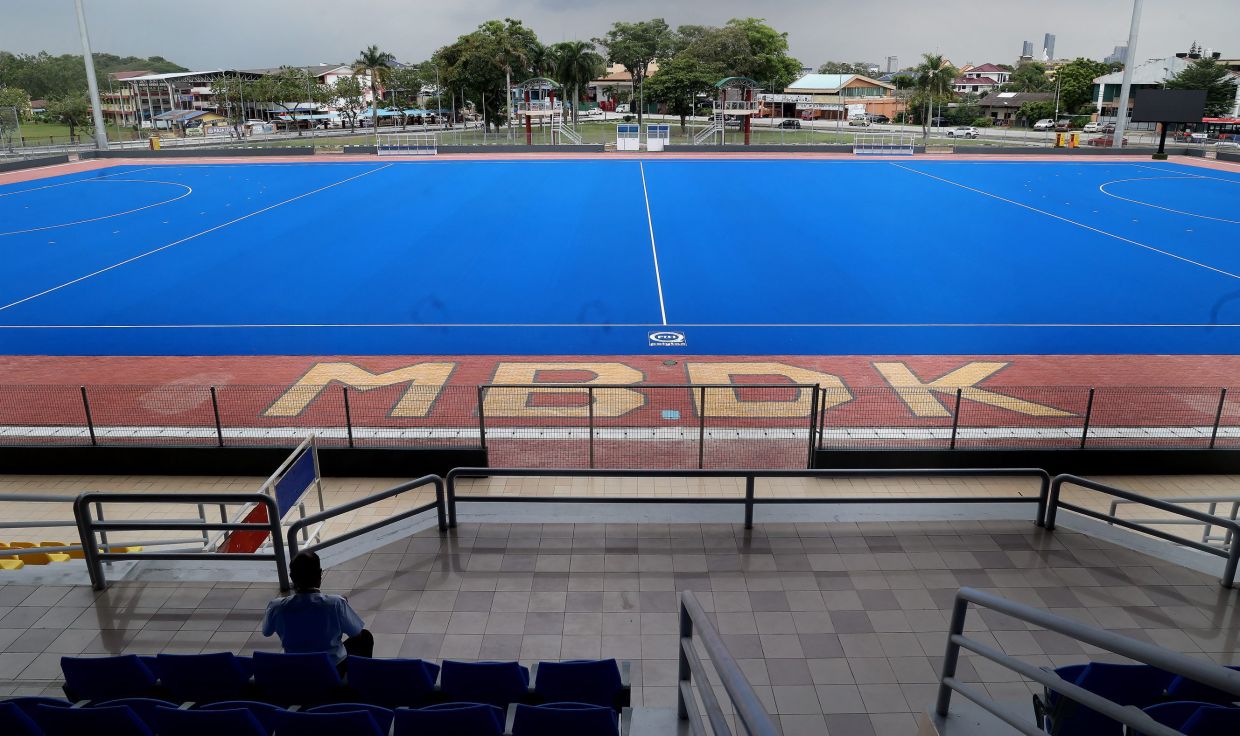
Klang Royal City Council (MBDK) is moving to hand over operational responsibility of its newly refurbished Pandamaran Hockey Stadium to Selangor Hockey Association, recognising the sporting body's institutional knowledge and track record in facility management. The partnership represents a strategic shift towards professionalised stadium stewardship that extends well beyond the typical council-run model, with both organisations committed to positioning the venue as a premier destination for competitive and recreational hockey in the region.
Klang mayor Datuk Abd Hamid Hussain framed the RM9mil stadium redevelopment as far more than routine municipal expenditure, instead characterising it as a calculated investment in Klang's sporting and economic future. The facility's location between Jalan Sukma and Jalan Raja Lumu in Pandamaran, Port Klang, places it within proximity to both residential populations and the busy port district, making it accessible to diverse user groups. Abd Hamid emphasised that housing such a high-profile sporting asset demands more than conventional management practices, necessitating the kind of specialist oversight that a dedicated hockey association can provide.
The partnership will see MBDK establish a dedicated stadium management team operating under SHA guidance, concentrating on the full lifecycle of facility stewardship encompassing operations, maintenance, security, event promotion and booking administration. This structural separation of concerns marks a departure from generalised council sports administration, allowing technical expertise in hockey event logistics and player welfare to inform day-to-day decisions. The arrangement also creates scope for SHA to programme competitive fixtures and training camps that might otherwise struggle to secure municipal venues competing for council attention.
The stadium's infrastructure reflects contemporary international standards, incorporating a synthetic playing surface engineered for competitive hockey, an advanced drainage system protecting the pitch from monsoon-season saturation, comprehensive floodlighting enabling evening fixtures, and an electronic scoreboard supporting broadcast-quality match presentation. Supporting amenities including athlete changing facilities and auxiliary spaces round out the facility's capabilities. This technical specification matters considerably because it positions Pandamaran as capable of hosting events beyond the State Games, particularly international qualifying tournaments and regional championships that demand FIH-compliant venues.
Certification by the International Hockey Federation (FIH) represents the stadium's signature achievement, validating the council's construction and design decisions against a rigorous external standard. The certification, valid through July 2, 2029, confirms that Pandamaran meets the dimensional, surface, drainage and safety specifications required for FIH-sanctioned competition. This credential removes bureaucratic obstacles to hosting international fixtures and positions the venue as an approved venue for broadcast-quality matches, a designation that matters significantly for sports tourism and event bidding.
The soft launch and test match scheduled for today represent necessary validation steps ahead of the 22nd Sukma, which Selangor will host from August 15 to 24, 2026, with Para Sukma to follow from September 5 to 10. These multi-sport games guarantee high-volume fixture scheduling during peak season, stress-testing operational systems and revealing any teething problems before global broadcast exposure. The test game allows the SHA-led management team to rehearse match day protocols, media workflows, and facility systems under realistic conditions without the full complexity of a State Games opening.
Beyond the immediate Sukma calendar, Abd Hamid identified a broader economic logic driving the SHA partnership model. Investing RM9mil in a single facility might appear extravagant without clarity on how that capital translates into sustained revenue or community benefit. By enabling the association to programme competitive fixtures, host training camps, and attract regional tournaments, the stadium becomes an economic multiplier, drawing visiting supporters, athletes, coaches and media into Klang's hospitality sector. The FIH certification further expands the addressable market of potential events, allowing Pandamaran to compete for international qualifying tournaments that would otherwise bypass Malaysia entirely.
The positioning of Klang as an emerging hockey hub carries implications for Southeast Asian sporting infrastructure. Most countries in the region concentrate major sports facilities in capital cities, but Klang's proximity to Kuala Lumpur, combined with the port city's own substantial population base, creates scope for a distributed venue strategy. This geography potentially attracts event organisers seeking alternatives to congested central districts, offering lower venue costs and simpler logistics while maintaining media accessibility. The stadium's FIH certification means it enters a relatively exclusive regional club of facilities capable of hosting world standards competition outside national capitals.
The management team structure also signals Malaysian civic authorities' gradual recognition that council sports directorates often lack specialised personnel to optimise high-profile facilities. Delegating operational control to sport-specific associations allows municipal governments to retain capital asset ownership while accessing expert judgment on programming, maintenance scheduling, and revenue generation. This model gains particular relevance as Malaysian cities invest in newer sporting infrastructure intended to showcase both national sporting capability and urban development progress.
The SHA partnership must still navigate the practical challenge of balancing public access with elite competitive use. A certified international hockey venue serves national team training camps and international tournaments, but such elite programming potentially limits community recreational access during high-season weeks. The management team will need to develop programming calendars that preserve adequate slots for school hockey programmes, club competitions, and casual community use whilst satisfying fixture requirements and generating operational revenue from hire fees.
Selangor's decision to vest management authority in SHA also reflects broader governance shifts across Malaysian local authorities seeking to outsource non-core functions to specialist entities. This approach permits MBDK to concentrate resources on core municipal services whilst ensuring that facilities requiring ongoing expert attention operate under optimal conditions. The stadium's international certification validates this bet, suggesting that professional management of FIH-compliant facilities demands capabilities that generalist councils cannot sustainably maintain without specialist support.
Looking forward, the Pandamaran Stadium partnership provides a replicable model for other Malaysian municipalities investing in sports infrastructure. The combination of significant capital investment, international standards certification, and specialist operational management through sport-specific associations creates the conditions for facilities to function as genuine community assets rather than underutilised showpieces. For Klang specifically, the stadium transforms Port Klang's sporting profile, offering the port city a signature venue that justifies investment in hockey development pathways and positions the municipality as a serious contender for regional and international sporting events seeking venues outside Kuala Lumpur.

