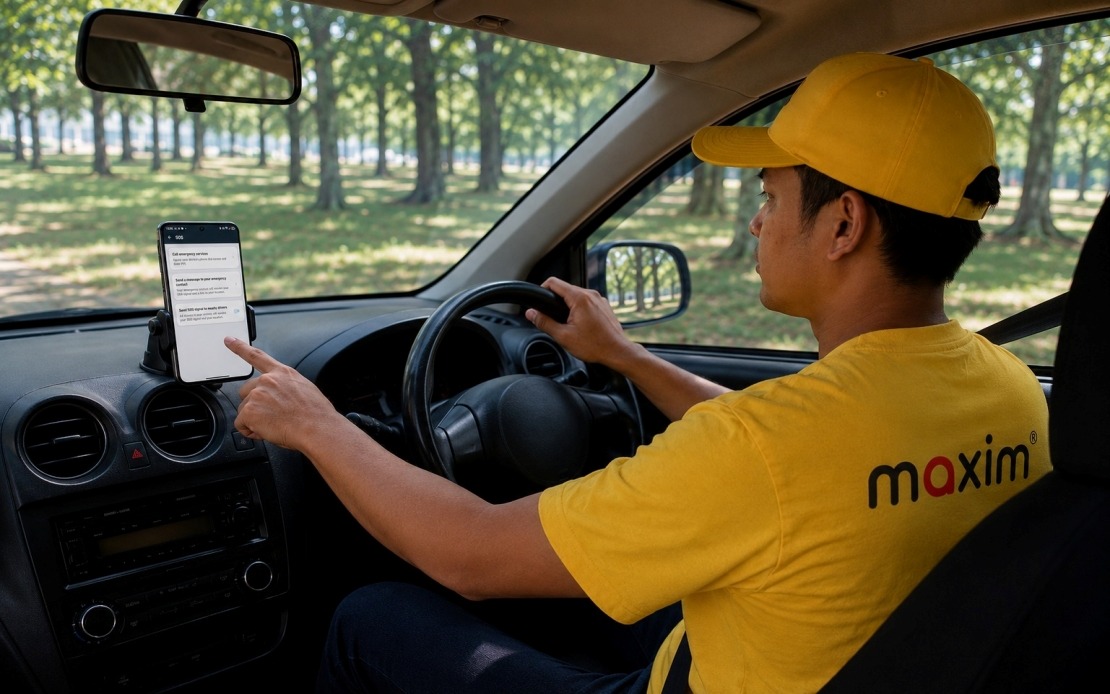
Maxim Malaysia has substantially upgraded its in-app emergency response capabilities, introducing a redesigned SOS system that promises faster assistance for both passengers and driver-partners during critical situations. The enhancements represent a strategic move by the ride-hailing platform to address safety concerns in the Malaysian mobility sector, where personal security during rides has become an increasingly important consideration for users.
The cornerstone of the upgrade is a reconfigured emergency button that operates identically for all platform users, eliminating confusion about functionality. When activated, the system provides flexibility in how users seek assistance. They can immediately connect to the 999 emergency hotline or simultaneously notify up to three pre-registered emergency contacts. This dual-pathway approach recognises that different emergencies may warrant different responses—a serious incident may require professional emergency services, while others might benefit from immediate family notification.
Technically, the system delivers critical information to recipients through SMS text messages, a deliberate choice that ensures reliability even when internet connectivity falters. Each alert message includes precise GPS coordinates of the user's location alongside a live tracking link that allows designated contacts to monitor the journey in real time. This redundancy in communication channels addresses a practical reality in Malaysian infrastructure where network conditions can be unpredictable, particularly in less urbanised areas or during peak usage periods.
Driver-partners utilising the platform gain access to a distinctive Driver Alert System that fundamentally changes how peer-to-peer assistance operates. When a partner driver encounters an emergency, notifications automatically broadcast to other Maxim drivers within a three-kilometre radius, providing location-specific information about the type of incident. This neighbourhood-level safety net creates an informal first-responder network, potentially enabling fellow drivers to offer immediate help while professional emergency services are en route. For a region where response times to incidents can vary significantly by location, this peer mechanism could prove instrumental in critical moments.
Mohd Hazwan Musli, Maxim Malaysia's director, emphasised that the system prioritises user agency in emergency decision-making. Rather than imposing a single standardised alert protocol, the upgraded platform empowers users to rapidly determine their most appropriate lifeline—personal contacts, emergency responders, or nearby fellow drivers. The ability to make this choice within seconds addresses a psychological reality that in genuine emergencies, hesitation or friction in access can compromise outcomes. The director's comments underscore a philosophy that effectiveness in safety systems depends partly on user autonomy and rapid option selection.
The broader safety infrastructure includes supplementary features addressing different threat vectors. An encrypted in-app chat function protects against fraud attempts that commonly target ride-hailing users, particularly in financial scams. Internal trip monitoring maintains continuous records of journey data including GPS coordinates for every transaction, creating an auditable trail useful for dispute resolution and security investigations. For passengers, a dedicated Trip Sharing feature permits immediate transmission of live ride details to family or friends upon vehicle boarding, effectively creating an external oversight mechanism that deters problematic behaviour.
Data protection represents a significant dimension of the system architecture. All information transmitted through the SOS function, Driver Alert System, and Trip Sharing features undergoes encryption conforming to contemporary security standards. Critically, only authorised security personnel and relevant authorities can access this data when lawfully required, establishing clear boundaries around privacy invasion. This encryption-based approach responds to growing concerns across Southeast Asia about data misuse and unauthorised access by third parties, establishing trust through technical rather than merely procedural safeguards.
The timing of these enhancements reflects evolving expectations within Malaysian consumer markets regarding platform accountability. Ride-hailing services, which have rapidly proliferated across major urban centres and expanded into secondary cities, have simultaneously generated safety incidents that received substantial media attention. By publicly upgrading safety infrastructure, Maxim signals responsiveness to these concerns and differentiates itself within a competitive landscape where multiple platforms operate. For Malaysian users choosing between ride-hailing providers, documented safety features increasingly influence selection decisions.
Geographically, the implications extend across the Southeast Asian region where Maxim operates multiple markets. Countries including Thailand, Vietnam, and Cambodia face comparable safety challenges in ride-hailing sectors, where regulatory frameworks remain nascent and user protection mechanisms vary considerably. Enhanced systems deployed in the more mature Malaysian market often establish templates subsequently implemented elsewhere in Maxim's regional network, potentially elevating safety standards progressively across the region.
From a regulatory perspective, these voluntary enhancements by a major platform may influence future policy discussions. Malaysian authorities monitoring ride-hailing operations can point to industry-led safety improvements as evidence of sector self-regulation, potentially reducing pressure for immediate statutory intervention. Conversely, if incidents continue despite upgraded systems, regulators may argue that voluntary measures prove insufficient and mandate more prescriptive requirements. The effectiveness of Maxim's enhanced SOS system will therefore shape not just user confidence but also the regulatory trajectory for mobility services across Malaysia.
For driver-partners, the upgraded system presents both opportunities and obligations. Notification of nearby emergencies creates potential for community assistance but also establishes expectations about mutual support. Partners must decide whether and how to respond to alerts, creating informal duty dynamics. Maxim's platform essentially transforms its driver network into a distributed safety infrastructure, which enhances collective security but introduces questions about liability and responsibility that may generate future policy discussions.
The practical effectiveness of these features ultimately depends on user awareness and adoption. Maxim must ensure that both passengers and driver-partners understand the full functionality of upgraded systems, as sophisticated features prove useless if users remain unaware of their existence. Educational campaigns explaining the SOS system's capabilities and operational modalities will determine whether the technical infrastructure translates into genuine safety improvements.

