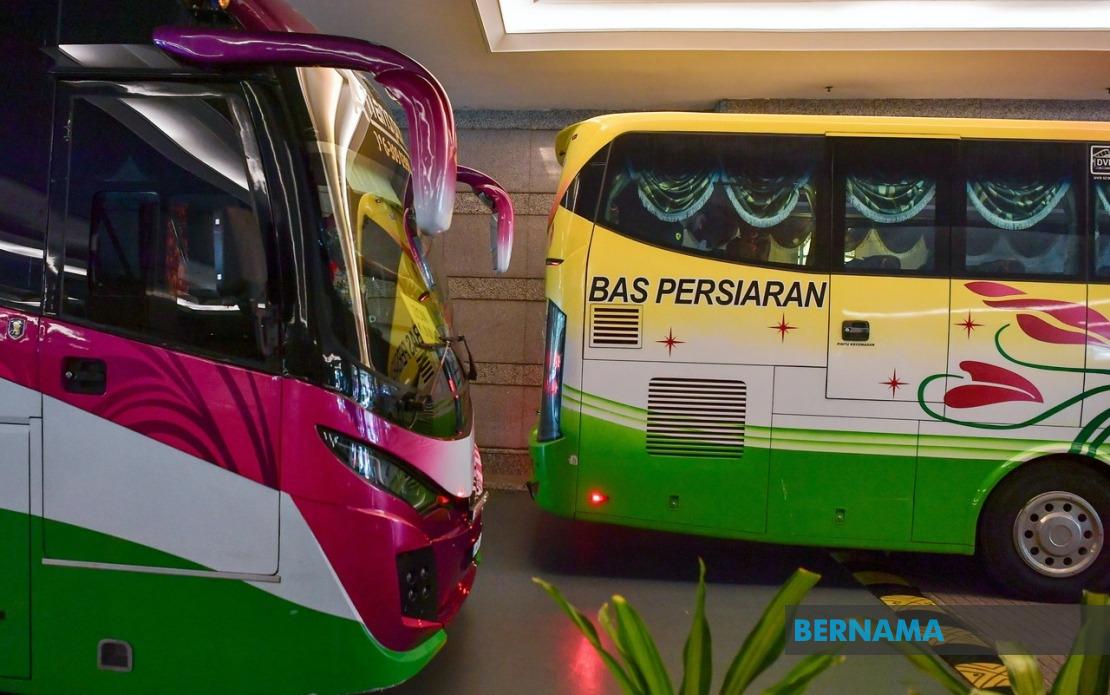
The Malaysian Association of Tour and Travel Agents (MATTA) has formally challenged the government's recent decision to exclude licensed tourism transport operators from the diesel subsidy programme, asserting that the move mischaracterises the industry's role and will ultimately harm Malaysian holiday-makers alongside international visitors.
MAtta president Nigel Wong directly contradicted statements from Finance Minister II Datuk Seri Amir Hamzah Azizan, who had suggested that extending fuel subsidies to tourism operators would primarily benefit foreign tourists. Wong emphasised that Malaysia's licensed tourism transport sector provides critical services across a spectrum of domestic tourism activities, extending far beyond the niche market of international visitor transfers.
The scope of domestic tourism transport is considerably broader than commonly understood. Operators in this space facilitate school excursions, corporate team-building events, incentive travel programmes, religious pilgrimages to Islamic heritage sites and places of worship, specialised educational expeditions, and community-organised recreational activities. These services collectively represent a substantial portion of tourism transport activity and overwhelmingly serve Malaysian citizens rather than overseas visitors.
Removal of diesel subsidies creates a direct cascade of cost pressures throughout the tourism transport ecosystem. Operators facing higher fuel acquisition costs have limited options beyond passing these expenses downstream to consumers through elevated ticket prices and costlier travel package components. For Malaysian families and groups already navigating constrained discretionary spending, such fare increases could prove decisive in determining whether domestic holiday trips remain financially feasible.
Beyond the immediate consumer impact, the decision carries implications for the government's Visit Malaysia 2026 campaign and broader tourism recovery objectives. The campaign fundamentally depends on creating conditions that encourage Malaysians to explore destinations domestically while simultaneously presenting Malaysia as an accessible and competitively priced destination to international markets. Diesel subsidy exclusions undermine both dimensions of this strategy by constraining affordability precisely when the sector requires cost advantages to remain competitive regionally.
The economic multiplier effects of robust domestic tourism activity extend well beyond the transport operators themselves. When Malaysians travel to unfamiliar regions within the country, spending distributes across accommodation providers, food and beverage establishments, attraction operators, retail businesses, and local service providers. Communities dependent on tourism revenue benefit from employment opportunities and consumer activity generated by this spending circulation. Conversely, price barriers that suppress domestic travel compress these multiplier effects and reduce income-generation opportunities for peripheral businesses.
Wong characterised the subsidy mechanism as worthy of reconsideration from an investment perspective rather than purely as a fiscal expenditure. The argument rests on the proposition that strategic subsidisation of tourism transport yields long-term economic returns exceeding the annual cost to government, particularly when analysed across multiple fiscal years and inclusive of employment, tax revenue, and economic growth contributions.
MATA has submitted a multi-point recommendation to the Finance Ministry requesting comprehensive programme reconsideration, collaborative engagement with the Ministry of Tourism, Arts and Culture and other stakeholders to design a narrowly-targeted and properly-governed subsidy mechanism, and formal acknowledgement of tourism transport as a strategic economic sector warranting policy support aligned with broader national tourism objectives.
The exclusion decision appears anchored in the assumption that most benefits would accrue to foreign visitors, yet this characterisation fundamentally misrepresents how Malaysia's tourism transport industry operates in practice. School group transport, corporate event coordination, and religious pilgrimage services have virtually no international visitor component. Even international visitor-focused operators frequently serve domestic passengers on the same routes and with the same capacity, making blanket exclusion imprecise policy design.
The broader policy question concerns how government subsidy programmes should be structured when they serve genuinely mixed-use purposes. Pure international beneficiary subsidies may warrant scrutiny, but where domestic citizens represent a substantial and measurable portion of service users—as demonstrably occurs in Malaysian tourism transport—exclusion becomes counterproductive to broader policy objectives including domestic mobility, regional economic development, and tourism sector growth.
From a Southeast Asian competitive perspective, Malaysia competes with Thailand, Indonesia, and Vietnam for both domestic and international tourism spending. Relative affordability of transport services influences destination selection for regional travellers. Policy decisions that elevate transport costs without comparable action by regional competitors risk shifting tourism activity to lower-cost alternatives, ultimately undermining Malaysia's position as a preferred regional tourism hub.
The timing of this subsidy exclusion, occurring mid-year and during the critical ramp-up period for the Visit Malaysia 2026 campaign, compounds the disruption. Tourism operators require planning visibility and cost certainty to price packages competitively and commit resources to marketing initiatives. Policy uncertainty creates hesitation in investment and marketing expenditure precisely when campaign momentum requires maximum sectoral engagement.
MATA's intervention represents a significant pushback from industry stakeholders who understand daily operational realities better than policy architects working from aggregate data. The association's position warrants serious consideration by government, particularly given the documented role of domestic tourism in employment creation, regional development, and consumer welfare across Malaysia's diverse geography.

