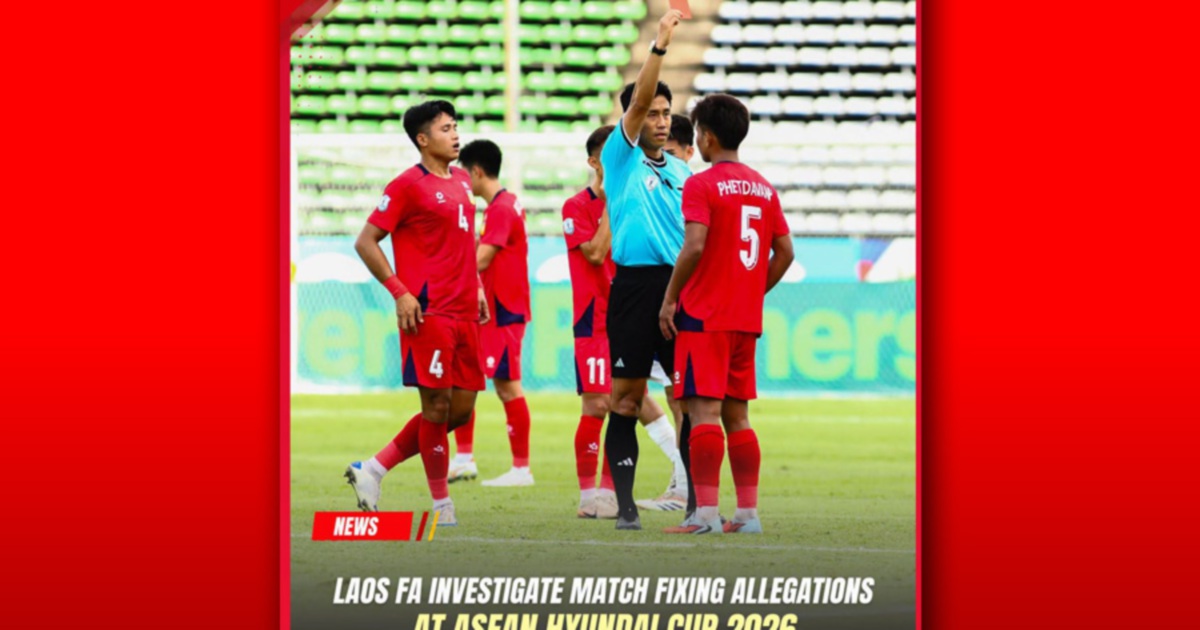
The integrity of regional football competition has come under severe scrutiny following allegations of match-fixing and financial impropriety involving Laos's national team. The Lao Football Federation has initiated a comprehensive investigation into claims that members of the squad engaged in corrupt activities, including accepting bribes and participating in illegal gambling networks. The scandal represents a significant blow to the credibility of Southeast Asian football at a critical juncture when the region has been working to elevate standards and professionalism across the sport.
The LFF's decision to formally investigate the matter signals the organization's commitment to transparency, though it also exposes vulnerabilities within the region's governance structures. Match-fixing represents an existential threat to competitive sports, undermining the fundamental principle that outcomes should be determined purely by athletic performance and tactical merit. For Southeast Asian football, where financial resources are often limited compared to other regions, the temptation to manipulate results for financial gain can be particularly pronounced when players earn modest salaries and face economic pressures.
The allegations emerge during a period when Asean Cup competitions have attracted increasing television audiences and sponsorship interest. This growing commercial value has paradoxically created incentives for corruption, as organized betting syndicates see opportunities in matches involving teams from nations where regulatory oversight may be less developed. Laos, like several other Southeast Asian nations, has faced challenges in implementing robust anti-corruption frameworks comparable to those in more developed sporting jurisdictions.
The involvement of illegal gambling networks points to transnational dimensions of the scandal. Football match manipulation is frequently connected to organized criminal operations that operate across borders, exploiting regulatory gaps and leveraging sophisticated betting platforms. For Malaysian football authorities and regional governing bodies, this Laos case serves as a cautionary reminder of how corruption can infiltrate even smaller national associations if adequate safeguards are not maintained.
The reputational damage to Laotian football extends beyond the immediate team involved. National football federations across Southeast Asia now face heightened scrutiny regarding their own internal controls and player monitoring systems. Asean Cup organizers will likely face questions about whether existing verification mechanisms adequately detect suspicious betting patterns or unusual match outcomes that might indicate manipulation.
Historically, Southeast Asian football has confronted match-fixing incidents sporadically, but the public investigation by a national federation demonstrates evolving institutional responses to corruption. The LFF's willingness to publicize the investigation rather than attempting to suppress the matter suggests some progress in regional sports governance, though critics may argue that reactive investigations are insufficient without preventative measures.
The financial implications warrant consideration. Sponsors and broadcasters increasingly demand assurances that competitions operate with integrity. A pattern of credible match-fixing allegations could deter investment in regional football development. For players from lower-profile nations seeking to build international careers, association with corruption allegations can damage marketability and limit opportunities with clubs in stronger leagues.
Laos faces particular challenges given its economic development status and limited resources for sophisticated anti-corruption infrastructure. The country's football federation operates with constraints that better-resourced bodies like the Football Association of Malaysia do not face. International support through Asian Football Confederation (AFC) mechanisms may prove essential for implementing comprehensive player education programs, betting monitoring systems, and disciplinary procedures that meet modern standards.
The investigation will likely examine whether bribery occurred through intermediaries, whether certain players were targeted for recruitment into fixing schemes, and how illegal gambling operations gained intelligence regarding team selection and tactical preparations. Establishing clear evidence and appropriate sanctions requires forensic investigation capabilities that may exceed current LFF capacity, potentially necessitating AFC intervention or independent oversight bodies.
Regional football bodies must now confront uncomfortable questions about whether existing regulations adequately protect competitions from organized corruption. The Asean Cup's profile has grown sufficiently to attract unwanted attention from criminal networks. Implementing mandatory player betting education, establishing independent integrity monitoring units, and creating whistleblower protection programs represent potential responses that could strengthen Southeast Asian football's defensive posture.
The scandal underscores how economic disparities within Southeast Asian football create unequal vulnerability to corruption. Wealthier national associations benefit from professional compliance departments and player welfare systems that reduce corruption incentives. Poorer federations lack comparable resources, creating a two-tier system where some nations can better protect competitive integrity than others.
For Malaysian stakeholders, particularly Football Association officials and professional league administrators, the Laos case reinforces the need for vigilant internal monitoring and transparent governance. Regional football's credibility ultimately depends on collective commitment to eliminating corruption across all member nations, not merely in wealthier or more developed jurisdictions.

