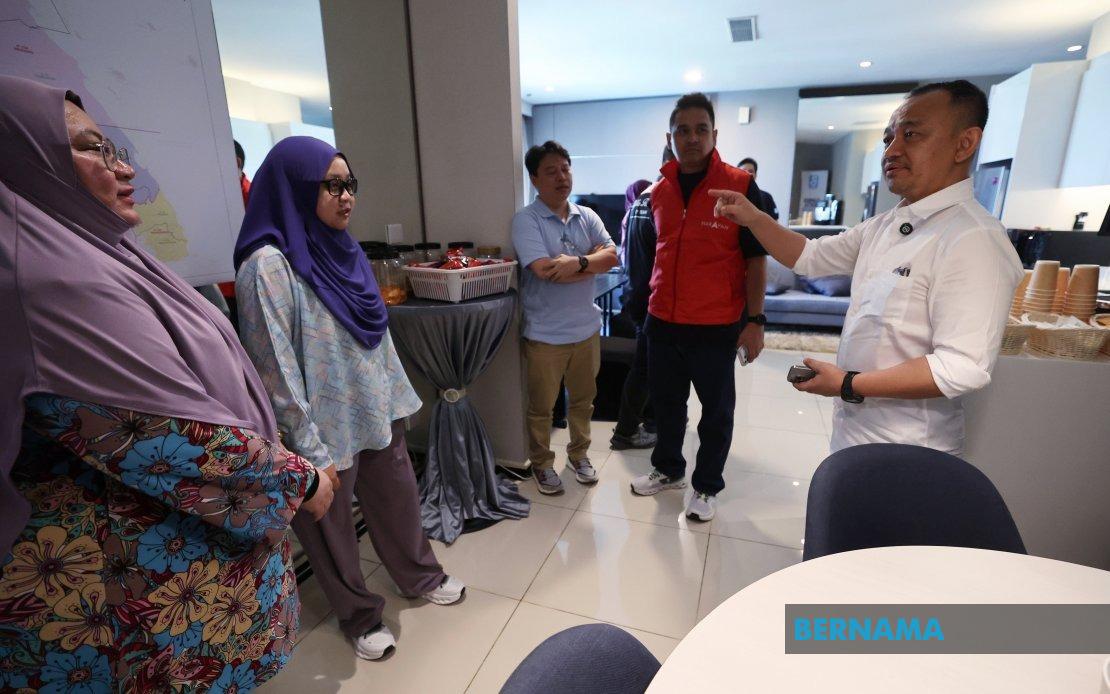
Pakatan Harapan candidate Dr Maszlee Malik is planning to introduce a specialised mobile application designed to make it easier for constituents in Puteri Wangsa to report grievances and lodge complaints if he wins a seat in the 16th Johor state election on July 11. The former education minister argues that given the constituency's sprawling geography and mixed demographic composition—ranging from upscale residential zones like Austin Heights to Felda Ulu Tebrau settlements—a technology-centred strategy is necessary to provide responsive and accountable representation.
The proposed app would function as more than a simple complaint mechanism. Maszlee envisions it as a tool for identifying residents who fall through administrative gaps, particularly single mothers and persons with disabilities who qualify for government support but lack awareness or face obstacles in accessing information. This targeting of marginalised groups underscores a strategic recognition that digital platforms can democratise access to welfare and government schemes by reducing bureaucratic friction. For a constituency as heterogeneous as Puteri Wangsa, such an approach could bridge communication barriers that traditional door-to-door campaigning cannot adequately address.
Maszlee draws inspiration from international models, specifically citing New York City Mayor Zohran Mamdani's community engagement methodology. Mamdani combines dedicated digital applications with social media platforms to collect real-time feedback directly from residents, creating direct channels of communication that bypass institutional layers. This approach resonates with contemporary expectations of political responsiveness, particularly among younger and digitally native voters who increasingly view technology-enabled governance as a standard rather than an innovation. By adopting similar frameworks, Maszlee positions himself as attuned to modern civic participation norms.
Beyond the app itself, his campaign strategy incorporates a multi-pronged engagement model that retains conventional mechanisms alongside digital innovation. Regular interaction with non-governmental organisations, residents' associations, and government agencies remains central to his outreach plan, as does convening town hall meetings to address constituency-specific concerns. This hybrid approach acknowledges that digital solutions, while efficient and scalable, cannot entirely displace the legitimacy and trust-building potential of face-to-face dialogue. The combination suggests an understanding that different voter segments respond to different communication modalities.
A significant pillar of his campaign involves targeted social media strategies designed to reach voters whom conventional campaigning cannot effectively address. Young voters and Malaysians working in Singapore—who lack time to participate in traditional walkabouts—represent a growing electoral segment whose concerns might otherwise remain unheard. Cross-border workers, in particular, represent a demographic increasingly important to Malaysian politics, as their economic contributions and transnational perspectives shape regional development debates. Social media offers a practical mechanism to include them in constituency conversations despite geographical separation.
The campaign explicitly acknowledges the limitations and challenges inherent in digital engagement. Algorithm-driven visibility and echo chambers—wherein platforms amplify content to like-minded audiences while suppressing exposure to competing viewpoints—risk fragmenting rather than unifying constituent discourse. To counter this fragmentation, Maszlee's team is creating tailored messaging that accounts for the distinct priorities and backgrounds of different voter clusters: Generation Z voters, overseas Malaysian workers from Chinese communities, rural and semi-urban residents, and salaried professionals. This segmentation reflects sophisticated campaign methodology but also highlights the increasing granularity with which political communication must operate.
The messaging strategy's acknowledgement that different communities harbour different preoccupations is theoretically sound but operationally complex. Socio-economic backgrounds, ethnic composition, and demographic profiles do shape policy priorities—urban professionals may prioritise infrastructure and business environment, rural constituencies may emphasise agricultural support and rural connectivity, and overseas workers may focus on remittance facilitation and dual-residency recognition. Articulating coherent policy frameworks while simultaneously tailoring communication to these divergent interests requires careful calibration to avoid accusations of inconsistency or pandering.
Puteri Wangsa's electoral contest features five candidates, fragmenting the contest beyond the traditional two-coalition framework. Maszlee competes against Rashifa Aljunied of Malaysian United Democratic Alliance (MUDA), Teow Chia Ling representing Barisan Nasional, Nicholas Paul Vincent of Parti Bersama Malaysia, and independent candidate Wang Wee Siong. This five-way split suggests a constituency electorate experiencing diversification of political preferences, potentially reflecting broader dissatisfaction with established coalitions or emergence of single-issue voting blocks. In such a fragmented environment, a candidate's ability to articulate clear, distinct positions while building broad coalitions becomes strategically paramount.
The Johor state election itself represents a significant political moment for Malaysia's southern region. Scheduled polling on July 11 follows early voting on July 7 and occurs within Malaysia's broader context of post-2022 coalition realignments and shifting voter preferences. State-level elections often serve as bellwethers for emerging electoral trends before they crystallise in federal contests, making Johor's results analytically valuable beyond the state's immediate governance implications. Maszlee's emphasis on technological innovation and targeted engagement may reflect broader campaign evolution occurring across Malaysian political parties as they adapt to digitally-mediated politics and increasingly fragmented media consumption patterns.
For Malaysian voters and policymakers, Maszlee's proposed approach raises important questions about the role of technology in democratic representation. Digital platforms can enhance transparency, reduce information asymmetries, and democratise access to government services—objectives widely viewed as beneficial. However, they also introduce new challenges: privacy concerns regarding data collection through apps, algorithmic bias in identifying vulnerable populations, digital divides among older or rural populations with limited internet access, and the potential for data misuse. Whether constituent services apps ultimately enhance accountability or create new layers of bureaucratic complexity depends substantially on implementation design and institutional oversight mechanisms that campaign platforms rarely address in detail.
The intersection of Maszlee's campaign strategy with Puteri Wangsa's demographic diversity illustrates broader dynamics reshaping Malaysian electoral competition. As constituencies become more economically diverse and geographically dispersed, traditional campaigning methods struggle to achieve comprehensive coverage. Digital solutions offer scalability and efficiency, yet risk privileging connected populations over marginalised groups. The candidate's explicit commitment to identifying overlooked vulnerable populations suggests an understanding that technology adoption must serve equity objectives rather than simply pursuing efficiency. This orientation may resonate with voters increasingly concerned about inclusive growth and equitable access to government services, positioning digital governance innovation as responsive to contemporary electoral imperatives rather than merely technological novelty.

