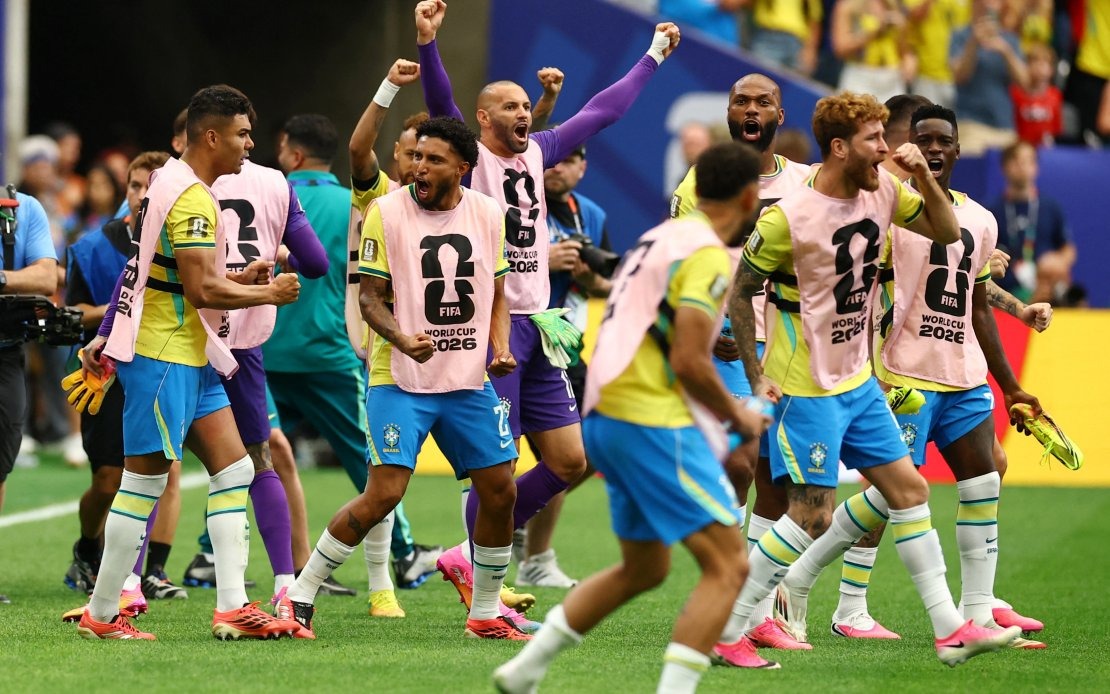
Gabriel Martinelli's composed finish deep into injury time delivered Brazil a narrow 2-1 victory over Japan in a tightly contested World Cup elimination match in Houston on Monday, propelling the five-time champions into the last 16 where they will face the winner of the Cote d'Ivoire versus Norway fixture.
Both teams arrived at this knockout encounter with flawless group-stage records, though their paths through the opening phase differed considerably. Brazil dominated Group C, accumulating seven points through a combination of wins and draws that underlined their superiority in the early tournament phase. Japan, meanwhile, progressed from Group F in a lower position, securing advancement with one victory and two draws—a tighter margin that reflected a more inconsistent approach during the group campaign.
Historically, the two nations have met only once at World Cup level, an encounter Brazil dominated with a commanding 4-1 triumph. However, this narrative took an unexpected turn in their most recent bilateral encounter last year, when Japan orchestrated a stunning reversal of circumstances to claim a 3-2 victory after initially falling behind. That result suggested Japan possessed the capacity to trouble even established football powerhouses, lending credibility to their hopes in this fixture.
Brazil's early approach was characterised by their customary dominance of possession and territorial control. The Selecao crafted a succession of threatening moments in the opening quarter-hour, with Matheus Cunha testing Japan's goalkeeper Zion Suzuki with a forceful attempt that required a single-handed save in the 14th minute. Despite this probing, Brazil's pressing proved insufficient to breach Japan's disciplined defensive setup in the opening stages.
Japan's breakthrough arrived unexpectedly in the 29th minute through a moment of poor concentration from the Brazilian midfield. Danilo's loose pass fell into the path of Kaishu Sano, whose subsequent surge forward saw him evade the challenges of Casemiro and strike a powerful effort that sailed beyond goalkeeper Alisson to hand the Japanese an unlikely lead. This goal represented a significant upset given Brazil's territorial advantage and the weight of expectation upon the tournament's most decorated team.
The setback galvanised Brazil into intensifying their attacking endeavours following the interval. The rhythm of the match shifted noticeably as the Selecao elevated their intensity, with Bruno Guimaraes and Casemiro spearheading renewed pressure on the Japanese goal. The breakthrough arrived in the 56th minute when Casemiro rose decisively to redirect a Guimaraes cross past Suzuki, restoring parity and shifting momentum decisively back in Brazil's favour.
Moments later, Vinicius Jr produced a moment of individual brilliance that exemplified Brazil's technical superiority. The winger embarked on a mazy dribbling run that saw him weave past several defenders, only for his eventual shot to rebound off the goalpost—a frustratingly narrow miss that suggested Brazil's dominance would ultimately translate into a winning scoreline.
Brazil maintained unrelenting pressure on Japan's increasingly fatigued backline throughout the closing stages of normal time. The Brazilian coaching staff and players evidently sensed vulnerability in the Japanese defensive shape, continuing to construct attacking opportunities with precision and purpose. Japan, meanwhile, found themselves penned into an increasingly defensive posture, forced to absorb wave after wave of Brazilian pressure while seeking opportunities on the counterattack.
The decisive moment arrived deep into injury time when Guimaraes delivered a precision pass that found Martinelli unmarked in the penalty area. The Brazilian forward displayed composure befitting a World Cup elimination match, placing his one-on-one effort past Suzuki with technical assurance to complete Brazil's comeback and silence any lingering Japanese hopes. Japan mounted a final push seeking an improbable equaliser in the remaining moments, but Brazil's defensive organisation held firm to secure their passage through the knockout phase.
This result carries significant implications for the tournament's broader narrative. Brazil's capacity to overcome adversity against a tactically organised opponent suggests the five-time champions possess the psychological resilience and technical depth required to navigate the increasingly demanding knockout fixtures ahead. For Japanese football, the performance—while ultimately unsuccessful—demonstrated that Asian representatives can compete credibly against football's established elite, potentially reshaping perceptions regarding the continent's competitive standing within global football architecture.

