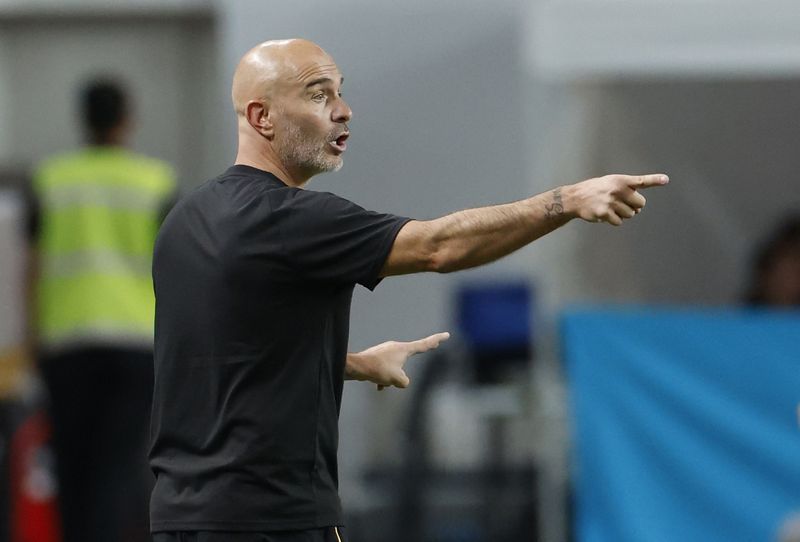
Manchester City embark on a new era this season with Enzo Maresca at the helm, marking the first time in ten years the club takes to the pitch without Pep Guardiola overseeing proceedings. The Spanish manager's departure concludes an extraordinary chapter for the English club, one defined by relentless success including six Premier League titles, a Champions League triumph, and the complete transformation of City into the dominant force across English football. Maresca now shoulders the responsibility of steering a squad brimming with world-class talent while honouring the legacy of a managerial tenure that fundamentally changed the club's trajectory and reshaped expectations at the Etihad Stadium.
The 46-year-old Italian is not venturing into unfamiliar territory. During Guardiola's most triumphant season, when City completed the historic treble, Maresca served as part of the coaching infrastructure, providing him with intimate knowledge of the club's systems and philosophy. This inside exposure distinguishes him from external candidates and explains City's confidence in his appointment. Beyond his time at Manchester, Maresca has demonstrated managerial credentials worthy of top-level consideration, orchestrating Leicester City's promotion back to the Premier League and capturing silverware during his tenure at Chelsea. These achievements convinced City's leadership that he possessed the requisite experience and tactical acumen to navigate one of football's most demanding transitions.
City's strategic approach to succession reflects a preference for evolutionary change rather than revolutionary transformation. Rather than pursuing a radically different tactical direction, the club has appointed a manager whose footballing identity remains rooted in positional play, meticulous ball retention, and adaptive tactics. These were the foundational principles animating Guardiola's operation, suggesting City aims to maintain philosophical consistency even as individual personnel and decision-making authority shift. Maresca must nevertheless forge his own leadership identity relatively swiftly, establishing his distinct fingerprint on the squad while leveraging the tactical frameworks already embedded within the club's organisational culture.
The playing personnel at Maresca's disposal remains exceptionally formidable. Erling Haaland, the Norwegian striker who has led the Premier League's scoring charts in three of the past four seasons, represents an invaluable asset, providing a dependable goalscoring outlet essential for any championship contender. Rodri occupies a similarly irreplaceable position, his sophisticated passing range, spatial awareness, and defensive contributions forming the midfield's operational nucleus. Notably, Barcelona continues circling Rodri, a situation that could yet complicate Maresca's planning; however, Rodri's contributions to Spain's World Cup success and his subsequent Golden Ball award underscore his standing among European football's elite midfield operators.
City have demonstrated ambition in the transfer market by recruiting England midfielder Elliot Anderson from Nottingham Forest, a move valued at approximately £116 million that introduces supplementary ball-winning capability and physical dynamism to central midfield areas. Beyond Anderson's acquisition, emerging talents including Rayan Cherki and Nico O'Reilly represent fresh competitive energy capable of revitalising portions of the squad. These reinforcements signal City's determination to strengthen rather than merely consolidate, suggesting the club recognises that marginal improvements are necessary for sustained championship contention in an increasingly competitive landscape.
Yet significant departures introduce complications into Maresca's equation. Bernardo Silva and John Stones, both longstanding fixtures within the squad, have departed, extracting valuable experience and established authority from the dressing room's social fabric. This turnover, whilst potentially enabling tactical adjustments and fresh perspectives, simultaneously removes embodied institutional knowledge that Guardiola cultivated across years of collaborative success. The cumulative effect is a squad simultaneously stronger in attacking potential whilst potentially more vulnerable to disorientation during periods demanding experienced navigators.
The circumstances surrounding Guardiola's final campaign underscore the immense scrutiny awaiting Maresca. Whilst finishing second to Arsenal in the Premier League would constitute a triumphant conclusion for most clubs, within Manchester City's context it represented a relative disappointment, reflective of Guardiola's own elevated standards and the organisation's refusal to accept anything less than championship achievement. This cultural expectation, now transferred entirely to Maresca's shoulders, means he cannot rely upon plaudits for stylistic elegance or incremental progress. City's hierarchy, supporters, and internal stakeholders anticipate immediate title challenge and genuine prospects of claiming major trophies.
The fundamental uncertainty surrounding City's transition concerns the pace at which players and coaching staff can acclimate to post-Guardiola existence. Guardiola's influence permeated beyond tactical minutiae, encompassing broader cultural architecture that shaped organisational identity. Maresca's previous proximity to these systems provides meaningful advantage, yet navigating the distinction between serving as a trusted lieutenant and commanding the enterprise independently represents a qualitatively different challenge. His coaching pedigree and familiarity with City's environment should facilitate adjustment, but guarantees remain elusive.
Considering the contemporary calendar, with numerous players returning gradually from World Cup engagements, an initial adjustment phase appears probable. Nevertheless, City remain positioned among the betting markets' favoured competitors across domestic and European competitions, testament to the squad's residual strength and competitive depth. Should Maresca successfully synthesise continuity with judicious innovation, preventing the squad from ossifying beneath singular managerial monopoly whilst preserving the tactical principles underpinning a decade of achievement, Manchester City could rapidly reassert their domestic supremacy and cement his credentials as Guardiola's legitimate successor.
City commences their campaign against Bournemouth on August 23, providing the first meaningful examination of Maresca's transition and offering early indicators regarding the squad's cohesion and competitive readiness. For Southeast Asian followers accustomed to monitoring English football's elite institutions, this managerial transition represents a pivotal moment in the league's narrative arc, with ramifications extending beyond Manchester to shape the entire competitive landscape for seasons ahead.

