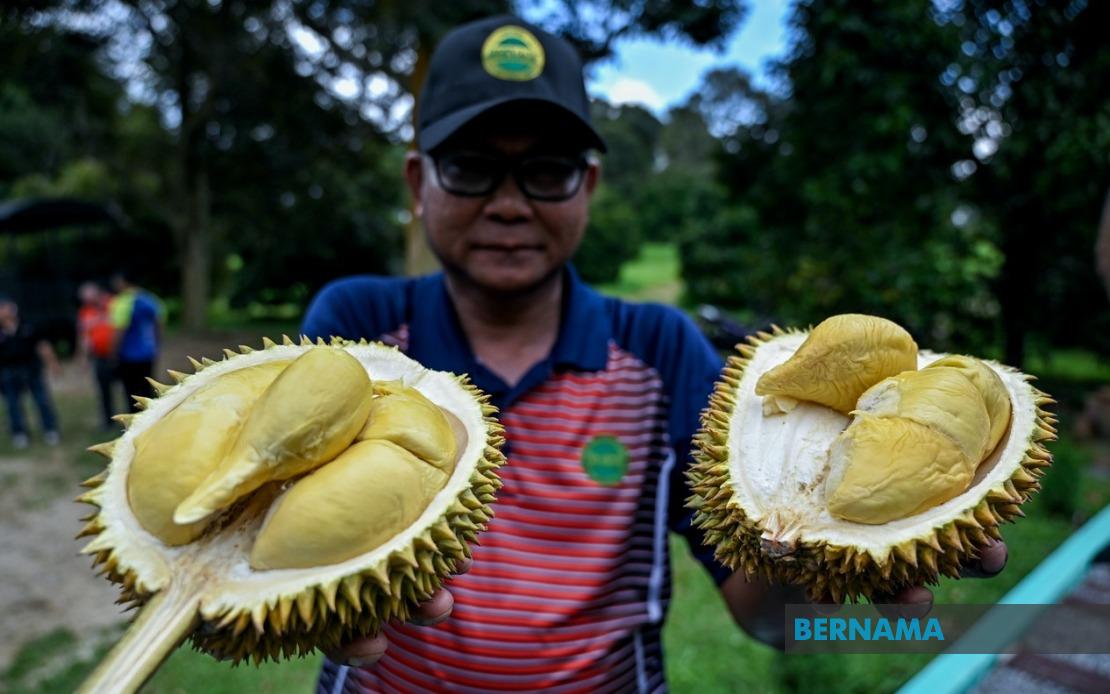
The Malaysian Agricultural Research and Development Institute (MARDI) has achieved a significant milestone in its durian cultivation programme, with approximately 25,000 MS88 hybrid durian trees now established across the country. According to Datuk Dr Mohamad Zabawi Abdul Ghani, the institute's director-general, these plantations span roughly 242 hectares of agricultural land, concentrated predominantly in Selangor and the east coast region, representing a substantial investment in Malaysia's premium fruit production sector.
The MS88 represents one of MARDI's flagship achievements in durian breeding, joining two other celebrated hybrid varieties—MDUR78 and MDUR79—that have garnered considerable enthusiasm among domestic durian connoisseurs since their development in the early 2000s. These three varieties constitute MARDI's response to evolving market demands for consistent quality and distinctive flavour profiles that can compete with traditional cultivars whilst offering improved agricultural characteristics. The expansion of MS88 cultivation reflects broader industry confidence in MARDI's breeding programme and its ability to deliver commercially viable alternatives to conventional durian farming.
Beyond current production, MARDI is actively advancing a pipeline of next-generation premium durian hybrids designed to address future market requirements and changing consumer expectations. The institute is currently evaluating three additional hybrid varieties with commercial potential, each undergoing rigorous assessment across multiple criteria. These evaluation protocols encompass comprehensive fruit quality analysis, systematic consumer acceptance testing, and practical suitability assessments for smallholder and commercial farming operations. This methodical approach ensures that new introductions possess both intrinsic quality advantages and realistic cultivation viability for Malaysia's diverse farming communities.
The strategic importance of durian development extends beyond simple agricultural productivity. As one of Malaysia's most economically significant specialty crops, durian production connects smallholder farmers to high-value export markets whilst anchoring rural livelihoods across key growing regions. The MS88 programme demonstrates how institutional research can translate into tangible economic opportunities, particularly when hybrid varieties offer advantages in disease resistance, yield consistency, or harvesting efficiency compared to traditional plantings. For farmers considering long-term orchard development, such officially recognised hybrids reduce investment risk by building on established research credentials.
The Selangor and east coast concentration of current MS88 plantings reflects deliberate geographical strategy. These regions combine suitable climatic conditions, established infrastructure for fruit handling and processing, and proximity to both domestic consumption centres and export logistics hubs. Selangor's intensive agricultural zones and the east coast states' traditional durian cultivation heritage create complementary advantages—mechanised processing capabilities in developed areas combined with farming expertise in traditional durian strongholds. This geographic distribution also allows MARDI to gather location-specific performance data that informs future expansion recommendations.
MARI's decision to withhold new variety nomenclature until the upcoming durian season generates strategic marketing momentum and anticipation within the industry. Timing new variety launches to coincide with peak durian season maximises consumer engagement and media attention whilst enabling farmers and retailers to observe fruits at their optimal developmental stage. This coordinated introduction approach, combined with public tasting opportunities, creates comprehensive market awareness and builds consumer familiarity before commercial availability begins, contrasting with simultaneous agricultural and consumer acceptance challenges that can arise from uncoordinated releases.
The emphasis on consumer acceptance testing reflects lessons learned from hybrid crop introductions globally. Whilst horticultural performance metrics matter considerably, market success ultimately depends on whether consumers perceive tangible quality improvements justifying any price premiums associated with branded hybrids. MARDI's deliberate evaluation methodology acknowledges that durian markets remain highly discerning, with established preferences for particular aroma profiles, flesh texture, and sweetness characteristics. New varieties must deliver compelling sensory attributes rather than merely offering agronomic conveniences, requiring authentic consumer participation in selection processes rather than purely technical assessment by agronomists.
For Southeast Asia more broadly, Malaysia's institutional commitment to premium durian development carries competitive implications. Thailand, Indonesia, and other regional producers increasingly recognise durian's premium market potential, investing in their own breeding programmes and hybrid development. MARDI's sustained advancement of three established hybrids plus emerging varieties positions Malaysia advantageously within this intensifying regional competition, maintaining technological differentiation and supporting premium pricing strategies that benefit domestic producers. The institute's track record in delivering commercially successful varieties enhances Malaysia's reputation for producing consistently reliable specialty agriculture products.
The practical implications for Malaysian farmers contemplating orchard investments remain significant. Adoption of officially developed hybrids like MS88 provides access to technical extension services, established nursery supply chains, and growing recognition among domestic and export buyers who increasingly demand traceability and quality assurance. For smallholders seeking to transition from subsistence or commodity-level durian farming toward premium market segments, institutional support surrounding registered hybrids reduces technical uncertainty and creates community amongst farmers using compatible cultivars who can collectively address shared challenges in pest management, harvesting coordination, and market access.
Looking forward, MARDI's pipeline of three additional varieties under evaluation suggests continued institutional commitment to maintaining Malaysia's leadership position in durian science and premium production. The institute's willingness to undertake multi-year evaluation processes before commercial release, rather than rushing marginally improved varieties to market, reinforces quality-focused institutional culture. This approach builds long-term industry confidence and consumer trust, essential foundations for sustaining premium positioning in increasingly competitive global specialty fruit markets where reputation constitutes a critical competitive advantage alongside actual product characteristics.

