President Ferdinand Marcos Jr has signalled unwavering confidence in the Armed Forces of the Philippines, maintaining his faith in the institution despite emerging allegations that active uniformed personnel may be involved in a purported plot against his life. The President's continued backing of the military came in response to disclosures made during Vice President Sara Duterte's impeachment trial, where National Bureau of Investigation Director Melvin Matibag identified several persons of interest in connection with the alleged scheme, including members of the armed forces currently on active duty.
The revelation surfaced during high-stakes proceedings on Wednesday, July 22, as lawmakers examined the impeachment case against Duterte. Matibag's testimony painted a troubling picture of potential internal security threats, not only flagging active military personnel but also identifying an individual connected to the Vice President's own security apparatus as another person of interest in the investigation. These details raised difficult questions about the integrity of security arrangements at the highest levels of government and underscored vulnerabilities within institutions traditionally responsible for protecting the nation's leadership.
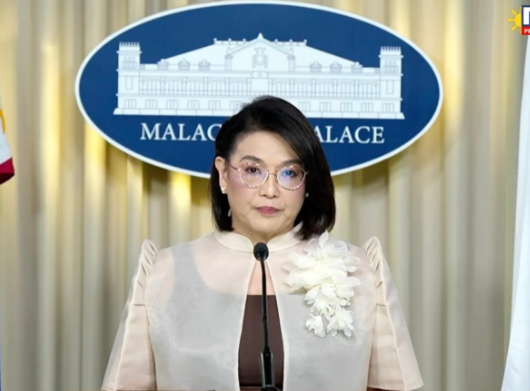
Speaking at a Palace press briefing, Press Officer Claire Castro articulated the President's position with careful diplomacy, emphasising that Marcos continues to extend complete trust to the armed forces as an institution. Castro's comments suggested a distinction between institutional loyalty and individual accountability, framing the situation not as a failure of the military broadly but as a matter of identifying and isolating rogue elements who might deviate from their constitutional duties. The carefully calibrated message sought to reassure the public and the military establishment alike that the President does not view the allegations as grounds for wholesale institutional distrust.
Castro elaborated on the administration's approach, stating that any personnel who stray from their mandate should be properly identified and removed from positions of influence to safeguard the President's security. This formulation allowed the Palace to acknowledge the seriousness of the investigation while simultaneously projecting confidence in the armed forces' ability to police its own ranks and maintain professional standards. The statement reflected a pragmatic strategy of compartmentalising the threat—treating potential conspirators as aberrations rather than symptomatic of systemic institutional failure.
The Palace press officer further broadened the investigation's scope, noting that accountability should extend beyond military circles to encompass any individual, regardless of affiliation or position, who might contemplate illegal action to protect or advance the interests of a single political figure. This observation appeared to reference the involvement of a member of Vice President Duterte's security detail among the persons of interest, suggesting that the alleged plot may have roots in competing political and personal loyalties at the highest echelons of power rather than stemming from ideological military grievance.
Castro addressed the question of whether the administration might initiate loyalty checks across the armed forces, a mechanism that could dramatically alter civil-military relations and institutional culture. She dismissed such measures, asserting that the President is confident in identifying whom he can trust and that no systematic loyalty vetting programme is presently underway. She repositioned the matter as primarily a concern for the security sector and the armed forces' own leadership to manage, effectively delegating responsibility for internal investigation and discipline to the military hierarchy rather than centralising control within the presidential office.
The unfolding situation carries significant implications for the Philippines' already fractious political landscape, where divisions between the Marcos and Duterte camps have intensified dramatically since the President took office in June 2022. Vice President Duterte's impeachment trial represents a major escalation in these tensions, and allegations of assassination plots suggest that political competition has descended into territory involving potential violence. For the military, sitting at the intersection of these rivalries, the allegations create an extraordinarily delicate position where institutional neutrality becomes increasingly difficult to maintain.
Duterte herself made inflammatory remarks during the impeachment proceedings, recounting what she characterised as prior instructions she had given to someone regarding her own protection and that of other figures, including Marcos himself. These comments, delivered in Filipino and marked by her characteristic directness, conveyed both the seriousness with which she perceived threats to her life and the extraordinary atmosphere of suspicion and fear permeating the upper reaches of Philippine government. The Vice President's subsequent non-compliance with an NBI subpoena further complicated the investigative landscape and demonstrated her resistance to full cooperation with the inquiry.
The intersection of alleged military involvement, Vice President Duterte's defiance of investigative authority, and the broader political conflict creates a complex challenge for institutional stability in the Philippines. The alleged presence of a security official linked to Duterte among the persons of interest suggests that her own protective apparatus may have become implicated in activities antithetical to her safety, raising troubling questions about compartmentalisation within her administration and possible competing factional interests within her own security arrangements.
For Malaysia and other Southeast Asian nations observing Philippine political developments, the alleged assassination plot and surrounding controversy underscore the vulnerabilities that can emerge when institutional checks weaken under the strain of personalised political conflict. The willingness of the Philippine military to conduct thorough internal investigations and maintain institutional discipline will significantly influence how this crisis unfolds and whether democratic institutions prove resilient enough to weather acute political stress. The President's maintained confidence in the armed forces, while politically strategic, ultimately depends on the military's demonstrated commitment to constitutional governance and its ability to subordinate individual or factional interests to institutional integrity and national stability.

