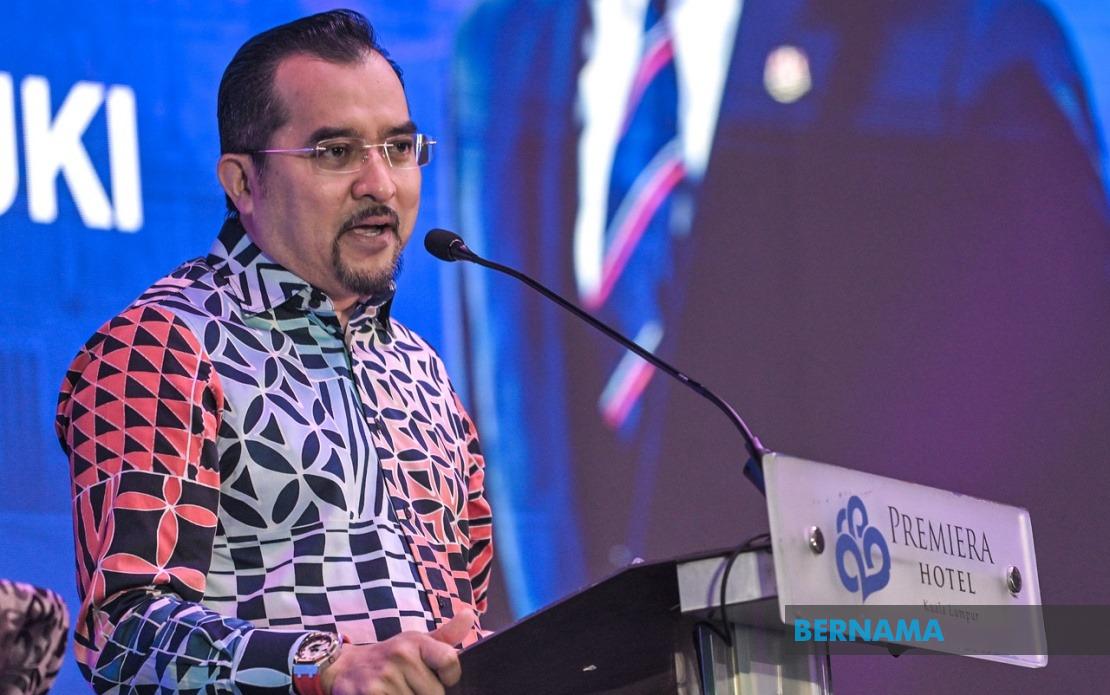
Majlis Amanah Rakyat (MARA) is embarking on an institutional overhaul aimed at reinforcing student discipline and moral development across its network of junior science colleges. The education body plans to position four dedicated wardens—drawn exclusively from former military ranks—at every MARA Junior Science College (MRSM) nationwide. This structured deployment represents a deliberate pivot towards leveraging military-trained personnel for on-campus welfare and behavioural oversight, addressing persistent gaps in institutional capacity that have strained teaching staff.
Chairman Datuk Dr Asyraf Wajdi Dusuki outlined a phased implementation strategy during remarks at the 2026 MARA Educators' Awards Day in Kuala Lumpur. The initiative will first take root across ten MRSMs during the current academic year, with full rollout to all 58 colleges scheduled for January 2025. This measured approach allows MARA to pilot the scheme, refine operational protocols, and ensure consistent quality before universal adoption. Each institution will receive two male and two female wardens, establishing a balanced supervisory presence intended to address the varied disciplinary and pastoral needs of students across different gender and age groups.
The recruitment process reflects MARA's commitment to maintaining rigorous selection standards. Screening for male wardens has already concluded, while final vetting for female candidates was expected to finish within days of the announcement. MARA worked closely with the Malaysian Armed Forces and allied government bodies to identify candidates with exemplary service records, ensuring that only individuals demonstrating high professional and ethical standards would enter the college environment. This collaborative approach underscores recognition that military organisations maintain institutional mechanisms for personnel evaluation that civil educational bodies can leverage.
Asyraf Wajdi articulated the underlying rationale: former military personnel bring ingrained discipline and institutional training that can meaningfully supplement teaching faculty. Malaysian teachers at MRSM institutions have increasingly struggled to balance instructional responsibilities with round-the-clock pastoral supervision—a dual burden that compromises both academic quality and student welfare. By introducing dedicated wardens from military backgrounds, MARA seeks to unbind teachers from non-instructional duties, permitting them to focus on curriculum delivery and academic mentorship. The military background also signals to students a seriousness of purpose surrounding behavioural expectations, potentially deterring misconduct through implicit appeals to authority and order.
Beyond discipline, MARA situates this initiative within a broader institutional philosophy prioritising character formation. The organisation explicitly frames its educational mission as producing graduates who combine technical competence with strong moral and social values. By deploying wardens specifically tasked with character development, MARA institutionalises ethical formation as a core function rather than an ancillary concern. This reflects regional and global trends wherein educational institutions increasingly recognise that producing economically productive citizens requires simultaneous investment in moral and civic development—a concern particularly acute in Malaysia's multicultural context where inter-communal understanding depends partly on character and integrity.
Meanwhile, MARA's broader educational portfolio continues delivering measurable outcomes that buttress the organisation's credibility. The institution's Technical and Vocational Education and Training (TVET) programmes have achieved a graduate employability rate of 99.1 per cent—an extraordinary figure suggesting close industry alignment and strong skills development. These graduates do not merely secure employment; they command premium starting salaries, reflecting employer confidence in their practical capabilities. Samsung's recent recruitment of 700 MARA TVET graduates at RM3,500 monthly starting pay exemplifies how multinational corporations increasingly view MARA credentials as reliable indicators of workforce readiness, particularly in technical and manufacturing sectors critical to Malaysia's economic diversification.
The Samsung recruitment initiative carries particular significance for Malaysian economic policy. As the nation seeks to transition from assembly-based manufacturing toward higher-value technical roles, MARA's ability to supply pre-trained personnel capable of immediately contributing to advanced production represents strategic infrastructure. The RM3,500 starting salary, competitive within Malaysia's context, demonstrates that vocational education need not condemn graduates to low-wage precarity. Rather, rigorous TVET preparation opens pathways to middle-class employment, potentially reducing inequality and broadening economic opportunity for students without traditional academic trajectories.
Recognition of MRSM excellence in academic examinations prompted MARA to allocate RM145,000 toward special programmes at five colleges identified as top performers in last year's Sijil Pelajaran Malaysia (SPM) assessments. This targeted investment acknowledges that high-achieving institutions require additional resources to sustain and deepen excellence. By concentrating resources at demonstrated high performers, MARA creates centres of pedagogical excellence that can generate institutional learning transferable across the system. These flagship colleges become laboratories where innovative teaching methods and character-building approaches can be developed, piloted, and subsequently disseminated to less-advanced campuses.
The warden initiative must be understood within Malaysia's evolving approach to institutional discipline and student welfare. Boarding schools like MRSM institutions occupy unique pedagogical positions, serving as total institutions where students spend formative adolescent years under institutional supervision. This environment demands robust support structures addressing not merely academic progress but also emotional resilience, peer relationships, and identity formation. Military-trained wardens bring exposure to hierarchical organisation, standardised procedures, and crisis management—competencies valuable when managing hundreds of adolescents in confined residential spaces. Their presence potentially signals to students that institutional rules reflect not arbitrary authority but serious, professionally-enforced expectations grounded in broader social order.
Yet the deployment also raises questions worthy of educational and social scrutiny. Military socialisation emphasises obedience, hierarchy, and discipline—values not universally optimised for adolescent development. Excessive emphasis on order might suppress initiative, critical thinking, or creative expression. Educational research suggests that character development flourishes when young people experience agency, participate in decision-making, and develop intrinsic rather than coerced motivation. MARA's initiative therefore benefits from complementary investments in student voice, participatory governance, and mentoring relationships that balance military-influenced discipline with democratic development.
For Southeast Asian observers, MARA's approach reflects broader regional trends. As competing economies increasingly compete for human capital, vocational and technical education systems have gained prominence. Singapore, Thailand, and Vietnam have similarly invested in technical workforce development, recognising that manufacturing and advanced services depend on skilled technicians. Malaysia's MARA system, serving as both educational institution and social mobility mechanism, occupies an important regional position. Its successes in graduate employment and industry partnerships suggest that targeted investment in discipline, character, and practical skills can simultaneously serve economic competitiveness and social cohesion—outcomes particularly valuable in multicultural societies navigating development pressures.
The transition from January 2025 onwards will require careful monitoring. Success depends not merely on deploying wardens but integrating them effectively into institutional cultures dominated by teaching staff. Tensions might emerge regarding disciplinary authority, chain of command, and pedagogical philosophy. MARA's leadership must ensure that wardens complement rather than undermine teaching staff, that military approaches to discipline mesh with contemporary educational psychology, and that character development emerges through integrated institutional effort rather than isolated enforcement. Should these conditions be met, the initiative could meaningfully enhance MRSM institutional capacity while offering a model replicable across Malaysia's broader education ecosystem.

