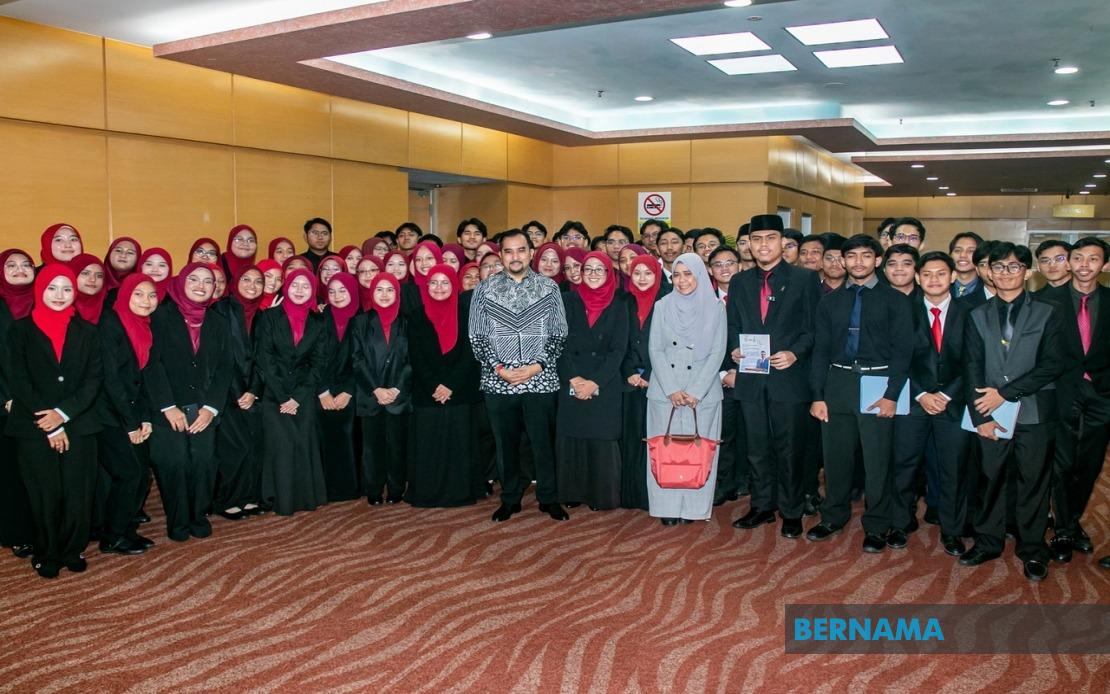
Malaysia's premier scholarship body, Majlis Amanah Rakyat (MARA), has formally reinitiated its long-dormant medical training partnership with Al-Azhar University in Egypt, welcoming 78 students as the inaugural cohort in what marks a significant shift in the organisation's overseas education strategy. The programme, which had remained suspended since 2019, represents MARA's renewed commitment to expanding affordable pathways for aspiring Malaysian medical professionals seeking international qualifications. The decision follows formal endorsement from the Cabinet, signalling government backing for the initiative at a time when access to medical education remains a pressing concern for middle and lower-income families across the nation.
MARA Chairman Datuk Dr Asyraf Wajdi Dusuki outlined the financial rationale underpinning the revival, noting that the per-student investment for the entire five-year medical programme, encompassing both tuition and residential expenses, stands at RM350,000. This substantially more affordable arrangement reflects a generous 50 per cent discount negotiated with Al-Azhar University, effectively halving the institution's standard fees. By contrast, pursuing medical degrees through Malaysian universities can command fees reaching between RM700,000 and RM800,000 per student, placing quality medical education beyond reach for many qualified applicants from ordinary Malaysian households. The cost differential underscores a persistent reality in Southeast Asian higher education, where international partnerships often unlock financial efficiencies that benefit home-country scholarship schemes.
The timing of this programme's relaunch carries particular weight given Malaysia's ongoing discourse around meritocratic access to professional training. MARA's decision to prioritise the resumption of medical scholarships, rather than limiting itself to traditional arts and sciences streams, reflects acknowledgement that the nation faces structural shortages in healthcare workforce development. The students departing for Cairo represent not merely individual career advancement but a potential augmentation of Malaysia's future medical capacity, particularly in specialist fields where local training infrastructure remains constrained. Their eventual return and integration into the Malaysian health system could help alleviate persistent staffing gaps in rural clinics and secondary hospitals.
Chairman Asyraf Wajdi publicly credited Prime Minister Datuk Seri Anwar Ibrahim for facilitating Cabinet approval of the arrangement, illustrating how international scholarship initiatives remain subject to high-level political consideration in Malaysia's governance structure. This personalisation of credit reflects both the significance attached to educational policy within the current administration and the diplomatic dimensions of bilateral educational partnerships. Malaysia's relationship with Egypt extends well beyond academic exchange, encompassing broader Islamic world engagement and professional development cooperation. The Al-Azhar arrangement thus functions as both practical skills transfer mechanism and symbolic reaffirmation of Malaysia's ties within the Muslim-majority international community.
Beyond the medical cohort, MARA is orchestrating a substantially larger deployment of sponsored scholars this year, with 600 students preparing for staged departures beginning the following week. These learners, predominantly graduates from MARA's own preparatory colleges located in Seremban, Banting, and Kuala Nerang, represent the traditional backbone of the organisation's overseas education mission. Their dispersal across multiple nations—including New Zealand, Canada, Australia, South Korea, the United Kingdom, and Egypt—demonstrates MARA's continued portfolio approach to international study partnerships. Rather than concentrating scholarships within single jurisdictions, the agency maintains deliberately diversified agreements, presumably to balance cost optimisation with student preferences and programme availability across varying educational systems.
MARA's broader scholarship pipeline reflects encouraging progress in placing students at globally prestigious institutions. The organisation revealed that 11 of its current sponsored cohort have secured admissions to Imperial College London, traditionally regarded as one of the world's most selective and rigorous science and engineering establishments. More expansively, MARA-supported students have gained entry to 40 universities ranking within the world's top 10, whilst 107 candidates have been accepted by top-20 ranked institutions globally. These metrics signal that MARA's selection processes and student preparation remain competitive even against international recruitment standards, validating the quality of human capital emerging from Malaysia's scholarship pipeline.
The revival of the Al-Azhar medical programme carries implicit commentary on MARA's strategic evolution under current leadership. The organisation historically focused on preparing bumiputera students for tertiary education through its residential colleges, gradually expanding into direct scholarship provision. The seven-year hiatus in Egyptian medical training likely reflected previous administrative decisions regarding portfolio prioritisation and institutional partnerships. The current resumption suggests a recalibration toward maximising value and accessibility, particularly by leveraging discounted partnerships at respected international institutions. This pragmatic approach acknowledges resource constraints whilst maintaining the organisation's foundational mission of democratising access to world-class professional training.
For Malaysian families navigating the steep costs of medical education, the Al-Azhar pathway offers tangible relief. Middle-income households unable to afford private local medical schools or full-price international alternatives now possess a credible sponsored option. The RM350,000 total investment, whilst substantial, remains significantly more manageable than alternatives and eliminates the burden from individual families entirely. This structural advantage may prove particularly consequential in competing for talented students from Bumiputera communities, where MARA's traditional constituency resides. Access to subsidised overseas medical training could meaningfully reshape career trajectories and family economic mobility across Malaysia's middle class.
The choice of Al-Azhar University as the primary Egyptian partner merits contextual examination. The institution occupies a unique position as one of the Islamic world's most venerable centres of higher learning, combining traditional Islamic scholarship with modern professional education across medicine, engineering, and other fields. Malaysian students selecting this pathway gain exposure not only to medical knowledge but also to pedagogical approaches and cultural environments distinct from Anglo-American educational models. This exposure contributes to Malaysia's human capital development in ways extending beyond pure technical competency, fostering professionals with broader international perspectives and cross-cultural competence increasingly valuable in globalised healthcare delivery.
The programme's resumption also reflects international economic realities. Currency exchange rates, particularly the Egyptian pound's valuation relative to the Malaysian ringgit, combined with Al-Azhar's discounted fees, create a genuinely cost-effective educational investment. MARA's financial planners have evidently capitalised on these macroeconomic conditions to maximise purchasing power, ensuring scholarship budgets stretch further than they would through alternative partnerships. This savvy deployment of budgetary resources demonstrates how international education arbitrage remains possible for well-positioned scholarship agencies, provided they maintain active engagement with partner institutions and remain alert to emerging financial opportunities.
Looking forward, the success of this initial 78-student cohort will likely determine whether MARA expands the Al-Azhar medical programme in subsequent years. Five-year medical courses mean the first graduates won't emerge until approximately 2029, creating a lag between policy decision and measurable outcomes. Malaysian policymakers and MARA administrators will be monitoring student adaptation, academic performance, and ultimate career trajectory when these physicians return to the Malaysian workforce. Positive results could catalyse expansion of the programme and potentially negotiations for enhanced partnership terms. Conversely, integration challenges or employment difficulties could constrain future recruitment. The stakes extend beyond individual student success to questions about Malaysia's broader strategy for internationalising professional education and leveraging global partnerships to address domestic skills shortages.

