The Malaysian government is moving forward with comprehensive legislative reforms at Majlis Amanah Rakyat (MARA), with the proposed MARA Bill 2026 now in its closing stages before parliamentary presentation scheduled for November. The legislation represents a significant modernisation effort for an institution that has operated under statutory provisions established nearly six decades ago, reflecting contemporary expectations around institutional accountability and operational transparency.
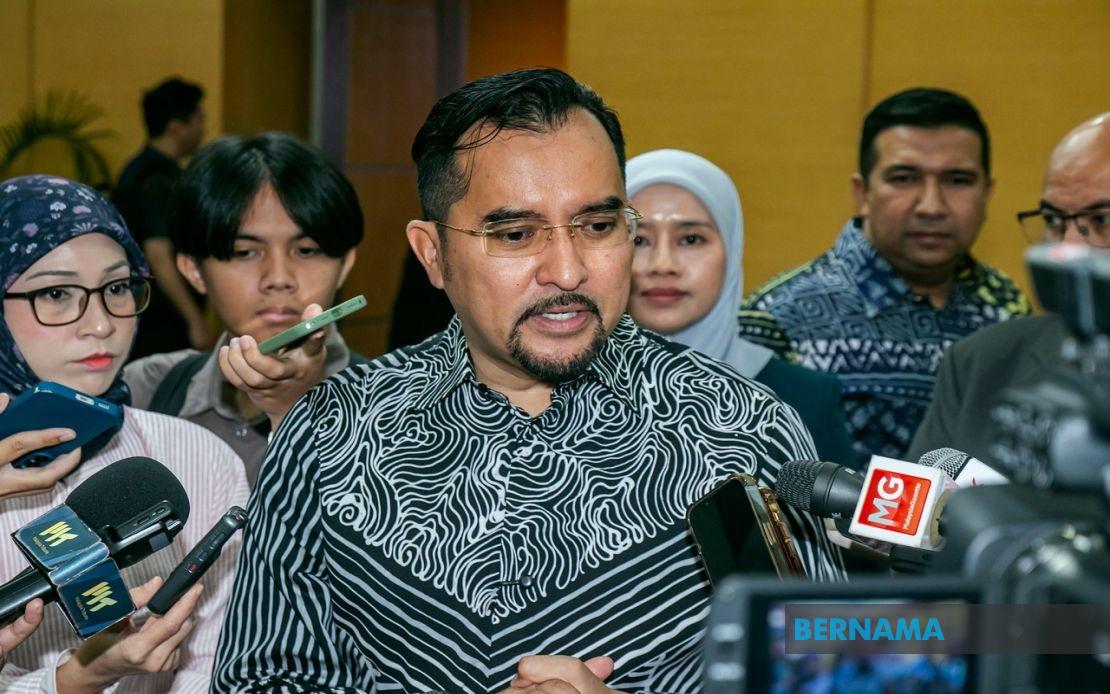
Chairman Datuk Asyraf Wajdi Dusuki outlined the philosophical underpinnings of the reform initiative, emphasising that approximately 80 per cent of the Bill's framework concentrates on strengthening governance practices aligned with internationally recognised benchmarks and rigorous corporate standards. The proposed legislation directly addresses historical vulnerabilities within the organisation's power structures, particularly by substantially constraining the discretionary authority previously vested in the chairmanship. Under the existing MARA Act 1966, the chairman position held expansive administrative and operational responsibilities that the new legislation deliberately curtails, positioning the office instead as a mechanism for institutional checks and balances rather than as a centralised locus of executive authority.
The reduction of chairman powers represents the legislative framework's most substantive structural innovation. Under the proposed arrangements, the chairman's functions would be confined to presiding over Board of Directors or Council deliberations and participating in policy formulation, eliminating direct involvement in day-to-day administrative operations that characterised the 1966 framework. This architectural shift deliberately separates governance from management, a principle now considered foundational to sound institutional design across both public and private sector contexts. Datuk Asyraf Wajdi articulated this recalibration not as a personal constraint but as an institutional imperative, framing his tenure as temporary stewardship aimed at establishing durable systems rather than concentrating individual authority.
The motivation for legislative overhaul traces directly to institutional crises that prompted governmental scrutiny of MARA's internal controls and fiduciary practices. Earlier official communications identified multiple governance deficiencies requiring rectification, including vulnerabilities to abuse of authority, inadequate oversight mechanisms, and instances of financial irregularities or wastage that exposed the organisation to reputational and operational risk. The August 12 articulation of reform objectives specifically targeted prevention of corruption, malpractice, misappropriation, and administrative irregularities that could compromise the institution's capacity to fulfil its constitutional mandate of safeguarding Malay and Bumiputera community interests. These concerns underscore the legislation's remedial character as both a corrective response to documented failings and a preventive architecture designed to restrict future abuse vectors.
The legislative initiative reflects a broader recognition within Malaysian governance circles that statutory frameworks require periodic recalibration to accommodate evolving operational realities and contemporary accountability standards. Datuk Asyraf Wajdi articulated this temporal dimension explicitly, noting that institutional arrangements appropriate to the 1960s became progressively misaligned with subsequent decades' governance expectations and will require further evolution as conditions continue transforming. This perspective positions the 2026 legislation not as a terminal reform but as a deliberate modernisation checkpoint reflecting current best practices while remaining open to future refinements as organisational and governance environments shift. The acknowledgement that regulatory frameworks necessarily reflect their historical moment demonstrates sophisticated understanding that permanent institutional architecture is inherently impossible in dynamic contexts.
Cabinet endorsement of the legislative proposal represents crucial procedural validation, confirming governmental commitment to advancing the reform agenda through the parliamentary approval process. The policy-level approval signals that senior ministerial leadership recognises the governance modernisation as a priority initiative warranting prioritisation within the legislative calendar during the upcoming parliamentary session. This governmental backing provides substantive momentum for the Bill's progression through parliamentary stages, though ultimate passage remains contingent upon legislative deliberations and potential amendments proposed during committee or chamber debates.
For Malaysian stakeholders, particularly Malay and Bumiputera constituencies dependent upon MARA's educational and professional development programmes, the legislative reforms carry significant implications for institutional credibility and operational effectiveness. Enhanced governance frameworks and constrained concentrated authority potentially strengthen public confidence in MARA's fiduciary stewardship and programme delivery. The separation of governance and management functions should facilitate clearer accountability mechanisms while reducing decision-making bottlenecks that can arise when single officeholders accumulate extensive discretionary authority. These structural improvements may ultimately enhance MARA's capacity to fulfil its developmental mandate more effectively across its extensive portfolio of scholarships, business support services, and community advancement initiatives.
The November parliamentary tabling provides stakeholders with opportunity to examine the legislation's specific provisions and advance informed commentary on proposed governance mechanisms. Civil society organisations, Bumiputera business associations, and educational advocates may engage substantively with the legislative text during parliamentary deliberations, potentially proposing amendments or clarifications addressing specific sectoral concerns. The public parliamentary process allows constituencies affected by MARA's governance decisions to contribute perspectives on whether the proposed reforms adequately address identified deficiencies and establish sufficiently robust accountability mechanisms to prevent recurrence of previous institutional vulnerabilities.
Broader institutional implications extend to other Malaysian government agencies operating under statutory frameworks predating contemporary governance standards. MARA's legislative modernisation may establish precedent for systematic review of other governmental institutions' statutory bases, potentially accelerating broader public sector governance reform initiatives. Should the MARA legislation successfully establish robust accountability mechanisms and transparent governance structures, comparable reform templates might be adapted for application across Malaysia's extensive institutional landscape, contributing cumulatively to public sector modernisation and enhanced fiduciary standards across government.

