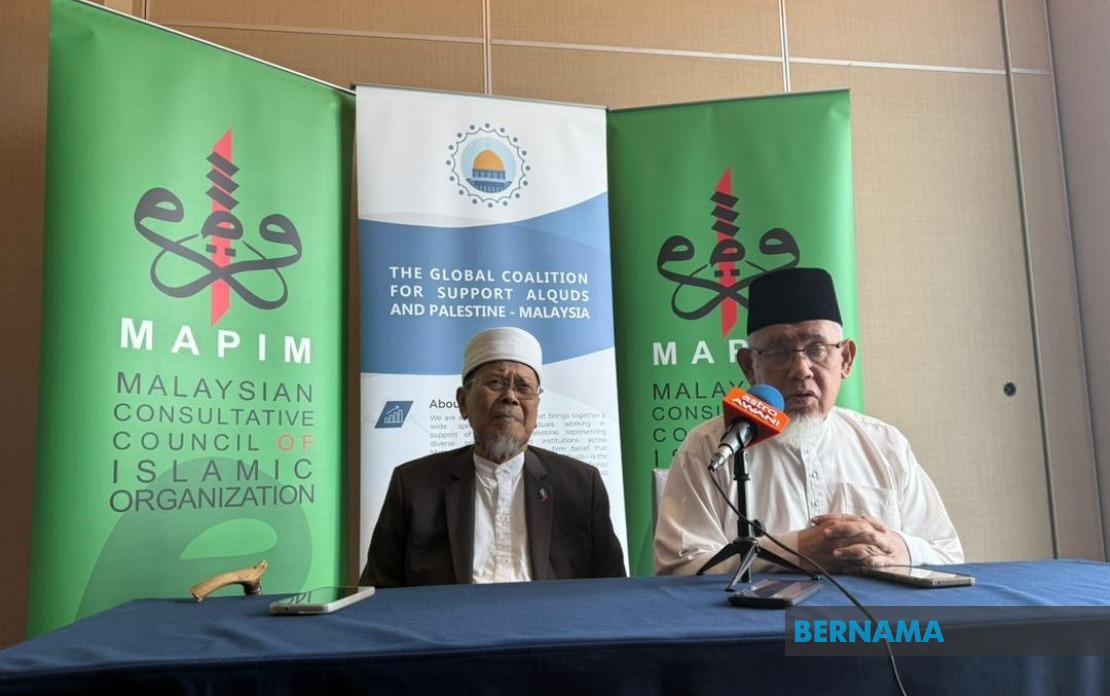
The Malaysian Consultative Council of Islamic Organisations (MAPIM) is preparing to launch a significant two-day gathering in Ipoh tomorrow, bringing together mosque leaders and Islamic community representatives from across the region. Working alongside the Perak Islamic Religious Department (JAIPk), MAPIM will host the Regional Mosque Conference 2026 at a hotel in the state capital, representing a major initiative to strengthen institutional networks among Islamic organisations across Southeast Asia and beyond.
The conference will draw approximately 400 mosque representatives from Malaysia and eight neighbouring countries—Indonesia, Singapore, Brunei, Timor-Leste, Myanmar, Cambodia, Thailand and Vietnam—alongside delegations from Turkey, Iran and Pakistan. This diverse assembly reflects the conference's ambition to foster regional cooperation and establish frameworks for collaborative action on shared Islamic community concerns. The scale and geographic spread of participants underscores MAPIM's vision of creating a coordinated approach to contemporary Islamic challenges at the Southeast Asian level.
According to MAPIM president Mohd Azmi Abdul Hamid, the conference is being held to commemorate World Mosque Day, observed on August 21 each year to mark the 1969 arson attack on Al-Aqsa Mosque in Jerusalem. Rather than treating this observance as merely symbolic, Mohd Azmi indicated that MAPIM intends to use the occasion as a springboard for revitalising the mosque's traditional role as a unifying institution for Muslim communities. This perspective moves beyond historical remembrance toward practical engagement with contemporary concerns affecting the Islamic world.
The conference organisers have identified seven core objectives guiding the two-day programme. Central among these is establishing a robust regional cooperation network connecting mosques across member nations, creating institutional linkages that can facilitate ongoing dialogue and joint initiatives. The agenda also emphasises encouraging younger Muslims to take active roles within mosque structures and exploring ways mosques can drive economic initiatives benefiting their communities. Strengthening partnerships between established mosques and Islamic non-governmental organisations represents another key focus, recognising that broader social impact requires coordination beyond purely religious institutions.
Mohd Azmi stressed that the gathering will produce tangible outputs designed for implementation beyond the conference itself. Participating mosques and Islamic NGOs are expected to collectively develop a formal declaration outlining shared principles and commitments. Crucially, delegates will also formulate a detailed action plan with specific, time-bound activities that organisations can pursue independently after returning to their home countries. This structured approach reflects recognition that significant impact requires converting regional consensus into decentralised, local action.
The conference programme combines academic rigour with community engagement through a mix of scholarly presentations, international dialogue sessions, and focused discussions addressing the Palestinian situation and the Al-Aqsa Mosque. This blend permits both intellectual exploration of Islamic institutional roles and direct engagement with political issues of concern to Muslim communities. The inclusion of international guests from Turkey, Iran and Pakistan ensures that perspectives from nations with distinct geopolitical positions and Islamic traditions contribute to the conversation.
Three significant initiatives will be formally launched during the conference. MAPIM will establish a regional mosque coalition specifically dedicated to advocacy on Palestine, creating an institutional mechanism for coordinated messaging and action. Simultaneously, the organisation will release a new book examining the mosque's evolving role in contemporary Muslim societies, offering scholarly grounding for discussions about institutional renewal. Most notably, MAPIM will introduce the MAPIM Gold Dinar, a fundraising mechanism designed to make it easier for ordinary Muslims to contribute toward establishing and maintaining an Al-Aqsa Mosque Fund.
The gold dinar initiative merits particular attention as a financial innovation. By offering a tangible, asset-backed instrument through which Muslims can participate in supporting Palestinian causes, MAPIM seeks to bridge the gap between individual charitable intent and organised fundraising mechanisms. This approach acknowledges that many Muslims wish to contribute materially to causes they support but may lack clear channels for doing so at scale. The dinar's introduction reflects broader Islamic financial thinking that emphasises assets backed by real value rather than fiat arrangements.
Mohd Azmi articulated the conference's deeper strategic purpose: advocating for global humanitarian issues with particular emphasis on Palestine and Al-Aqsa Mosque while mobilising the broader Muslim regional community toward sustained engagement. Rather than approaching these concerns as isolated matters, MAPIM positions them within a framework of strengthening Islamic institutional capacity across Southeast Asia. The conference thus serves simultaneously as commemoration, strategic planning session, and community mobilisation event.
For Malaysia specifically, the conference's location in Ipoh and MAPIM's lead role reflect the country's positioning as a substantial Muslim-majority nation capable of hosting and coordinating regional Islamic initiatives. The Perak Islamic Religious Department's collaboration underscores the integration of federal and state-level Islamic governance structures in advancing such programmes. As a regional hub for Islamic organisational activity, Malaysia can leverage such conferences to enhance its soft power within Southeast Asian Islamic communities while advancing causes it considers important.
The timing and scope of the Regional Mosque Conference 2026 also reflects broader regional developments. Southeast Asia's Muslim communities increasingly seek coordinated responses to shared challenges, from religious education standards to interfaith relations to humanitarian concerns. By creating formal networks and establishing concrete action plans, MAPIM positions mosques not merely as places of worship but as nodes within a functional regional system capable of collective advocacy and programming.
The success of this conference will likely depend on whether participants from diverse countries and cultural contexts can identify sufficient common ground to sustain the regional coalition beyond the initial gathering. The challenge lies in translating the broad consensus achievable at such assemblies into ongoing collaboration among organisations operating in different national and legal frameworks. The detailed action plan and formal declaration represent steps toward this goal, but implementation will ultimately depend on individual organisations' capacity and commitment once representatives return home.

