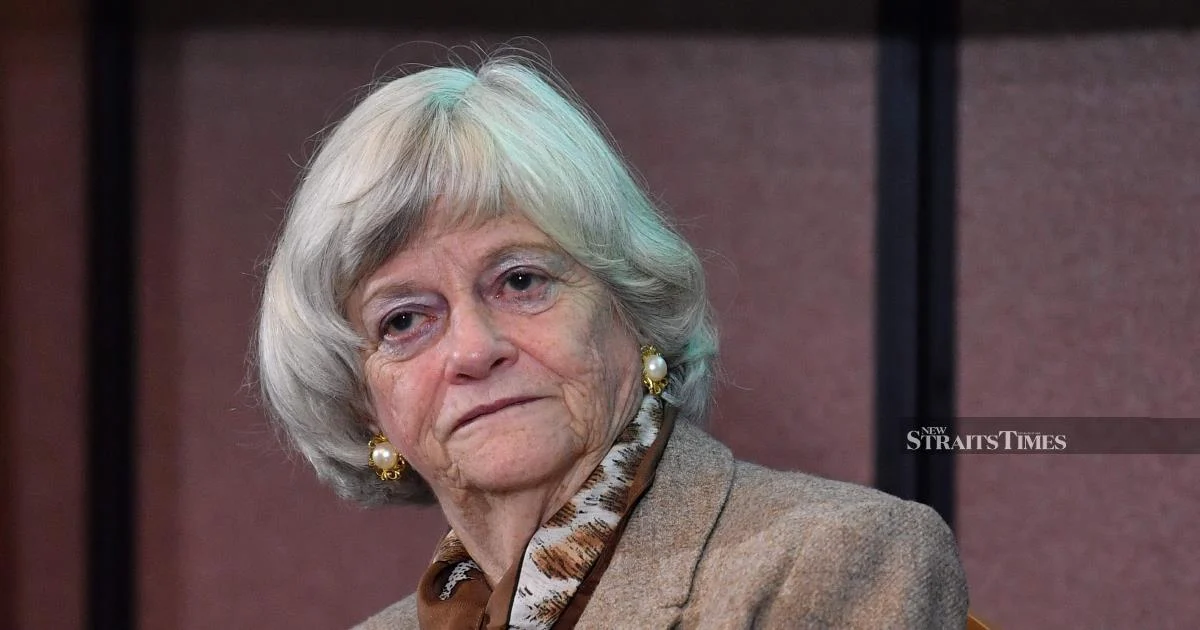
A man is now in police custody in the United Kingdom following the violent death of Ann Widdecombe, the 78-year-old former government minister and prominent Reform UK politician, whose body was found bearing evidence of severe trauma. Detectives made the arrest on Friday as part of an active murder investigation into circumstances surrounding the discovery, marking a significant development in what promises to become one of Britain's most closely watched criminal cases in recent years.
Widdecombe's passing represents the loss of one of the British political establishment's most recognizable and outspoken figures. Over decades in public life, she carved out a distinctive role as a Member of Parliament known for her forthright views on social policy, particularly on matters relating to crime, family values, and religious faith. Her time serving as a government minister across multiple Conservative administrations during the 1990s and 2000s cemented her position as a significant political personality. More recently, she had become a prominent voice within the Reform UK movement, advocating for British withdrawal from international agreements and stricter immigration policies.
The circumstances surrounding her death have sent shockwaves through political circles in London and beyond. The discovery that she sustained what investigators describe as serious injuries suggests not a matter of natural causes or accident, but rather a violent confrontation. The fact that authorities moved swiftly to make an arrest on the same day as the discovery indicates either eyewitness accounts, forensic evidence, or other compelling information available to investigating officers that pointed toward a specific individual.
For Malaysian observers and regional readers, the incident underscores the occasional eruption of violence against political figures that can occur even in mature democracies with strong institutions. While such events remain statistically rare in Britain, they resonate deeply in societies where public figures occupy prominent positions and maintain high visibility in media and public discourse. The case will likely prompt discussions about personal security arrangements for politicians across the Commonwealth nations, including Malaysia, where similar vulnerabilities exist.
The arrest itself represents only the beginning of what will likely be an extensive investigative and judicial process. British law enforcement must now compile evidence, conduct interviews, and build a case sufficient for prosecution. The detained individual will have access to legal representation and will appear before magistrates to determine bail conditions or continued remand. Throughout these proceedings, presumption of innocence remains a cornerstone of British justice, meaning that arrest does not constitute a finding of culpability.
Widdecombe's profile as a public personality inevitably means the investigation will attract intense media scrutiny and international attention. Her career trajectory from parliamentary backbencher to shadow spokesperson to government minister, and later to broadcaster and television personality on reality programmes, made her a recognizable figure across multiple generations. This visibility means the investigation and subsequent trial, if it proceeds, will operate under intense public observation.
The implications of her death extend beyond the immediate criminal investigation. Political parties across the spectrum will likely revisit questions about the security and personal safety of their elected representatives and campaigners. While Britain has experienced isolated incidents of violence against public officials, the country's general level of political stability and absence of widespread sectarian or ideological extremism means such cases remain exceptional. Nevertheless, the case will prompt reflection on whether adequate protective measures exist and whether the public sphere remains sufficiently civil to permit politicians to engage in normal constituent duties without unreasonable personal risk.
For observers across Southeast Asia and the wider Commonwealth, the incident serves as a reminder that no nation, regardless of democratic maturity or institutional strength, can entirely eliminate the risk of violence. Malaysia, with its own history of political intensity and occasional confrontations, will likely view the case with particular attention to how British authorities manage the investigation and subsequent prosecution. The case may also influence discussions about whether enhanced security protocols are necessary for political figures in the region.
The circumstances of Widdecombe's life prior to her death also merit consideration. As someone who had remained publicly active and engaged in political discourse well into her late seventies, she represented a model of longevity in political engagement. Her willingness to remain visible and vocal on controversial subjects, rather than retreating from public view, characterizes many senior political figures across democracies. Yet this visibility and engagement, while valuable for democratic discourse, can occasionally expose individuals to risks that more withdrawn figures might avoid.
The investigation will likely unfold over coming weeks and months as British police conduct forensic analysis, interview potential witnesses, and gather additional evidence. The Crown Prosecution Service will eventually determine whether the evidence warrants formal charges and whether the case proceeds to trial. Throughout this process, the spotlight will remain intense, and the question of what motivated the alleged act will become a central focus of public and media attention. Only through the completion of investigative and judicial processes will the full circumstances of Widdecombe's death become clear to the public and to the political community she inhabited.

