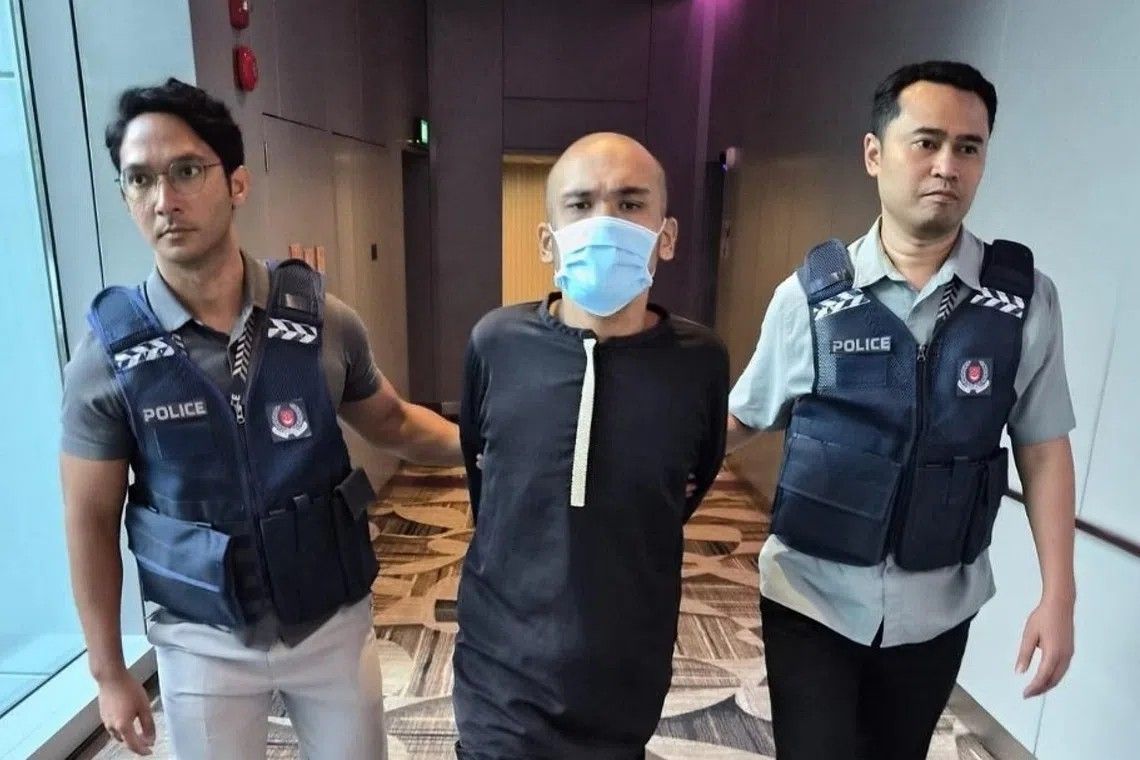
Singapore's authorities have moved swiftly to prosecute a 27-year-old citizen accused of uploading offensive social media content targeting the Muslim faith, marking a serious test of the city-state's commitment to interfaith harmony in an increasingly digital age. Elvin John Baptist was brought before the courts on August 7 following allegations that he had posted provocative material on the TikTok platform in March that authorities contend deliberately sought to demean Islam and provoke public discord. The single charge he faces invokes the Maintenance of Religious Harmony Act, Singapore's primary legislative tool for safeguarding relations between different faith communities and preventing sectarian conflict.
According to case documents tendered in court, Baptist allegedly uploaded two separate videos to TikTok on March 1 in which he is said to have spoken words in Malay with the clear intention of causing offense to Muslim believers and destabilising public tranquility across Singapore. The precise nature of the remarks remains undisclosed by authorities, though the prosecution appears confident that the words chosen constituted a deliberate assault on Islamic faith rather than a careless or spontaneous utterance. The timeline of events reveals a coordinated law enforcement response that crossed international borders, underscoring how seriously Singapore treats allegations of religiously motivated incitement despite the challenges posed by digital communication platforms.
Police received notification of Baptist's alleged misconduct on March 1, the very date the videos were distributed online, but by that point the suspect had already departed Singapore for neighbouring Malaysia. The coordination between Singaporean law enforcement and the Royal Malaysia Police proved instrumental in locating and apprehending Baptist before he could evade accountability. On August 6, Malaysian authorities cooperated with their Singaporean counterparts to deport Baptist, who was then immediately arrested upon his arrival back in Singapore the same day. This seamless cross-border operation demonstrates the growing capacity of Southeast Asian police forces to pursue digital-age offences that span multiple jurisdictions.
The Religious Harmony Act under which Baptist has been charged represents one of Singapore's most carefully calibrated legislative responses to the potential dangers of sectarian division in a religiously plural society. The statute criminalises conduct that insults the religion of others, promotes enmity between religious groups, or threatens public peace and order on religious grounds. For Malaysia and other Southeast Asian nations grappling with their own religious tensions and social media-fuelled incitement, Singapore's prosecutorial approach offers both a template and a cautionary tale about the necessity of maintaining strict legal boundaries around religiously inflammatory speech whilst respecting free expression.
Beyond the specific charges against Baptist, authorities have indicated he is cooperating with investigations into a parallel incident involving a separate video circulating across social media platforms. This footage purportedly captures an individual desecrating a Quran by stepping on it, and police believe the recording was made aboard a public bus operating in Singapore. The emergence of this second video suggests a broader pattern of deliberate attempts to provoke the Muslim community and potentially incite wider social unrest. The interconnected nature of these cases indicates that what might appear as isolated incidents of digital mischief are being treated as part of a coordinated campaign of religious provocation requiring comprehensive investigative response.
Singapore's approach to such cases reflects the precarious balance the island nation must maintain between protecting religious minorities from hateful incitement and preserving fundamental freedoms in an open society. With a Muslim population comprising roughly 15 percent of the total and significant Christian, Hindu, and Buddhist communities alongside other faith traditions, the government has invested considerable effort into institutional frameworks designed to prevent the kind of sectarian violence that has plagued other parts of Southeast Asia. The prosecution of Baptist sends a clear signal that authorities will not tolerate religiously motivated provocations, particularly those deliberately amplified through social media platforms designed to reach mass audiences with unprecedented speed and scale.
The digital dimension of these offences presents novel enforcement challenges that traditional legal frameworks were not designed to address. Whereas historically religious incitement typically occurred in public spaces, during sermons, or through printed materials subject to regulatory oversight, social media enables individuals to broadcast inflammatory content to thousands of people instantaneously and with minimal gatekeeping. Baptist's use of TikTok—a platform with particular penetration among younger demographics—illustrates how quickly such content can circulate before authorities even become aware of its existence. The lag between creation and police notification, combined with the international mobility of suspects, necessitates precisely the kind of transnational law enforcement cooperation that ultimately led to Baptist's apprehension.
For Malaysian observers, the case carries particular significance given the ongoing debates within this country about the appropriate legal and social responses to religiously provocative speech. Malaysia maintains its own framework of laws prohibiting insults to Islam and to the Malay-Muslim majority community, though the application and interpretation of these provisions have sometimes sparked controversy regarding their consistency with broader free speech principles. The Singapore prosecution offers a comparison point for how a highly diverse, secular constitutional framework handles comparable allegations, even as Malaysia continues to navigate its own unique constitutional arrangement allocating special protections to Islam.
The involvement of cross-border cooperation and the rapid apprehension of Baptist also underscores how law enforcement strategies have evolved to address the challenge of jurisdictional evasion in the digital era. By fleeing to Malaysia, Baptist may have calculated that distance would afford protection from accountability, yet the existence of robust bilateral policing arrangements meant his escape merely delayed rather than prevented prosecution. This development suggests that perpetrators of social media-based incitement will find geographic relocation an increasingly unreliable shield against legal consequences, a reality with important implications for how individuals contemplating such conduct calculate their risks.

