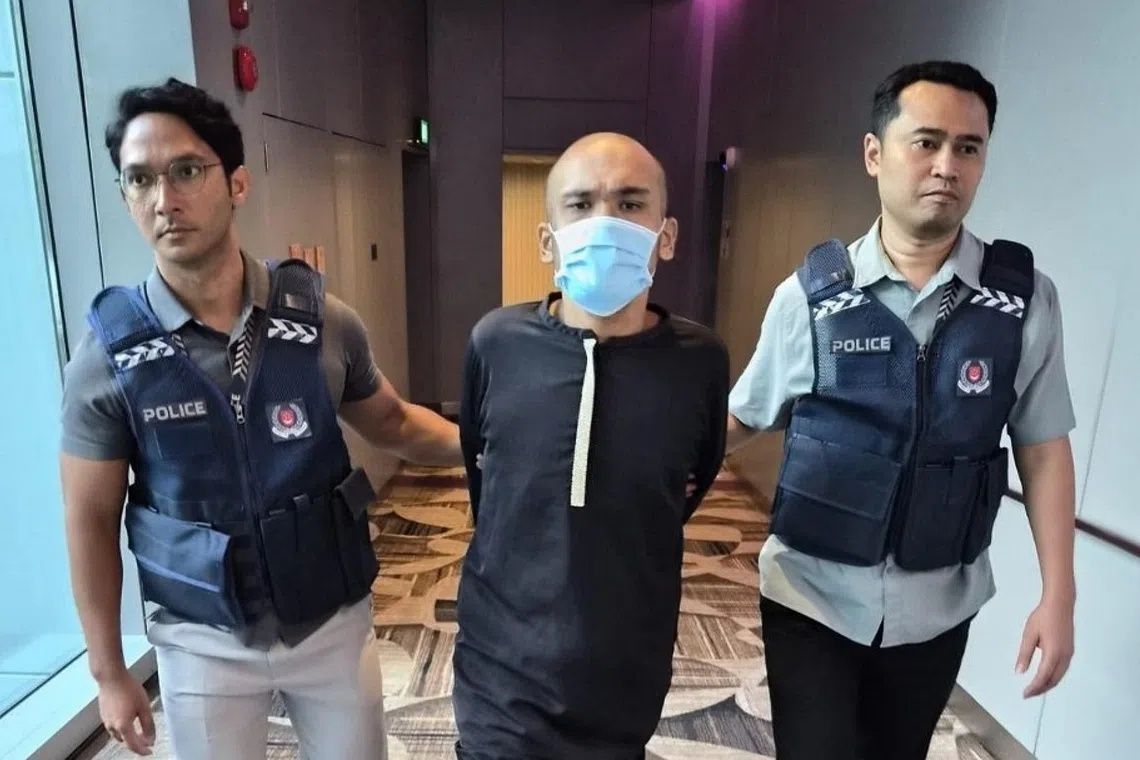
A 27-year-old male resident will appear before Singapore courts on Friday, August 7, to face charges stemming from deeply offensive videos he posted on social media platforms earlier this year that included insulting language directed at the Muslim community. The case highlights the island nation's zero-tolerance approach to content that threatens religious harmony, a foundational principle in its multicultural society where Muslims, Christians, Buddhists, Hindus and other faith communities coexist.
Police records show that authorities first learned of the man's conduct when they received a complaint on March 1. However, by the time investigators began their work, the individual had already departed Singapore. The delay in apprehending him required cross-border cooperation that underscores how social media-fuelled offences increasingly demand coordinated law enforcement responses across Southeast Asia. His location remained uncertain until Malaysian authorities, working through official channels with the Royal Malaysia Police, identified and subsequently deported him on August 6.
The man's arrival back in Singapore on August 6 led to immediate arrest at the airport. Within hours of his detention, police confirmed he would be charged the following day. The swift progression from apprehension to formal charges demonstrates Singapore's commitment to acting decisively against content creators whose work endangers community relations. The potential penalties he faces are substantial: conviction could result in imprisonment of up to five years, monetary fines, or a combination of both. These sentencing options reflect the severity with which Singapore's legal framework treats religiously inflammatory speech.
Investigators have additionally linked the defendant to a second, separate video circulating on social media that depicts a man desecrating the Quran, Islam's holiest scripture, by stepping on it. The Straits Times confirmed that the individual captured in this footage is the same 27-year-old now facing charges. This video was reportedly filmed aboard a public bus travelling within Singapore, meaning the alleged desecration occurred in a shared public space rather than a private setting—a factor that amplifies the communal disturbance his actions generated.
The authorities' response to managing the spread of such material involved direct intervention with Meta, the technology conglomerate that owns Facebook, Instagram and WhatsApp. On March 7, police issued five separate disabling directives to the company, instructing it to restrict access to the offensive videos for users based in Singapore. This approach reflects how law enforcement agencies now operate within the digital ecosystem, working with major platforms to contain content that violates local laws before it reaches broader audiences. Meta's compliance with such requests demonstrates the framework through which governments and technology firms manage speech that crosses cultural and legal boundaries.
Singapore's legal and political framework around religious sensitivities differs markedly from neighbouring countries and reflects the city-state's particular historical circumstances. As a densely populated island with significant religious and ethnic diversity packed into a small geography, Singapore's founders established that public order and communal harmony depend on mutual respect across faith lines. The law criminalising insulting remarks about religions applies without exception and protects all faith communities equally, though enforcement actions often garner significant public attention and scrutiny.
The police statement issued on August 6 articulated the government's position unambiguously. Authorities declared they regard any conduct threatening racial or religious harmony with utmost seriousness, signalling that individuals engaging in speech or actions designed to breed enmity, hatred, or hostility between religious groups will face prosecution without leniency. This messaging serves both as legal warning and as a statement of national values. For Malaysia and other Southeast Asian nations managing their own multicultural contexts, Singapore's approach offers one model of how governments can employ criminal law to regulate religious speech, though the applicability and appropriateness of such measures remain contested among civil liberties advocates.
The incident also raises broader questions about content moderation and digital jurisdiction in an era where speech uploaded from one location circulates instantly across borders. The defendant's departure to Malaysia before authorities identified him illustrates how transnational movement can complicate investigations into online offences. Regional cooperation mechanisms between Malaysia and Singapore, demonstrated in this deportation, indicate growing recognition that cross-border digital misconduct requires coordinated responses. Such cooperation, however, remains inconsistent and depends on bilateral relationships and the relative priority governments assign to particular categories of offences.
For Malaysian readers and those across Southeast Asia, this case underscores the rapidly evolving legal landscape around digital speech. While Malaysia has its own laws addressing religious sensitivities and sedition, enforcement approaches and penalties vary from Singapore's framework. The incident demonstrates that social media users can face serious legal consequences for content posted across national boundaries, and that platforms' roles in content removal create additional accountability layers. The case also illustrates how religious sensitivities remain central to governance and public order considerations throughout the region, with authorities willing to deploy significant enforcement resources to manage content deemed religiously offensive.
The defendant's simultaneous involvement in two distinct cases—the insulting video remarks and the Quran desecration footage—suggests a pattern rather than isolated incidents, which may influence judicial sentencing if conviction occurs. Prosecutors will likely present evidence of multiple infractions to demonstrate deliberate, sustained efforts to antagonise the Muslim community rather than spontaneous, momentary lapses in judgment. This distinction matters substantially for sentencing outcomes and for shaping public perception of whether the offender engaged in calculated provocation or acted impulsively. The August 7 court appearance will begin proceedings that unfold in Singapore's public and mediated sphere, with outcomes likely to reverberate through regional discussions about religious respect, digital speech regulation, and multicultural governance.

