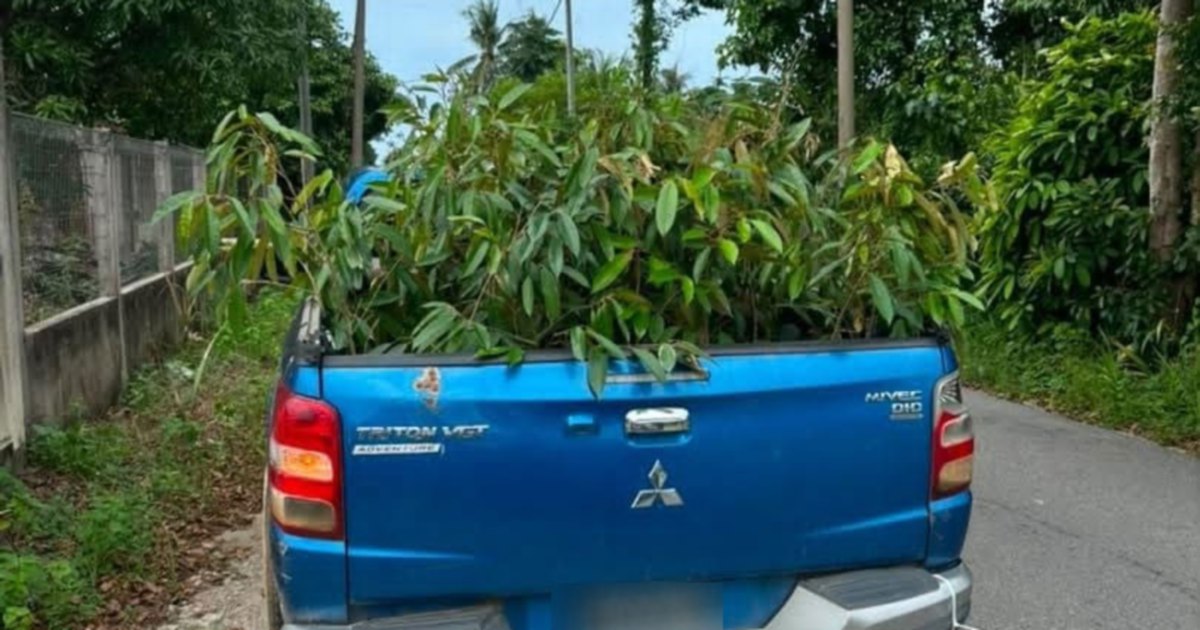
Security forces in Tumpat have apprehended a 55-year-old individual accused of attempting to smuggle durian saplings across the Thai-Malaysian border. The General Operations Force intercepted what officers believe to be 52 young durian trees during a routine operation conducted in the area yesterday, leading to the suspect's arrest and seizure of the plants.
The discovery represents a significant crackdown on agricultural smuggling activities that have increasingly become a concern for Malaysian authorities along the northern frontier. Durian saplings, particularly those sourced from Thailand, have become attractive targets for illicit trade due to growing domestic demand for these high-value fruit trees and the varieties available across the border.
The nature of durian sapling smuggling reflects broader challenges facing Malaysia's biosecurity framework. Unlike finished fruit, which faces established inspection protocols at border checkpoints, young trees present a more complex regulatory puzzle. Authorities must contend with the risk of introducing unvetted genetic material and potentially harmful pests or pathogens that could devastate local durian plantations, particularly in states like Pahang and Johor where commercial cultivation remains economically significant.
Thailand has developed a reputation for cultivating distinct durian varieties, some commanding premium prices in regional markets. The proximity of Tumpat to the Thai border and established smuggling routes makes this region a predictable point of interception. Malaysian enforcement agencies have stepped up operations in response to growing awareness that uncontrolled importation of agricultural materials undermines legitimate farming operations and threatens the integrity of the local horticultural sector.
The suspect's detention signals intensified enforcement against cross-border agricultural trafficking. The General Operations Force, traditionally associated with counter-insurgency and border security, has increasingly deployed resources toward combating smuggling operations that exploit the porous nature of maritime and terrestrial borders. This shift reflects recognition that economic crimes in the agricultural domain demand comparable operational rigor.
Local agricultural stakeholders have expressed mounting concern about unfair competition from smuggled plants that evade quarantine procedures, phytosanitary certification, and associated costs borne by legitimate importers and growers. Nursery operators in Malaysia who source durian saplings through legal channels argue that unregulated smuggling undermines their market positioning and erodes government revenue through customs duties and agricultural licensing fees.
The confiscated saplings will likely undergo examination by the Department of Agriculture to assess their health status and determine appropriate disposal methods. Standard protocol involves destruction of suspect plant material to prevent accidental propagation or environmental contamination. This procedure, though necessary from a biosecurity standpoint, represents a significant economic loss to those involved in the smuggling operation.
The incident underscores Malaysia's vulnerability to agricultural smuggling despite repeated ministerial declarations regarding border security enhancements. The sheer volume of legitimate agricultural trade flowing across Thai borders daily creates concealment opportunities for illicit consignments. Enforcement agencies face persistent challenges in balancing legitimate commerce facilitation with vigilance against contraband without creating bottlenecks that harm legal traders.
Beyond the immediate criminal implications, this case highlights how global agricultural trade vulnerabilities manifest at the Southeast Asian periphery. International demand for superior durian genetics has created economic incentives for circumventing established import protocols. Regional cooperation frameworks addressing agricultural smuggling remain underdeveloped relative to the scale of the problem, leaving individual nations to mount largely independent enforcement efforts.
Authorities have not yet disclosed whether the suspect possessed documentation suggesting an intended recipient or commercial distribution network. Understanding the supply chain architecture behind such operations typically requires follow-up investigations that may lead to additional apprehensions further downstream. Tumpat's location makes it a natural staging point for materials destined for peninsular markets, and investigators will likely focus on tracing intended recipients.
Future prevention of similar incidents may necessitate enhanced coordination between Malaysian and Thai authorities at the bilateral level, coupled with investment in improved detection technologies at land borders. Plant material smuggling often exploits inspection gaps because officers lack specialized botanical training to identify suspect specimens quickly during high-volume border processing scenarios.
The broader implications extend to Malaysia's standing on agricultural standards within international frameworks. Smuggling incidents that result in border seizures, while tactically successful, often indicate systemic vulnerabilities that trading partners monitor closely when considering import agreements and phytosanitary certification status. Persistent smuggling records can complicate Malaysia's efforts to secure premium market access in demanding jurisdictions where biosecurity reputation carries commercial weight.
This operation contributes to an emerging pattern of agricultural enforcement activity along Malaysia's northern frontier as agencies coordinate increasingly sophisticated interdiction capabilities. The case demonstrates that even relatively low-profile commodities warrant serious enforcement attention when they traverse controlled borders, particularly where biosecurity implications and revenue considerations align.

