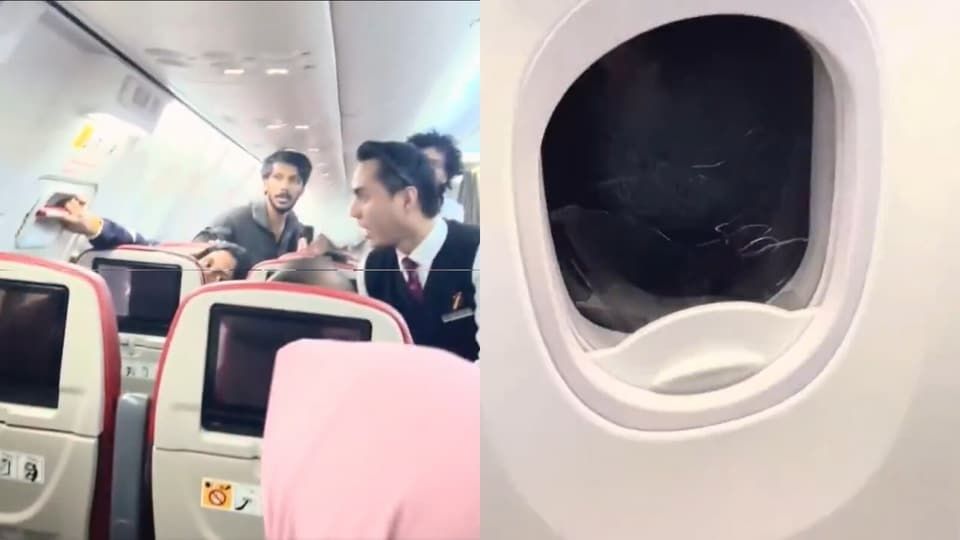
A 36-year-old passenger aboard a Batik Air flight was arrested by Kerala Police after attempting to breach the emergency exit of the aircraft while in mid-flight over the Indian Ocean on Wednesday night. The incident, which unfolded aboard flight OD231, a Boeing 737 operating on the Kuala Lumpur-Kochi route, sent shockwaves through the cabin and raised serious concerns about aviation security across the region. The suspect, identified as Jamsheer Athanikkal from Palakkad but currently residing in Sreemoolanagaram, was taken into custody when the flight touched down at Cochin International Airport early on Thursday morning.
According to the First Information Report filed with Kerala Police, the alarming incident occurred between 9:30 pm and 11:05 pm as the Boeing 737 traversed the night sky at cruising altitude. Jamsheer allegedly targeted the emergency exit situated in the rear section of the aircraft, using his foot to damage the inner window panel whilst simultaneously attempting to force the door mechanism open. During this ordeal, witnesses reported that he issued threats toward both fellow passengers and members of the cabin crew, escalating an already tense situation to dangerous levels. The aircraft's pressurized cabin design ultimately prevented catastrophic decompression, a critical factor that likely prevented loss of life or serious injury.
The swift intervention of fellow travellers and Batik Air's crew members proved instrumental in containing the crisis. Passengers who had been roused from sleep by the distinctive sound of rushing air worked in coordination with flight attendants to physically restrain Jamsheer before his actions could escalate further or cause additional damage to the aircraft's structural integrity. Passenger Matty Mathew documented aspects of the incident through video recording and later shared his account on social media, describing the harrowing moments when most travellers were unconscious and vulnerable. Mathew's post emphasised how the aircraft's robust engineering and cabin pressurization system functioned as an unintended safety mechanism, preventing the door from opening despite the passenger's forceful attempts.
The charges filed against Jamsheer reflect the gravity of his alleged conduct and the multiple layers of breach he was attempting to commit. Under Indian law, he faces accusations under Section 351(3) of the Bharatiya Nyaya Sanhita for criminal intimidation of both passengers and crew. Additionally, Section 11A of the Aircraft Act addresses his violation of critical safety and security directions specific to aviation operations. The Kerala Police Act's Section 118(e) has also been invoked, targeting his alleged actions that endangered public safety on a mass scale. These composite charges underscore how aviation security incidents are treated as serious offences that extend beyond simple assault or property damage.
The investigation into the incident remains active, with authorities working to establish the circumstances and motivations behind Jamsheer's actions. The complaint that triggered the police response was officially filed by Batik Air's Security In-Charge based in Kochi, ensuring that the airline's safety protocols were properly activated and documented. Police have indicated that detailed investigative work is ongoing, which will likely include interviews with passengers and crew, technical examination of the damaged window panel, and assessment of the aircraft's condition. Understanding the root cause of such incidents is crucial for developing enhanced preventive measures across the aviation sector.
This incident marks the second significant in-flight emergency affecting India-bound flights within a 48-hour period, illustrating mounting concerns within the aviation community. Just two days earlier, Air India flight AI2379 originating from Phuket, Thailand, experienced an unexplained loss of altitude whilst cruising en route to Delhi. That Boeing aircraft, carrying 137 passengers alongside eight crew members, managed to recover and land safely at Indira Gandhi International Airport. However, the incident left its mark on those aboard: thirteen passengers and four crew members required hospitalization for treatment following the ordeal, receiving medical attention for injuries and trauma-related conditions sustained during the altitude loss.
The Air India flight incident demonstrated different dynamics compared to the Batik Air emergency. Rather than deliberate human interference creating the crisis, the earlier incident appeared to stem from technical or operational complications affecting the aircraft's systems. According to flight-tracking data from Flightradar24, the aircraft involved in the Air India incident was a seven-year-old Airbus, suggesting it was not an ageing aircraft prone to mechanical failure but rather a relatively modern aircraft within typical operational lifespan parameters. The airline swiftly informed regulatory authorities and has been cooperating fully with ongoing investigations whilst also liaising with the aircraft manufacturer to identify causative factors.
For Malaysia-based carriers and regional aviation stakeholders, these consecutive incidents underscore the persistent challenges facing commercial aviation security and safety across Southeast Asia and the Indian subcontinent. Batik Air, a Malaysian carrier operating extensive networks throughout the region, faces increased scrutiny regarding cabin safety protocols and crew training for managing disruptive passengers. The incidents highlight gaps that may exist in pre-flight passenger screening, in-flight monitoring systems, and crew response training when confronted with dangerous behaviour at altitude. Airlines operating on regional routes connecting Malaysia, India, Thailand, and neighbouring countries must now reassess their procedural frameworks to prevent similar occurrences.
Crew welfare and passenger protection have emerged as paramount concerns following these incidents. Air India has publicly committed to supporting affected passengers and crew members and their families as investigations progress, positioning passenger and crew safety as the airline's foremost priority. This statement carries significance not merely as corporate messaging but as an acknowledgement that aviation incidents generate psychological and physical trauma extending beyond the flight duration. For regional carriers including Batik Air, establishing robust support systems for affected personnel and maintaining transparent communication with regulatory bodies appears increasingly essential for maintaining public confidence in regional aviation.
The regulatory framework governing aviation safety in Malaysia and India will likely face scrutiny in coming weeks as aviation authorities review incident response protocols and aircraft security measures. The Directorate General of Civil Aviation in India, alongside Malaysia's Civil Aviation Authority, may examine whether existing protocols for identifying potentially dangerous passengers prior to boarding require enhancement. Advanced behavioural screening techniques, improved psychological assessment tools, and strengthened communication channels between security agencies and airlines could represent potential outcomes of these investigations. The challenge lies in implementing security enhancements without creating excessive passenger inconvenience or extending airport processing times beyond acceptable thresholds.
Looking forward, the incidents raise questions about passenger education and crew empowerment in managing mid-air crises. Most passengers aboard these flights remained largely passive until circumstances became critical, suggesting potential value in providing travellers with basic understanding of aviation safety protocols and cabin pressurization principles. Training crew members to recognize early warning signs of aggressive behaviour and intervening proactively before situations escalate represents another avenue for prevention. Both Batik Air and Air India, alongside other regional carriers, may find value in reviewing and potentially enhancing their crisis management protocols to ensure that future incidents—should they occur—can be managed more efficiently and with minimal risk to those aboard.

