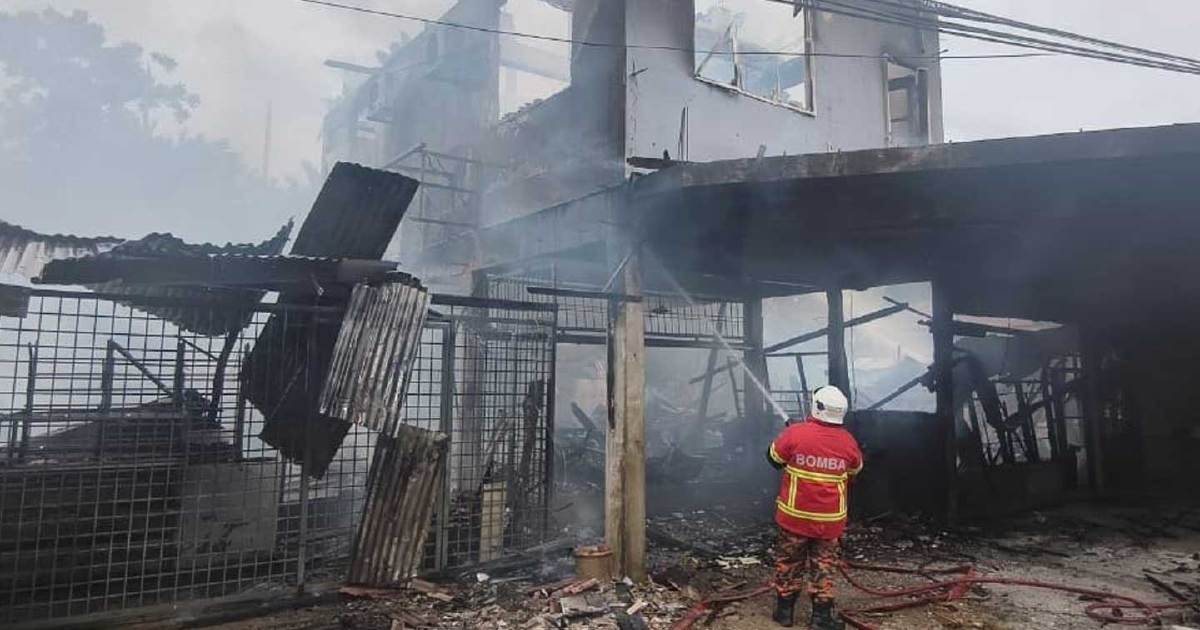
Authorities in Jitra have secured a five-day remand order for a 36-year-old man accused of deliberately setting fire to his mother's residential property in Kampung Sungai Baru. The remand decision follows the suspect's arrest in connection with the alleged arson incident, marking the beginning of what is expected to be a thorough police investigation into the circumstances surrounding the destructive fire.
The case has drawn attention to the troubling intersection of family conflict and violent property destruction. House fires resulting from deliberate acts carry serious legal ramifications under Malaysian law, with arson charges typically falling under the Penal Code. The five-day remand period allows investigators to gather preliminary evidence, obtain statements from witnesses, and establish a clearer timeline of events leading up to the alleged incident.
In such cases, police typically work to determine the suspect's motive and mental state at the time of the alleged offence. Family disputes, financial difficulties, inheritance conflicts, and psychological distress frequently emerge as contributing factors in domestic arson cases. The initial remand phase is crucial for investigators to piece together how the fire started, whether accelerants were used, and whether the suspect had prior opportunity and access to the property.
The involvement of a family residence and a maternal relationship adds a particularly sensitive dimension to this investigation. Domestic violence and abuse-related incidents increasingly feature in Malaysian crime statistics, reflecting broader societal challenges. When such conflicts escalate to property destruction, it signals potential underlying issues that may warrant intervention beyond criminal prosecution, including family counselling or mental health assessment.
Police procedures for handling arson cases in Malaysia involve collaboration with the Fire and Rescue Department, whose investigators examine physical evidence at the crime scene. Forensic analysis of burn patterns, residual accelerants, and the origin point of the fire helps establish whether the blaze was accidental or deliberately set. This technical investigation complements the police interview process during the remand period.
The five-day remand window is strategically important for law enforcement. During this time, investigators can pursue multiple investigative avenues simultaneously: interviewing the suspect under controlled conditions, gathering witness statements from neighbours and family members, collecting photographic and video evidence from the scene, and obtaining preliminary forensic reports that might indicate the fire's origin.
For Malaysian readers, this case underscores the seriousness with which authorities treat arson and property destruction offences. Deliberately setting fire to any structure, particularly a residential dwelling, endangers human life and violates fundamental rights to safety and security. The legal consequences for such actions are stringent, reflecting the gravity of the offence and its potential to cause widespread harm.
The Kampung Sungai Baru incident also raises questions about community safety and the mechanisms available to residents facing domestic threats. Neighbours and family members who witness escalating conflict or concerning behaviour have avenues to seek police intervention before situations deteriorate to violence. Public awareness about emergency hotlines and reporting procedures remains critical for preventing such incidents.
During the remand period, the suspect will be held in police custody while remaining presumed innocent until charges are formally filed. Malaysian courts follow strict procedures ensuring suspects' rights are protected, including access to legal representation and periodic court reviews of remand orders. Should authorities require additional investigation time beyond the initial five days, they must obtain court approval for extension of the remand period.
The investigation's outcome will depend heavily on forensic evidence and witness testimony. If the evidence conclusively demonstrates the suspect's involvement, prosecutors will proceed with filing formal charges, typically under Penal Code sections pertaining to mischief by fire or criminal intimidation. Conviction on arson charges can result in imprisonment and substantial fines, depending on whether the fire caused injury or death.
This case also illustrates the broader challenge of domestic conflicts in Malaysian society. Housing situations where adult children and elderly parents share accommodation can sometimes become flashpoints for tension, particularly where financial stress, substance abuse, or unresolved family grievances persist. Preventive measures and family intervention programmes represent important complements to criminal justice responses in addressing root causes of such incidents.
As the investigation progresses over the coming days, the police team will work methodically to establish facts, secure evidence, and build a comprehensive case file. Whether additional remand extensions prove necessary, or charges are filed promptly, will become clearer once the initial investigative phase concludes. The case serves as a sobering reminder of how domestic disputes, if left unaddressed, can escalate into dangerous and destructive criminal acts with lasting consequences for families and communities.

