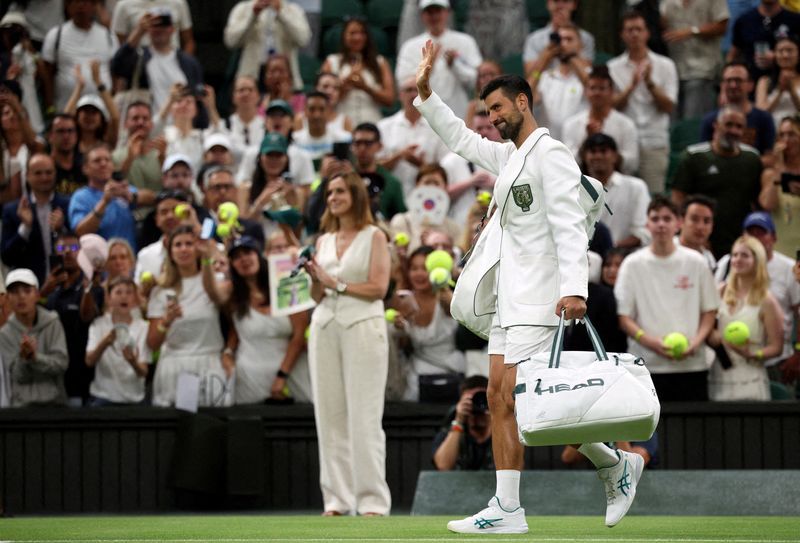
Wimbledon has long been synonymous with tennis tradition and the rigid dress code that requires all players to wear all white, but this year's Championships have witnessed an unexpected uprising in sartorial expression among the men's draw. Following the high-profile fashion statements made by Naomi Osaka, whose kimono-inspired walk-on outfit captured global attention, several top-seeded male players have begun seizing the opportunity to transform their court entrances into carefully curated fashion moments. Novak Djokovic has graced the grass courts wearing a personalised Lacoste blazer and tailored shorts, while sixth seed Taylor Fritz has made his appearance in a pristine white cotton Hugo Boss jacket paired with dress trousers and a silk scarf. This convergence of athletic competition and haute couture signals a notable evolution in how professional tennis players—and their corporate partners—are leveraging the sport's most prestigious stage.
The shift represents something deeper than mere vanity or stylistic whimsy. According to Joelle Michaeloff, chief creative officer at Wilson sports brand, male players are now recognising the power of clothing as a vehicle for personal expression at a level previously dominated by female athletes. She explained to Reuters that this emerging trend reflects players drawing inspiration from iconic Wimbledon moments throughout the tournament's storied history, while also responding to what they observe in the broader conversation around tennis and fashion. Her observation highlights how Wimbledon, despite its stringent all-white requirement that stands as the only Grand Slam enforcing such uniformity, continues to provide fertile ground for memorable fashion statements. The All England Club has indeed been home to legendary sartorial moments, from British designer Ted Tinling's groundbreaking white bodysuit from 1985 to Roger Federer's elegant jacket in 2007, establishing a precedent that resonates with contemporary players.
Sponsorship represents the commercial engine driving much of this fashion evolution. Major brands including Nike, Hugo Boss, and Lacoste are increasingly treating Wimbledon walk-ons as premium marketing opportunities, recognising that the global visibility of these moments generates significant media coverage and social media engagement. Nike and Osaka's team strategically shared videos and imagery of her kimono entrance before her opening matches, while Hugo Boss actively promoted Fritz's sartorial choices. This symbiotic relationship between athlete, brand, and platform has become a central focus for sports marketing departments. Michaeloff emphasised that the narrative being constructed transcends traditional advertising, instead telling the story of personality and individual style both on and off the court. This approach acknowledges that modern consumers, particularly younger demographics, seek authentic connections between the athletes they admire and the brands they wear.
However, the path to fashion-forward success at Wimbledon carries inherent risks, particularly for male players operating within a cultural space where traditionally such visible style choices have been more acceptable for their female counterparts. Taylor Fritz acknowledged this tension directly, noting his preference for maintaining a low profile while simultaneously recognising that executing a dramatic walk-on outfit requires backing it up with strong performances. His concern—that appearing in a distinctive outfit only to lose early creates an unfortunate aesthetic contradiction—reflects the genuine pressure athletes face when balancing sartorial ambition with competitive necessity. Fortunately for Fritz, he advanced to the third round without dropping a set, allowing him to remove his designer trousers with impunity when transitioning to his match shorts. Djokovic faced no such concerns, generating substantial media attention following his comprehensive defeat of Stefanos Tsitsipas, during which he even challenged professional golfer Rory McIlroy to a tennis match while joking that his jacket deserved comparison to McIlroy's Masters Green Jacket.
The design process itself has evolved beyond simple sponsorship provision. Some male players now actively participate in determining every aesthetic element of their Wimbledon entrance attire, from fabric selection and colour choices to neckline design and overall fit. Karen Khachanov, the Russian player who also reached the third round, exemplifies this engaged approach, reportedly wanting to discuss every detail of his outfit while ensuring it maintains both fashionable appeal and functional performance on court. This collaborative relationship between player and brand creative teams represents a departure from previous eras when athletes largely accepted what sponsors provided. Michaeloff characterised this shift as reflecting a deeper truth about modern athlete-brand relationships, where genuine partnership and creative input matter increasingly to players who view their appearance as an extension of their personal brand identity.
Despite the growing enthusiasm, Wimbledon's stringent dress code remains a constraint that occasionally stymies creative ambition. Italian player Matteo Berrettini, once ranked as high as sixth globally, experienced disappointment when the All England Club rejected his proposed outfit on the grounds that it was insufficiently white. Such rejections serve as reminders that beneath the apparent fashion freedom, Wimbledon's traditional values remain firmly embedded in the institution's governance structures. The tournament's brand is fundamentally built on sporting purity and classical elegance, principles that occasionally conflict with contemporary fashion experimentation. Yet the fact that players even attempt to push these boundaries suggests that the underlying culture permitting and even encouraging such expression has shifted measurably.
Wimbledon's fashion evolution should be contextualised within broader tennis history, where sartorial statement-making extends far deeper than recent trends might suggest. Michaeloff drew parallels between contemporary male players' efforts and the iconic style of legendary players like Arthur Ashe, whose distinctive fashion choices during the 1960s and 1970s established a precedent for athletes using their appearance as a form of cultural expression long before modern sponsorship infrastructure existed. This historical perspective reveals that fashion-forward tennis is not new; what has changed is the scale, coordination, and commercial investment surrounding such moments. The visibility has amplified through social media and global broadcast infrastructure, transforming individual style choices into worldwide spectacles that generate trending topics and media discussion.
Fritz himself acknowledged that women players have generally maintained a more aggressive approach to walk-on fashion, treating their court entrances as complete theatrical productions rather than simple appearances. His observation suggests that male players are now cautiously following a path female athletes have pioneered, though with a distinctly masculine sensibility characterised by tailored formality rather than avant-garde experimentation. He expressed openness to the trend continuing, indicating that the present moment may represent merely the opening chapter of a longer story involving increasing male player participation in fashion-forward Wimbledon moments. This suggests the phenomenon is unlikely to be ephemeral or limited to the current tournament iteration.
Naomi Osaka has emerged as the standard-bearer for contemporary Grand Slam fashion innovation, elevating the conversation across all major tournaments through her coordinated, season-spanning approach to match-day styling. At the French Open, she wore a black Kevin Germanier skirt before unveiling a layered yellow-brown and gold Nike dress inspired by the glittering nocturnal Eiffel Tower aesthetic. She previously captivated audiences at the Australian Open with a jellyfish-inspired creation. At Wimbledon, the 14th seed continued this trajectory with another evolution of her signature kimono-influenced walk-on design. Eleanor Thomas, collections lead at the All England Lawn Tennis Club and custodian of the on-site Wimbledon Lawn Tennis Museum, positioned Osaka's fashion contributions squarely within the tournament's legacy of iconic clothing moments. Her assertion that Osaka's fashion choices merit consideration as a defining moment of the 2024 Championships validates the notion that tennis fashion has genuinely entered a new era.
The implications for Malaysian and Southeast Asian tennis extend beyond aesthetics. As the sport continues globalising and attracting investment from Asian corporations eager to associate with premium international events, the fashion dimension provides additional commercial leverage for tournaments and players alike. Southeast Asian athletes may increasingly find sponsorship opportunities tied to fashion collaborations, while regional media coverage of these tournaments benefits from having compelling visual narratives beyond match statistics. Furthermore, the normalisation of fashion expression by elite male athletes potentially influences perceptions of masculine style expression within cultural contexts where traditional conservatism regarding male appearance persists. The precedent set by Djokovic and Fritz, operating within a sport synonymous with classicism and tradition, sends a message that style consciousness and athletic prowess are not mutually exclusive qualities, potentially broadening cultural conversations about masculinity and self-presentation.

